
Guide · Saints
St Padre Pio of Pietrelcina: his life, the stigmata and his devotion
A Capuchin friar in a small town in southern Italy, who spent most of his days hearing confessions and bore the wounds of Christ for half a century. Few modern saints are as loved in Irish homes.
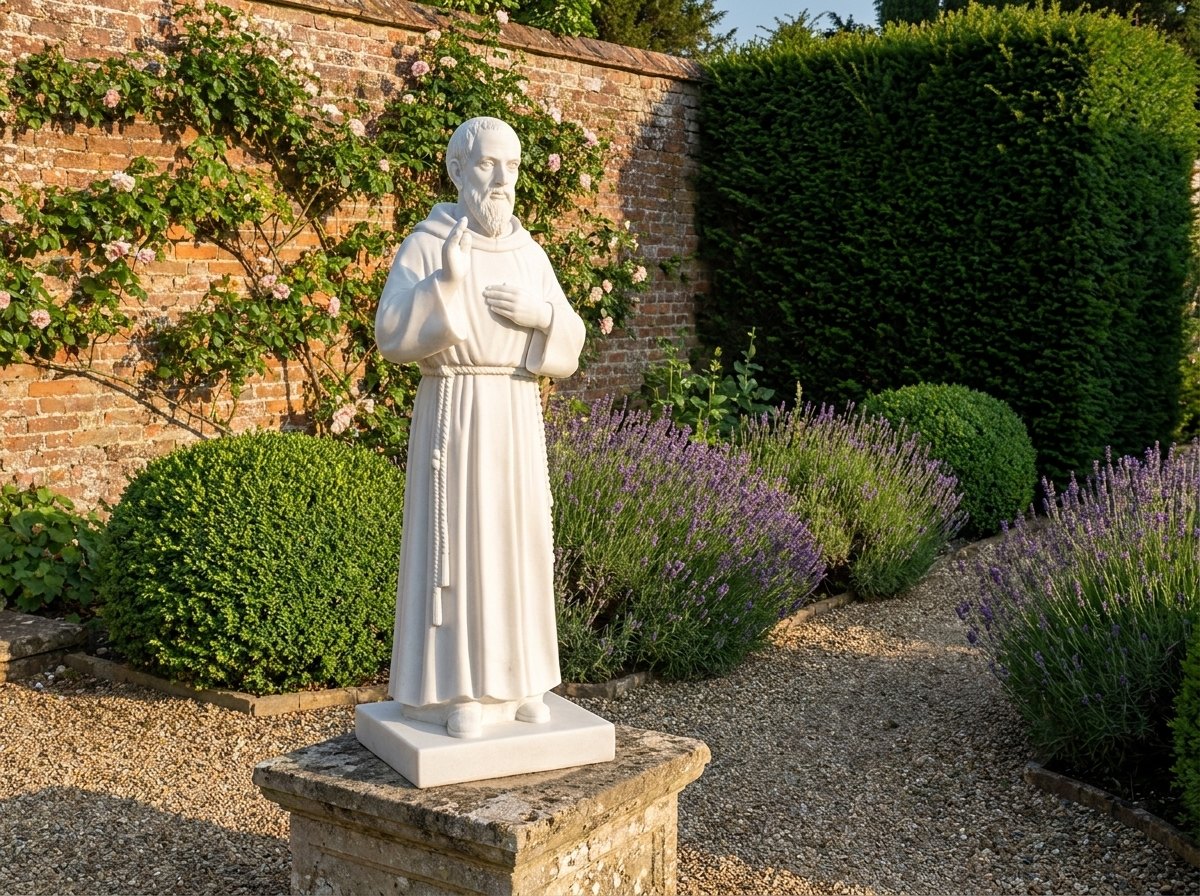
His life
Francesco Forgione was born on 25 May 1887 in Pietrelcina, a farming village near Benevento in southern Italy. He entered the Capuchin Franciscans at fifteen, taking the name Pio, and was ordained priest in 1910. Poor health kept him in and out of his home village for years; in 1916 he was sent to the friary of Our Lady of Grace at San Giovanni Rotondo, on the Gargano peninsula, where he lived for the rest of his life.
On 20 September 1918, while praying before a crucifix in the friary choir, he received the stigmata: wounds in his hands, feet and side, like those of the crucified Christ. They bled for fifty years. He was examined by doctors and, for a time, restricted by Church authorities, and he accepted both with obedience. He died on 23 September 1968.
Confessor, and builder of a hospital
What drew people to San Giovanni Rotondo was not the wounds but the confessional. Padre Pio spent long hours of each day hearing confessions, and people waited days for their turn. His Mass, said with great slowness and intensity, drew crowds from all over the world.
He also founded a hospital, the Casa Sollievo della Sofferenza — the House for the Relief of Suffering — which opened in 1956 and is now one of the major hospitals of southern Italy. And he encouraged the prayer groups that bear his name, which still meet in parishes around the world, including many in Ireland.
Saint
Pope St John Paul II, who as a young priest had visited him at San Giovanni Rotondo in 1947, beatified Padre Pio in 1999 and canonised him on 16 June 2002 as St Pio of Pietrelcina. His feast is 23 September. His advice, often repeated, was simple: “Pray, hope, and don’t worry.”
Reading a Padre Pio statue
The Capuchin habit
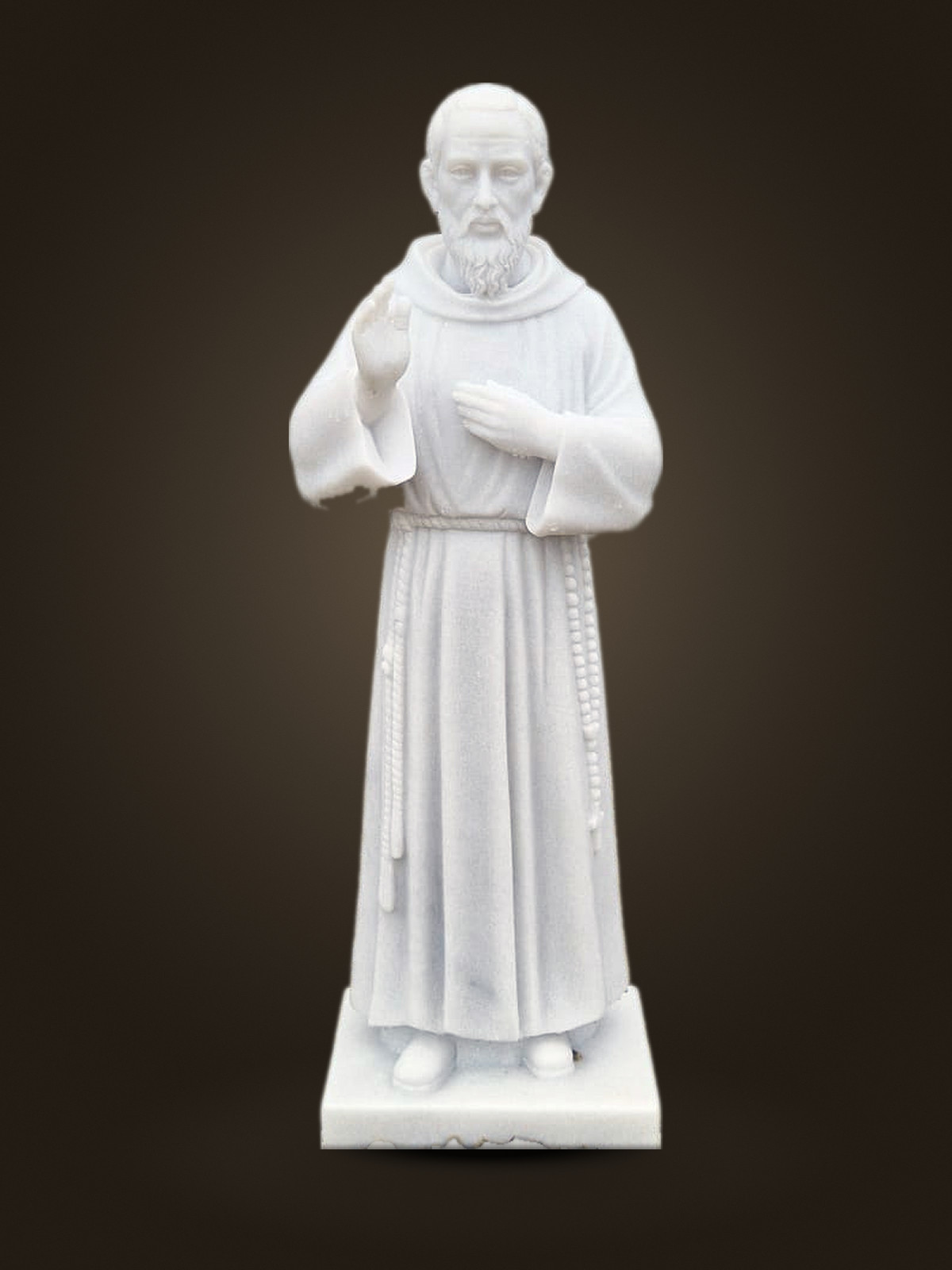
Brown habit with a hood, a white cord at the waist, and usually a beard.
The mittens
He wore fingerless gloves, or half-mittens, to cover the wounds in his hands, and many statues show them.
Hands raised in blessing, or holding a crucifix or rosary
He was rarely without a rosary, which he called his weapon.
Choosing a Padre Pio statue
Think first about where he will stand. For a bedside, a hospital locker or a small prayer corner, a modest painted statue is right: the brown habit and the face read clearly, and it is light enough for an older person to lift and dust. For a hall, a parish prayer group or a hospital chapel, a larger statue gives the group somewhere to gather. For a garden or a memorial, marble is the material that will stand the weather; our guide to outdoor statues in Irish weather explains how to site it.
If you are buying for someone who is ill, it is worth knowing that many people like to keep a Padre Pio within sight of the bed, and that his feast in late September is a natural day to give it. If you are buying for a prayer group, ask the group leader about size before you order: a statue that will be carried to and from meetings is better small and light.
Padre Pio statues
St Padre Pio in the catalogue today.
Padre Pio in Ireland
Irish people took Padre Pio to their hearts during his lifetime, and the devotion has only grown. Prayer groups meet in parishes across the country, and his picture or statue is found in homes, hospitals and nursing homes. Many people turn to him in illness, and in times of anxiety his “don’t worry” is a comfort.
A statue of Padre Pio suits a home prayer corner, a hospital chapel or care home, a prayer group, or a garden. In marble, he stands well outside; see garden statues. He is also a fitting memorial for someone who loved him.
Questions people ask
When is Padre Pio’s feast day?
23 September, the anniversary of his death in 1968.
When did Padre Pio receive the stigmata?
On 20 September 1918, in the choir of the friary at San Giovanni Rotondo. The wounds remained for fifty years, until shortly before his death.
When was Padre Pio canonised?
On 16 June 2002, by Pope St John Paul II.
What is a Padre Pio prayer group?
A group, usually based in a parish, that meets regularly to pray for the Church and the world, as Padre Pio asked. Many Irish parishes have one; ask in your parish office.
Was Padre Pio a priest?
Yes. He was a Capuchin Franciscan friar and was ordained priest in 1910. Most of his life was spent saying Mass and hearing confessions at San Giovanni Rotondo.
Is a Padre Pio statue suitable for outdoors?
In marble, yes — marble is the traditional material for outdoor statues. For a painted resin piece, check the statue’s page or ask us before standing it outside.
Read next
Updated
Read next
Divine Mercy
Jesus in a white robe, one hand raised in blessing, two rays streaming from His heart, and five words beneath: “Jesus, I trust in You.” The Divine Mercy image is now one of the best-loved in Ireland.
St Thérèse, the Little Flower
She died at twenty-four in an enclosed convent in Normandy, having done nothing the world would notice. Within thirty years she was a saint, and she is now a Doctor of the Church.
Memorial statues
When someone dies, a statue can do what flowers cannot: stay. Placed in the house, the garden or at the grave, it becomes the spot where a family keeps praying for the one they have lost.
Garden statues
A statue of Our Lady in the garden is one of the oldest sights in Ireland. Getting one to look right — and keep it standing straight winter after winter — is mostly about the base, the spot and the material.