
For the garden
Religious garden statues for Irish weather
A statue of Our Lady in the garden is one of the oldest sights in Ireland. Getting one to look right — and keep it standing straight winter after winter — is mostly about the base, the spot and the material.
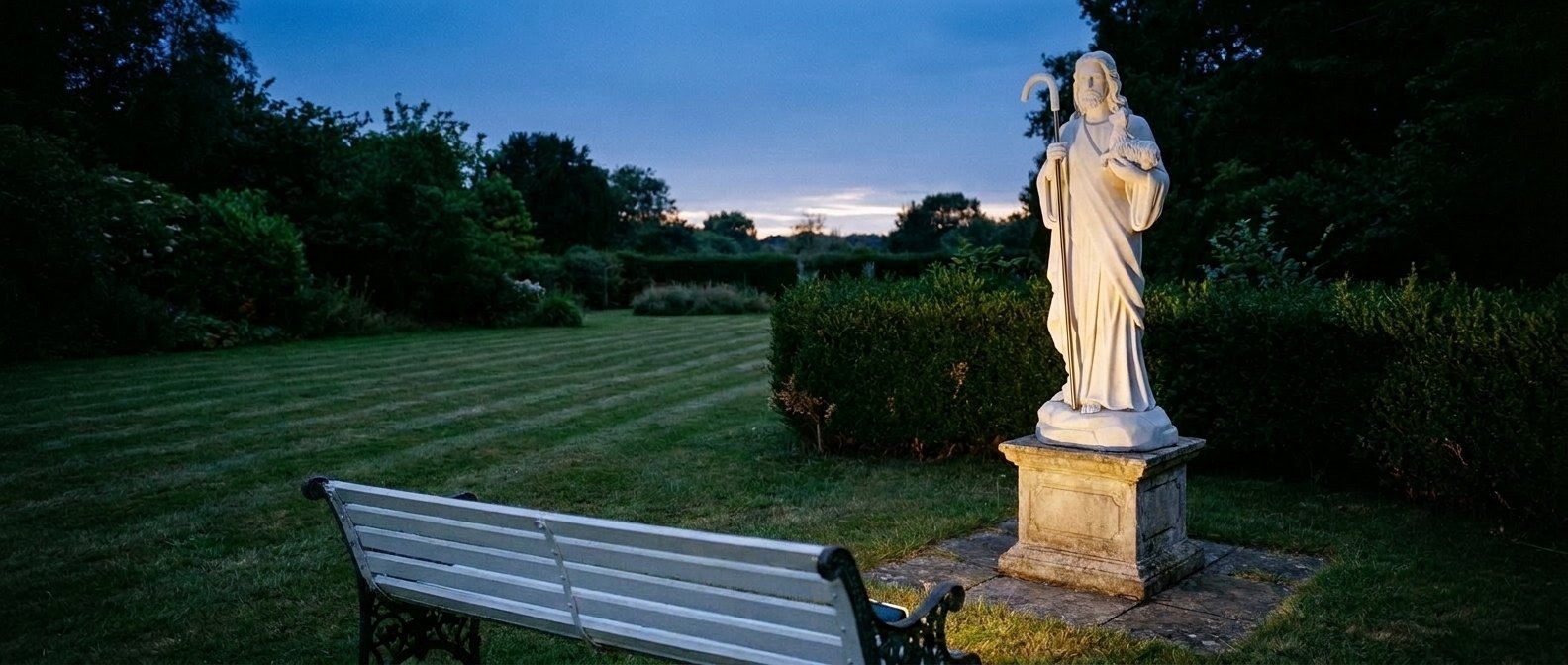
What Irish weather does to a statue
An Irish garden is hard on anything left in it. Rain sits in every crease, frost gets into anything porous and opens it up, wind off the Atlantic will push over a tall figure on a soft lawn, and moss and algae settle on any surface that stays damp. None of this is a reason not to have a garden statue; it is the reason to choose and place one carefully.
For the garden, hand-carved marble is our first recommendation. It is dense, heavy enough to stay where it is put, and weathers slowly and gently. The shop also offers pieces in its garden and outdoor collections; if you are thinking of putting a painted resin statue outside, check that particular statue’s page or ask us first, and expect painted colours to last longest in a sheltered spot.
Statues for the garden
The garden and outdoor collections, with sizes and prices as they stand today.

Our Lady of Lourdes and St Bernadette
Hand-painted resin · the pair
€240
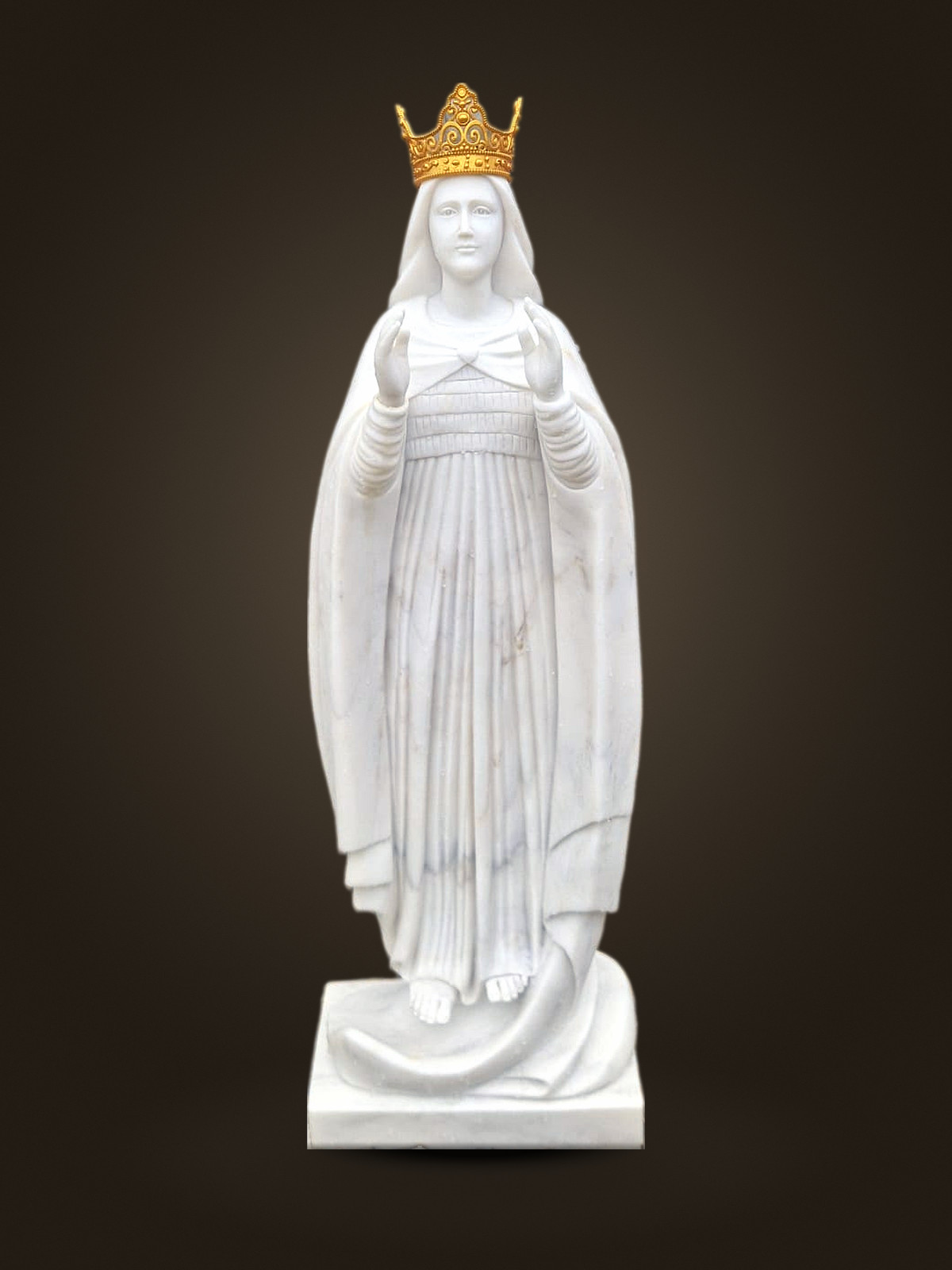
Our Lady of Knock
Hand-carved marble
€1,600
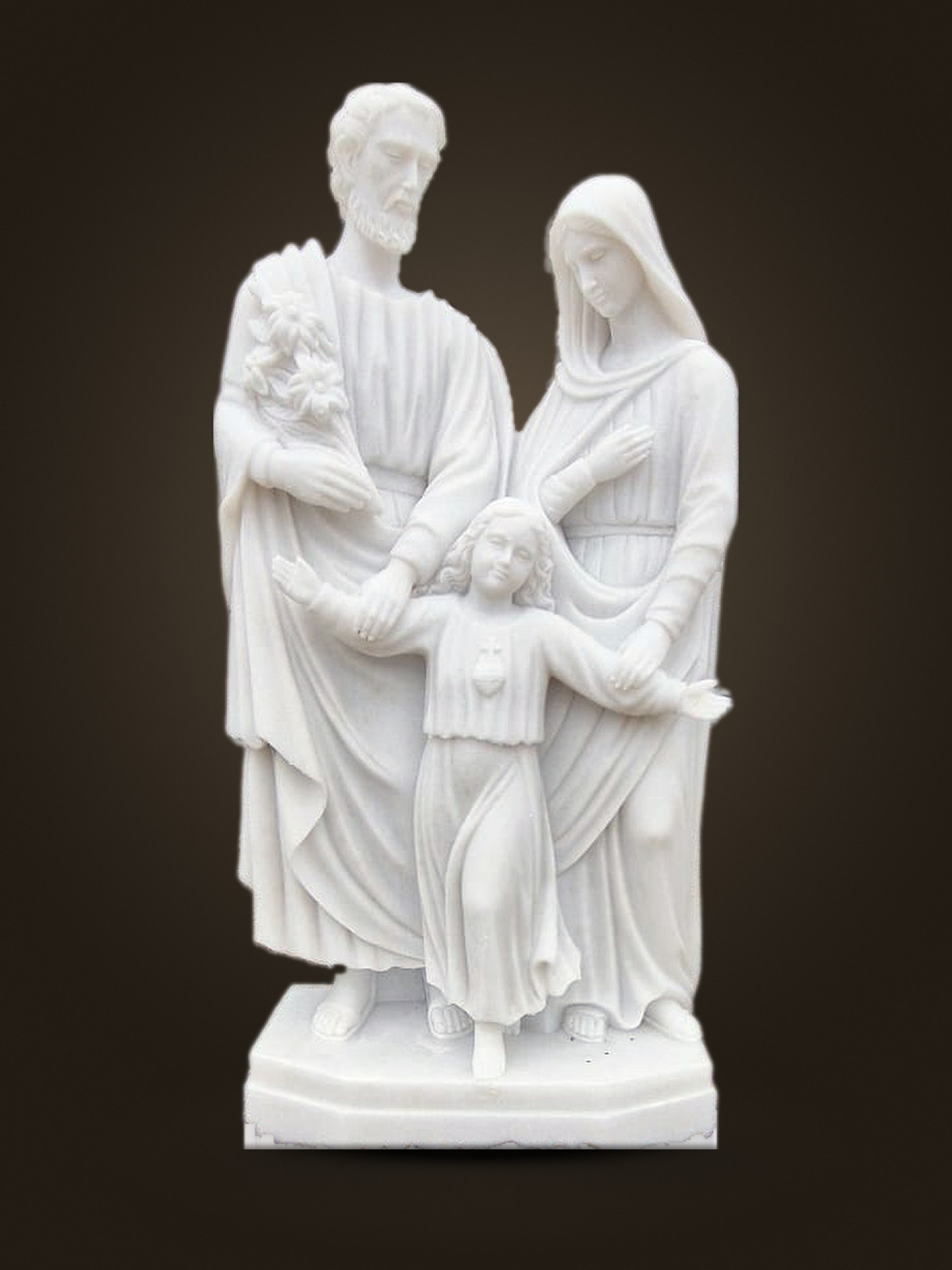
Holy Family
Hand-carved marble
€2,800
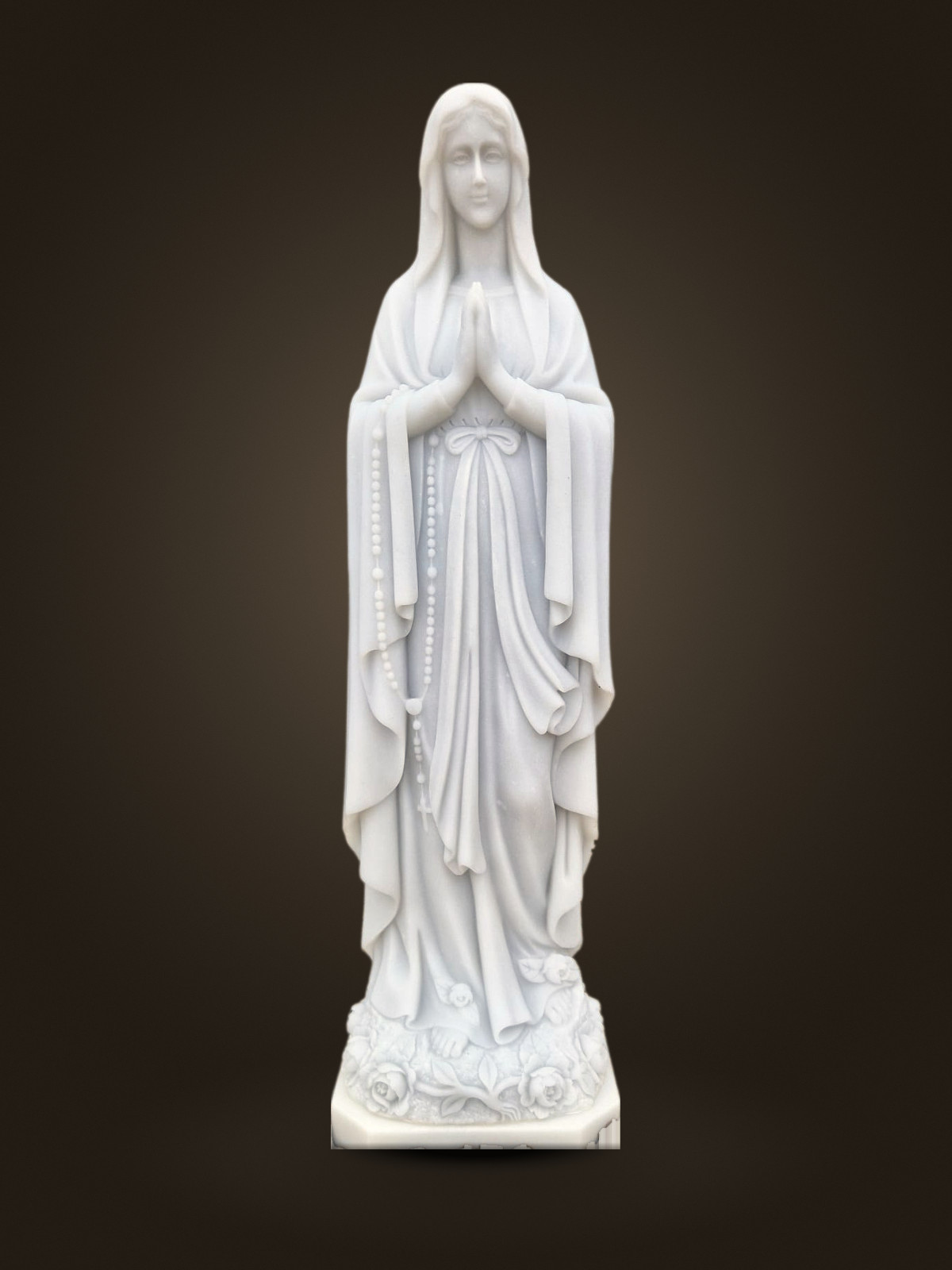
Our Lady of Lourdes (Fine Detail)
Hand-carved marble · 3ft 3in
€2,400
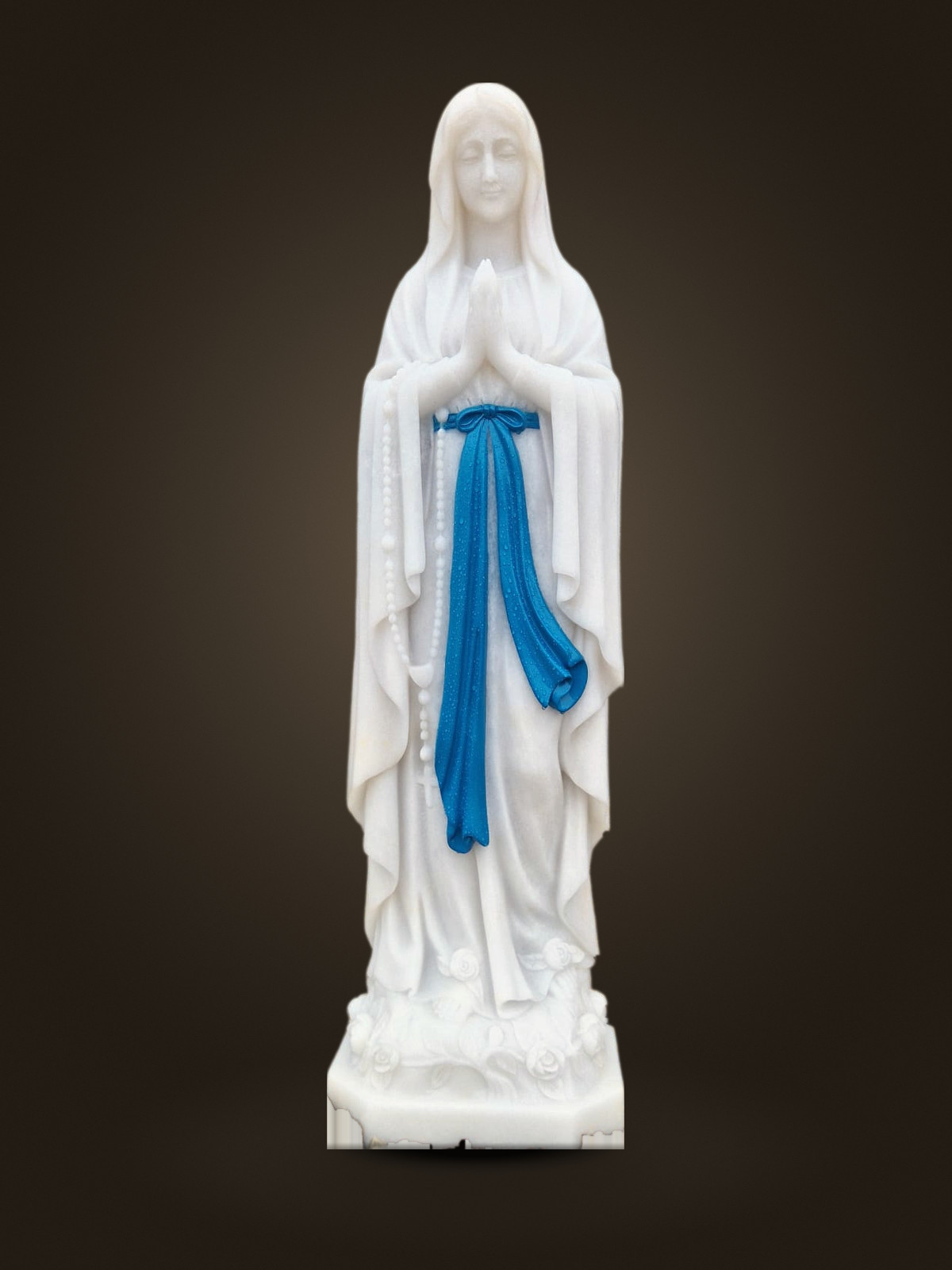
Our Lady of Lourdes (Blue Ribbon)
Hand-carved marble · blue ribbon
€2,100
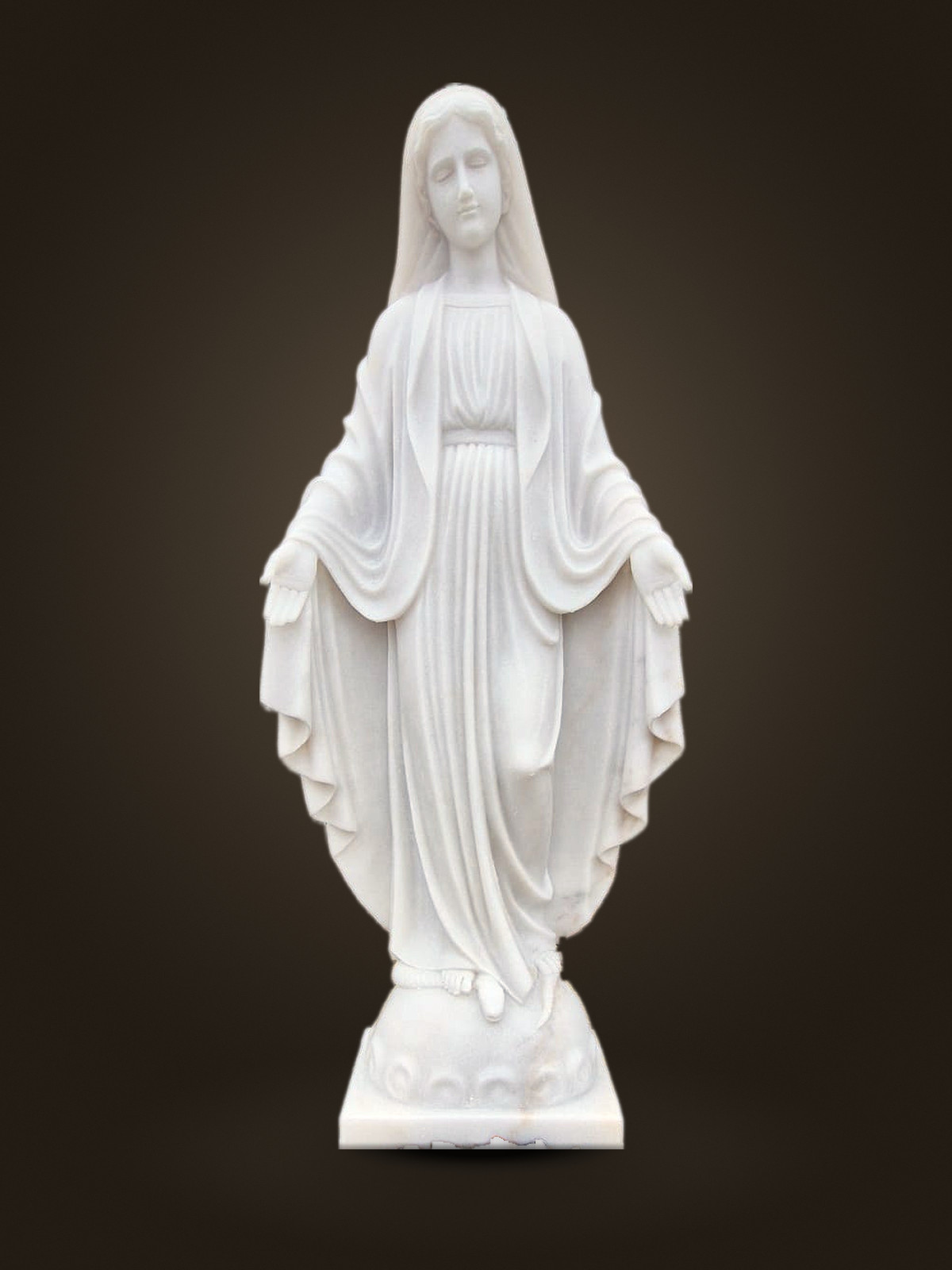
Our Lady of Grace
Hand-carved marble
€2,150
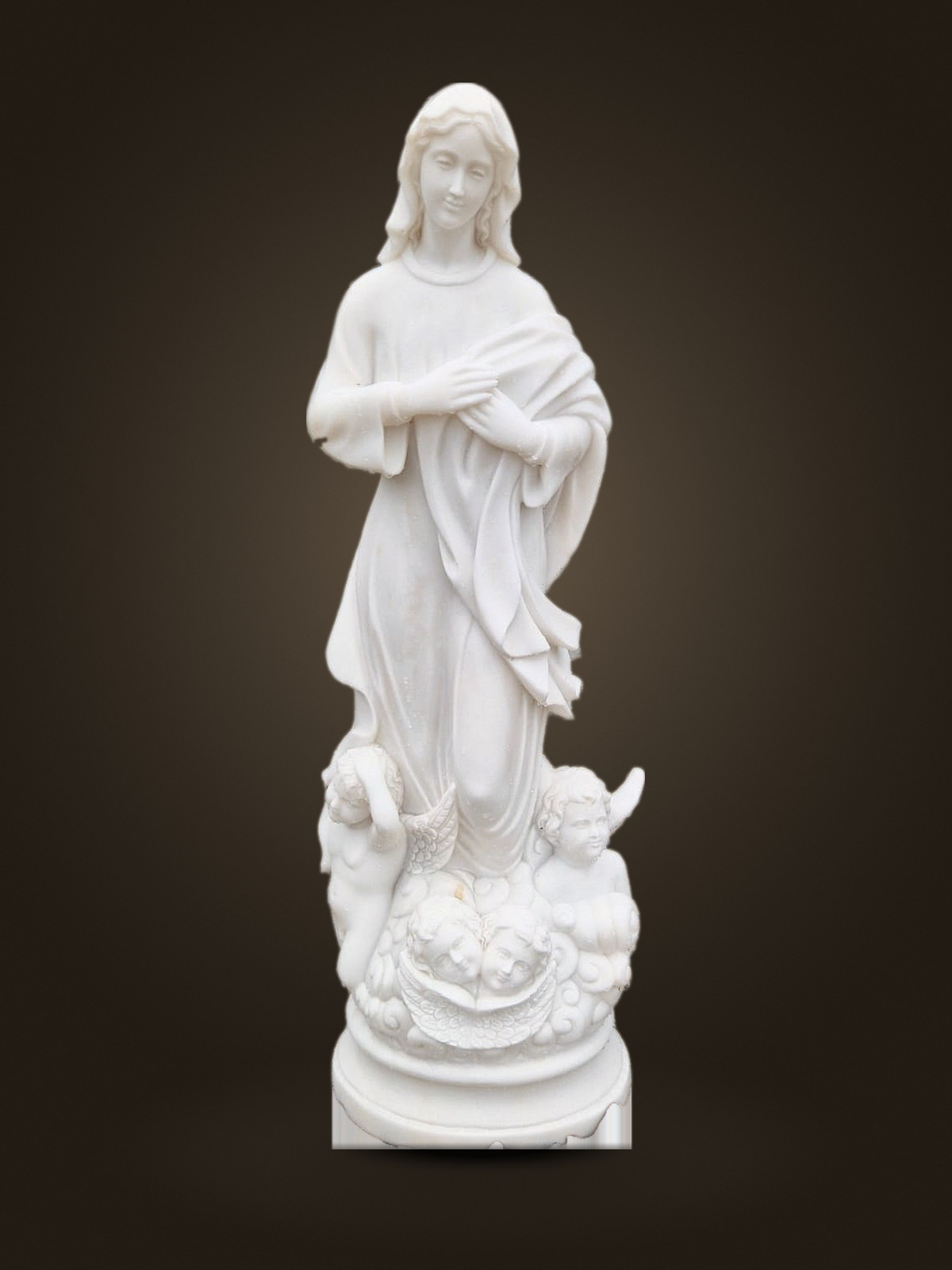
Our Lady of the Assumption
Hand-carved marble
€1,800
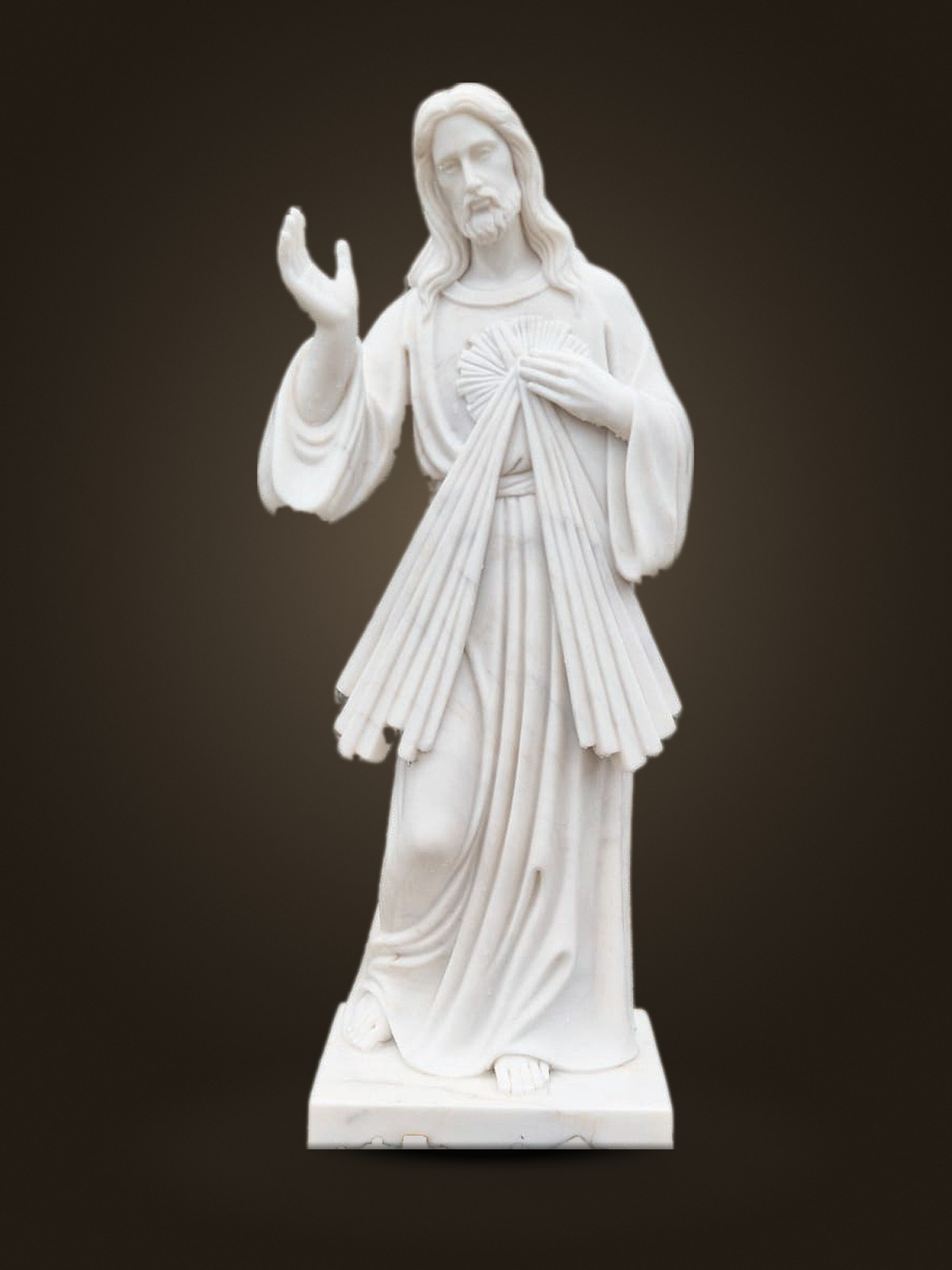
The Divine Mercy
Hand-carved marble
€1,650
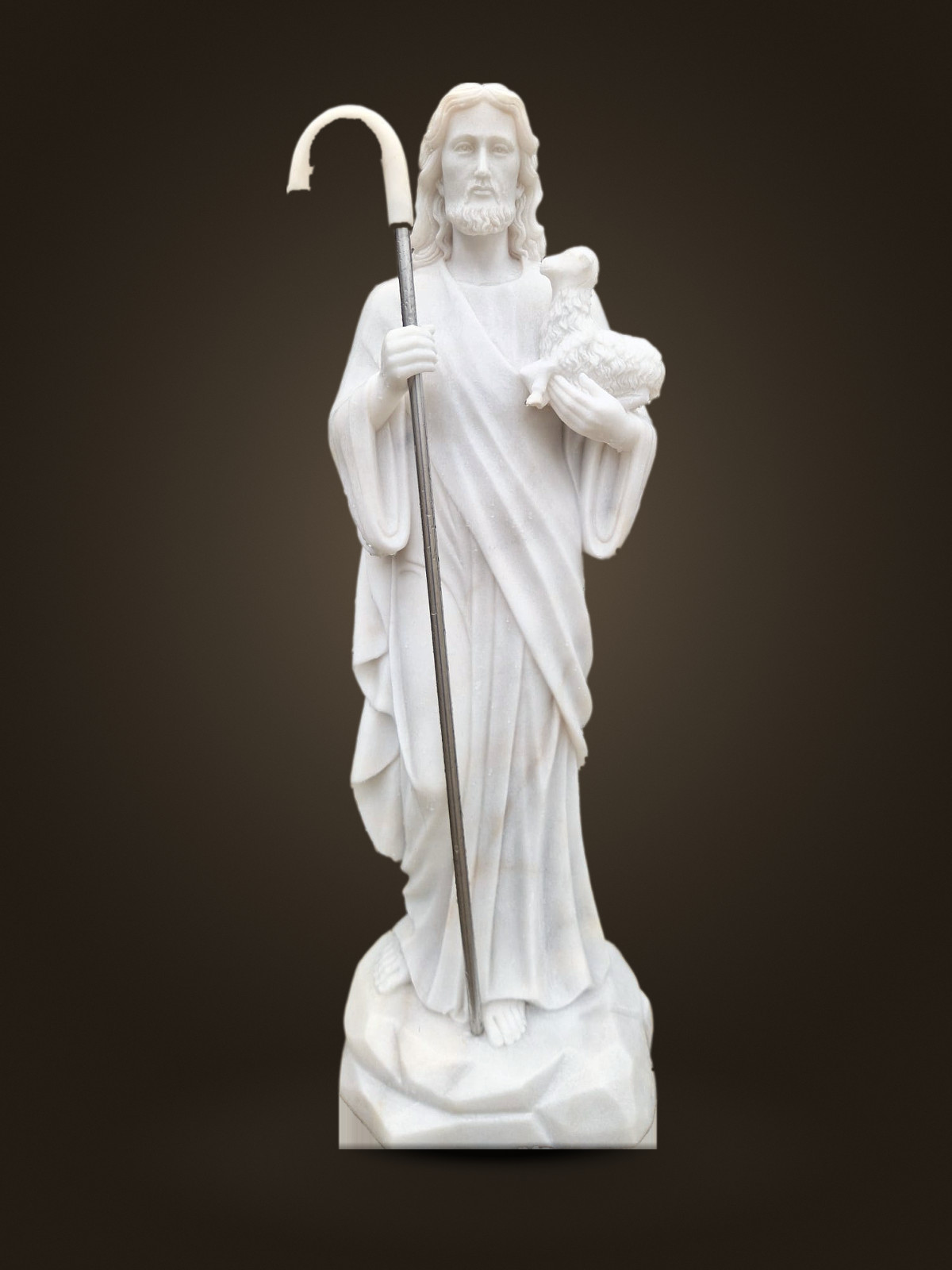
Jesus the Good Shepherd
Hand-carved marble
€1,700
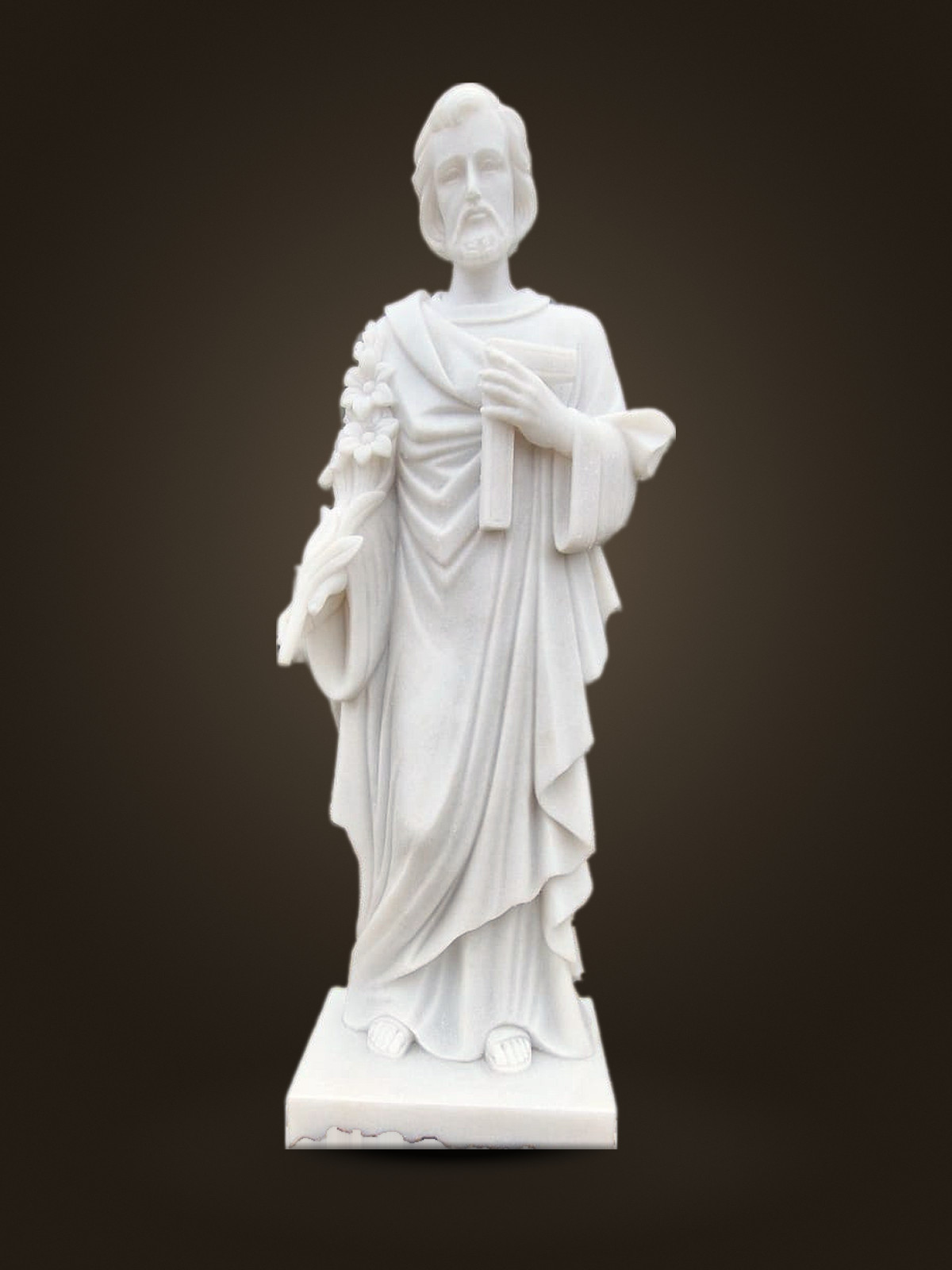
St Joseph
Hand-carved marble
€1,700
Siting a garden statue, step by step
Choose where it will be seen from
Stand at the kitchen window, the back door or the garden seat — wherever you will actually look at it — and place the statue facing that point. A statue at the far end of a lawn, facing the house, is the traditional arrangement for good reason.
Give it a backdrop
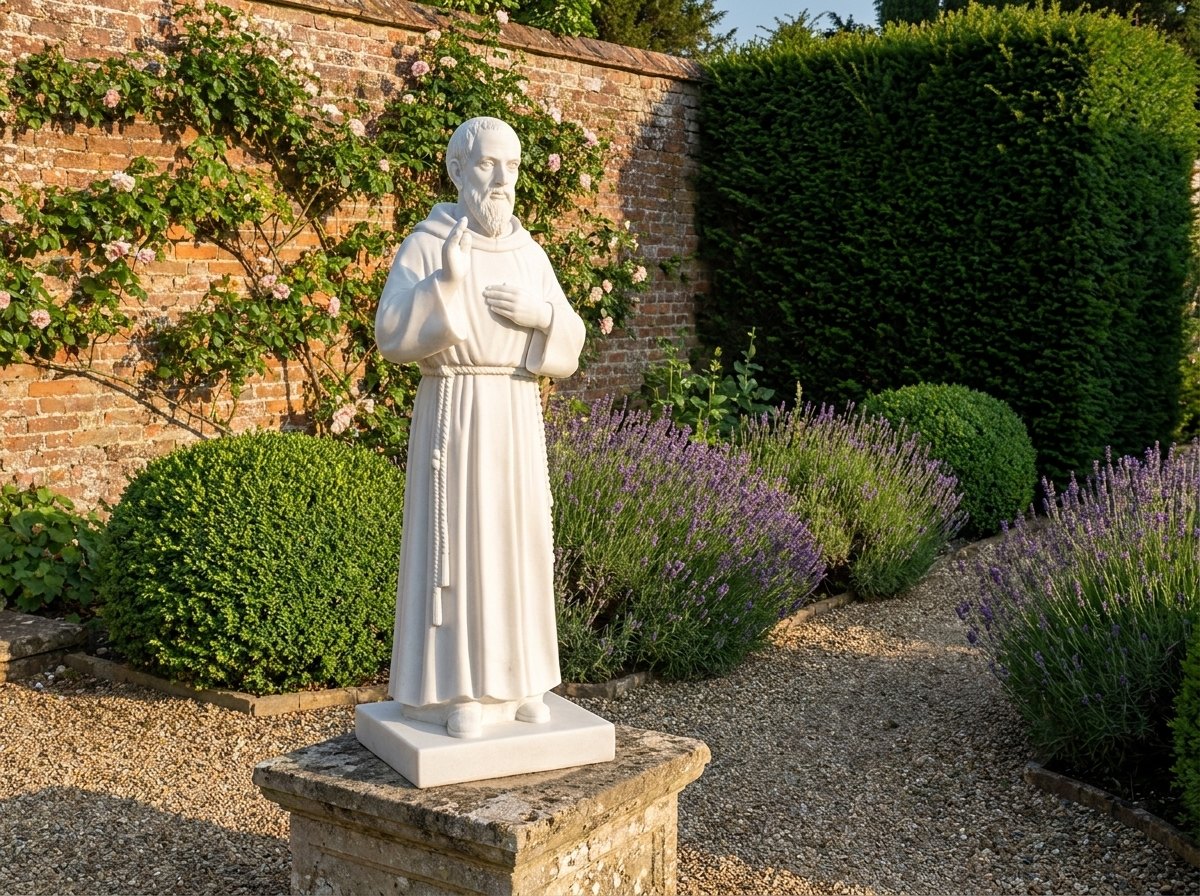
White marble looks its best against something dark: a hedge, a stone wall, ivy or a row of shrubs. Against a white house wall it disappears.
Build a level, solid base
Never stand a statue straight on grass or soil, which settles unevenly and tips it over time. Use a paving slab bedded on compacted hardcore, a concrete pad, or a stone plinth, checked with a spirit level.
Think about wind and people
In an exposed spot, or anywhere children play, fix the statue to its base with a suitable outdoor adhesive or have a builder secure it. Taller statues need this more than short ones.
Keep it clear of drips and sprinklers
Avoid placing it under a tree that drips sap and leaves, or where a gutter overflows on it. Constant wet is what turns a statue green.
Looking after it through the year
Marble outdoors needs very little. In spring, wash off any moss or algae gently with lukewarm water, a drop of mild soap and a soft brush, then rinse. Do not use a pressure washer, and keep vinegar, lemon, bleach and patio cleaners away from it — acids etch marble and leave it dull. Check the base each spring too: a slab that has sunk at one corner is the most common reason a garden statue leans.
Some families bring smaller statues indoors or into a porch for the worst of the winter, and that is never a bad idea. Painted resin especially keeps its colour longest out of strong sun and hard frost. Full care notes are on our story page.
Saints for the garden
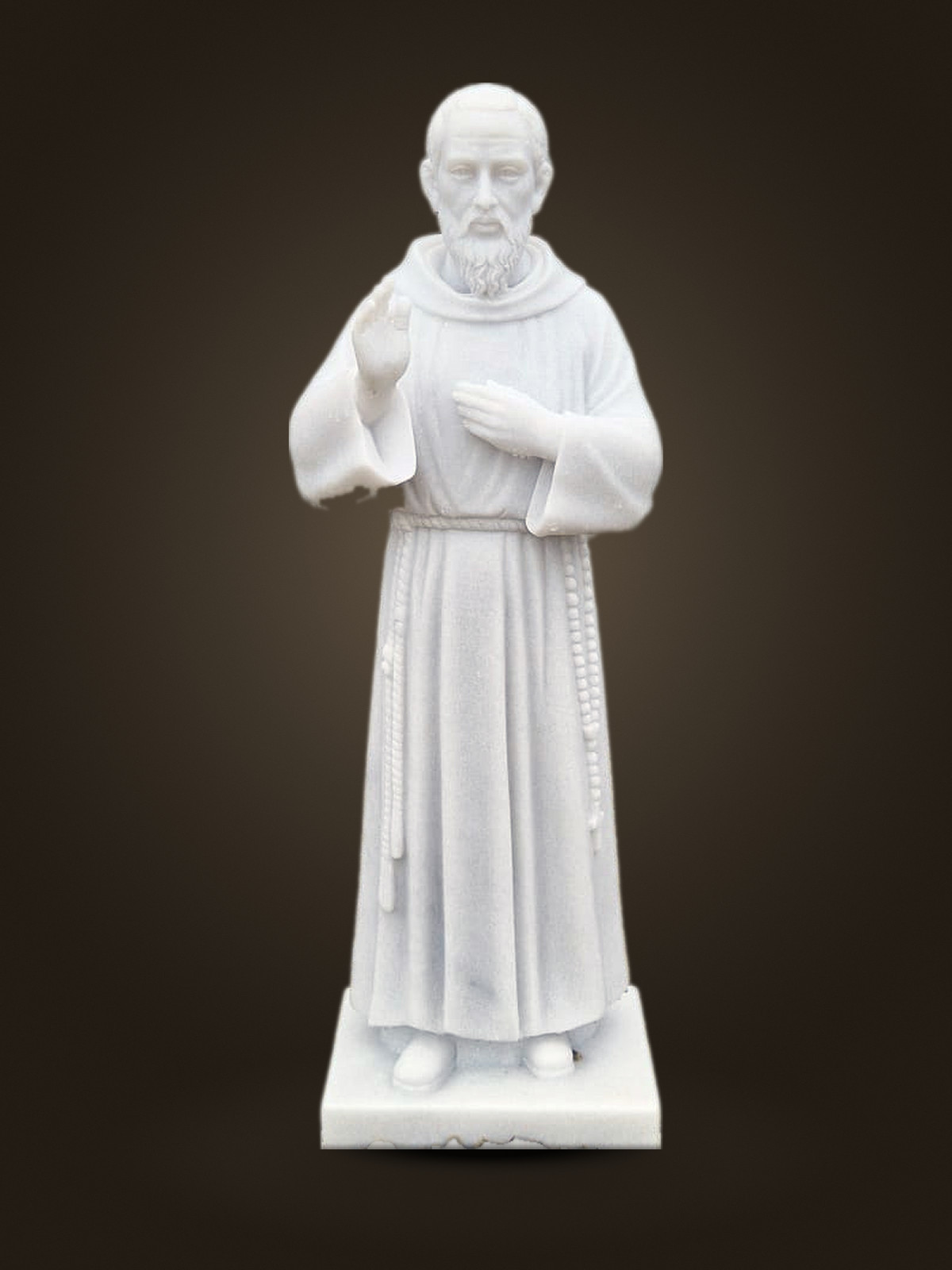
St Francis, who praised God for all creation, and the other saints often chosen to stand outside.
Garden statue questions
Can a religious statue stay outside all year in Ireland?
A marble statue on a level, solid base is made to. For any other piece, check that statue’s page or ask us; painted statues keep their colour longest in a sheltered spot.
What should I stand a garden statue on?
A level, solid base: a paving slab on compacted hardcore, a concrete pad or a stone plinth. Never straight on grass or soil, which settles and tips the statue over time.
How do I stop a garden statue going green?
Site it away from dripping trees and overflowing gutters, and in spring wash it gently with lukewarm water, a drop of mild soap and a soft brush. Never use bleach, acid cleaners or a pressure washer on marble.
Which saint is traditional for a garden?
Our Lady, above all, and St Francis of Assisi, patron of ecology. Many Irish gardens also have the Sacred Heart or a small grotto to Our Lady of Lourdes — see grotto statues.
How is a heavy marble garden statue delivered?
We deliver marble ourselves to any county in the Republic of Ireland, at the charge shown on each statue’s page. Tell us about access to the garden — steps, side gates, gravel — and have the base ready before it arrives.
Should I fix the statue to its base?
In an exposed or windy spot, or anywhere children play, yes. A suitable outdoor adhesive or fixing by a builder keeps it safe.
Can I put a statue on a grave?
Check the cemetery’s rules first, as many limit what can be placed on a grave. Our page on memorial statues has more.
Planning a statue for your garden?
Send us a photograph of the spot and we will suggest a statue and a size that suit it.
Updated
Read next
Grotto statues
Almost every Irish parish has one: a rock grotto with Our Lady of Lourdes in a niche above and St Bernadette kneeling below. Here is the story behind it, and how to choose statues for a grotto of your own.
Marble statues
Hand-carved marble is the statue that outlasts everyone who bought it. It is also heavy, dearer than resin and has its own needs. Here is the honest version, so you can decide whether it is right for you.
Large statues
A statue meant to fill a niche, stand at the end of a garden or be seen from the back of a church has to be bigger than people expect. Here is how to judge the size, and what to plan before a heavy statue arrives.
Memorial statues
When someone dies, a statue can do what flowers cannot: stay. Placed in the house, the garden or at the grave, it becomes the spot where a family keeps praying for the one they have lost.
Statues for the home
A statue in the house is a face to turn to at the start of the day and at the end of it. Here is how to choose one for a shelf, a sill or a prayer corner — and which statues Irish homes have kept for generations.