
Guide · Care
Caring for outdoor statues in Irish weather
Ireland is kind to stone in some ways and hard on it in others. Rain is constant, frost comes and goes, and wind off the Atlantic finds anything not fixed down. A little care at the start and once a year does most of the work.
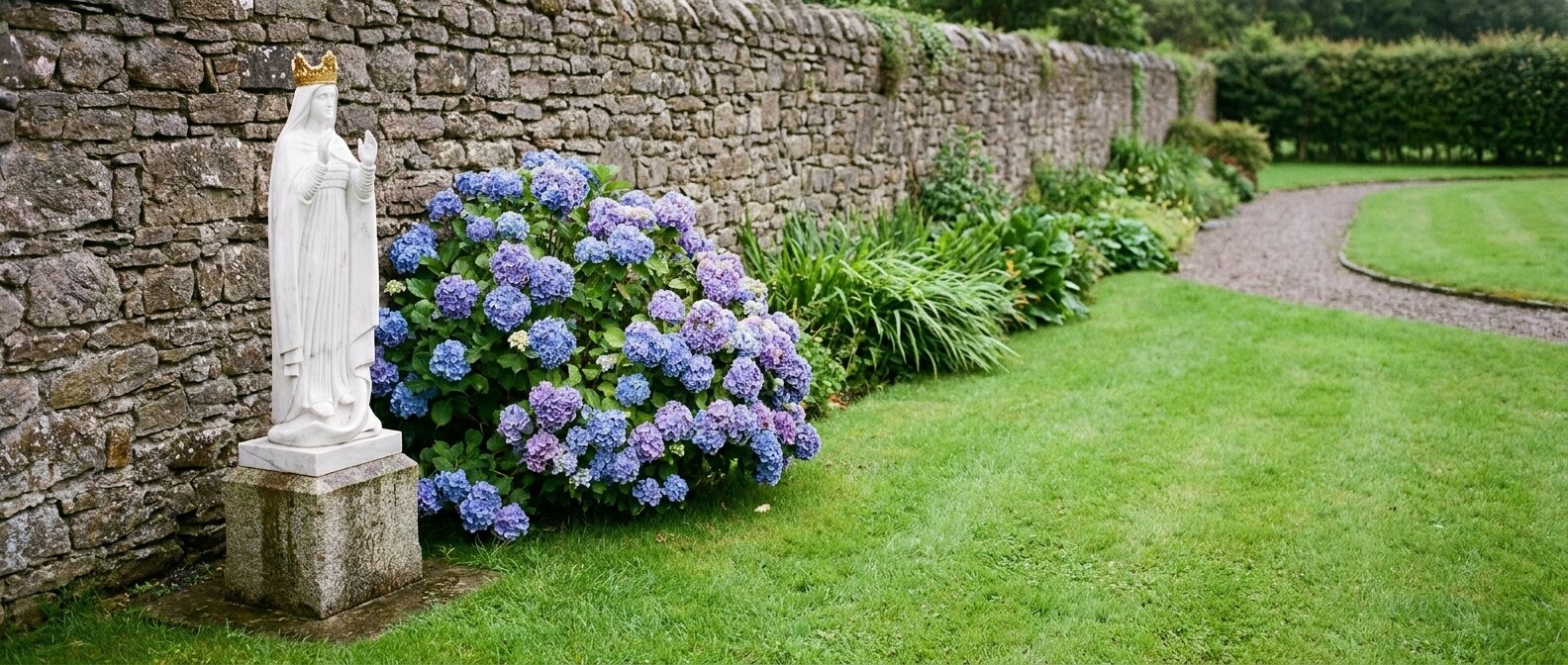
What the weather actually does
Irish weather is less extreme than it feels, but it is relentless. The main enemies of an outdoor statue here are standing water, the freeze-and-thaw cycle in winter, wind, and the green film of algae and moss that grows on anything damp and shaded. Direct sun matters less than in hotter countries, though over years it does soften painted colour.
Marble is the traditional material for statues that stand outside all year, and many Irish grottos and churchyards have marble figures that have been there for generations. Resin can stand outside when it is finished for it, but painted colour is the part that ages first; a sheltered spot keeps it freshest for longest. If you are not sure whether a particular resin piece is meant for outdoors, ask us before you place it.
Setting a statue outside properly
Choose the spot
Pick a place where water drains away rather than pooling, out of the drip line of a gutter or overhanging tree. A wall or hedge behind the statue gives a backdrop and some shelter from the prevailing wind.
Make a level, firm base
Stand the statue on a level paving slab, a concrete pad or a purpose-built plinth — not straight onto soil or gravel, which shift and let it tilt. A slight slope away from the statue helps water run off.
Secure it against wind and knocks
A heavy marble statue on a level base is very stable, but in an exposed site, or where children play, it is worth fixing it. A stonemason or builder can advise on a discreet fixing suited to the base.
Keep it off the wet
If the base of the statue sits in water after rain, raise it slightly. Water that sits against stone is what freezes and does damage in winter.
Think about winter
In a hard frost, a resin statue in an exposed spot is safer moved to a porch or shed. Marble on a well-drained base can stay where it is.
Cleaning marble outdoors
Wash off moss and algae gently once a year, ideally in spring, when the worst of the winter is over. Use lukewarm water with a drop of mild soap and a soft brush — a soft nailbrush or a washing-up brush works well — then rinse with clean water and let it dry.
Never use vinegar, lemon juice, bleach or descaling products on marble. Marble is a calcium-based stone and acids etch it, leaving a dull, rough surface that cannot be polished back at home. Avoid wire brushes, scouring pads and pressure washers, which can pit the surface and drive water into the stone. If a statue has heavy staining or lichen that will not shift with gentle washing, a stone conservator or a monumental mason is the right person to ask.
Looking after painted resin outdoors
Treat painted resin like a painted garden door: rinse it, do not scrub it. Wipe it down with a soft cloth and plain water, or a barely damp cloth with a drop of mild soap, and keep solvents and abrasive cleaners well away — they lift paint.
Over years, the colours of a resin statue that stands in the open will soften. That is normal. Moving it to a sheltered spot, a porch or a covered grotto slows the process a great deal. If the paint is chipped by a knock, it can be touched up, and our guide to cleaning and repairing indoor statues covers what is sensible to try at home.
A once-a-year routine
Spring
Gentle wash, check the base is still level, clear leaves and soil from around the plinth.
Summer
Trim back plants that have grown up against the statue; they hold moisture against it.
Autumn
Clear fallen leaves, check drainage, look for anything loose before the winter storms.
Winter
After a storm, check it is still upright and secure. Move small or exposed resin pieces under cover in hard frost.
Statues for the garden
Marble and outdoor pieces from the catalogue. Each statue page says what it is made of and gives its weight.

Our Lady of Lourdes and St Bernadette
Hand-painted resin · the pair
€240
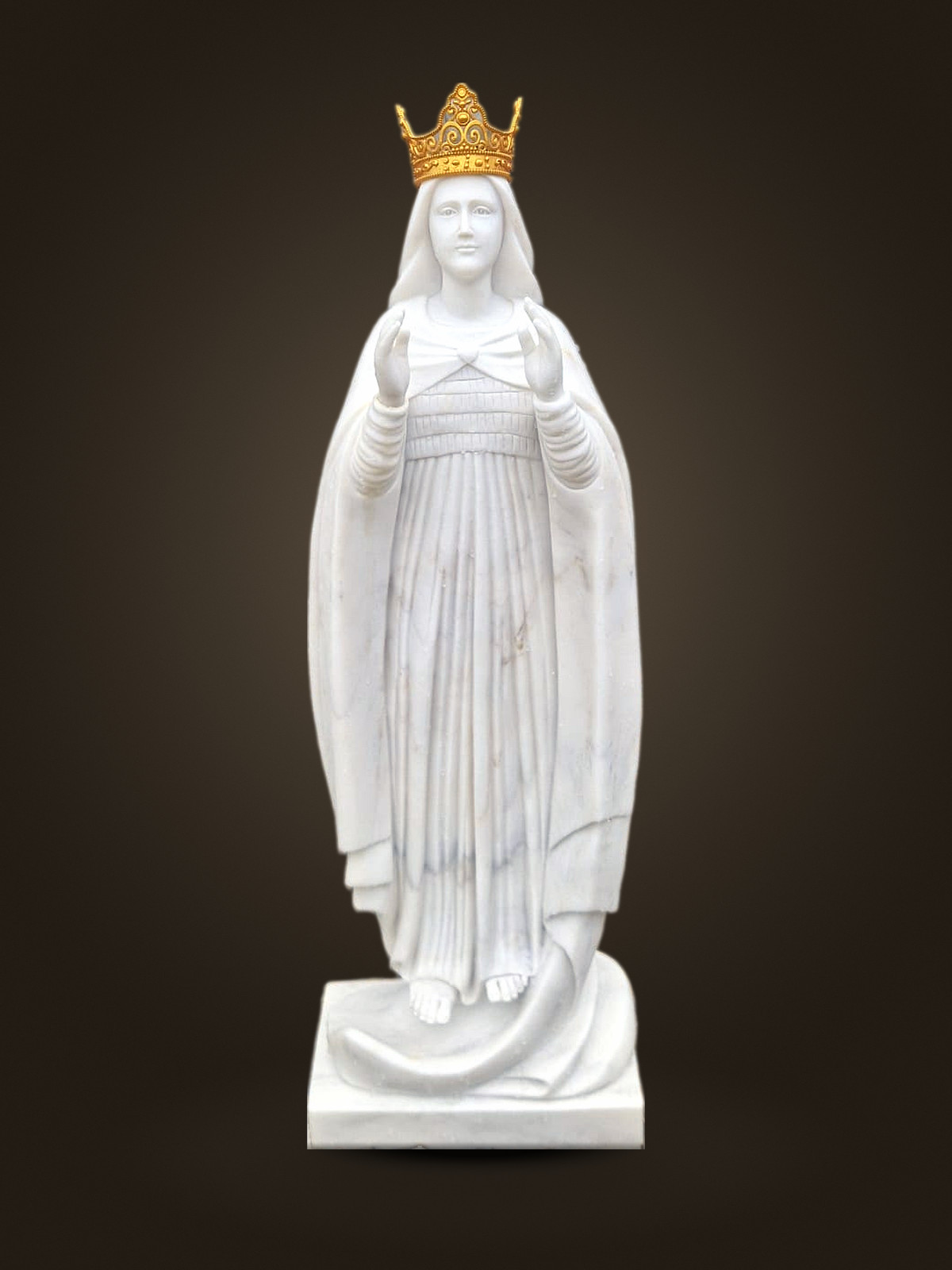
Our Lady of Knock
Hand-carved marble
€1,600
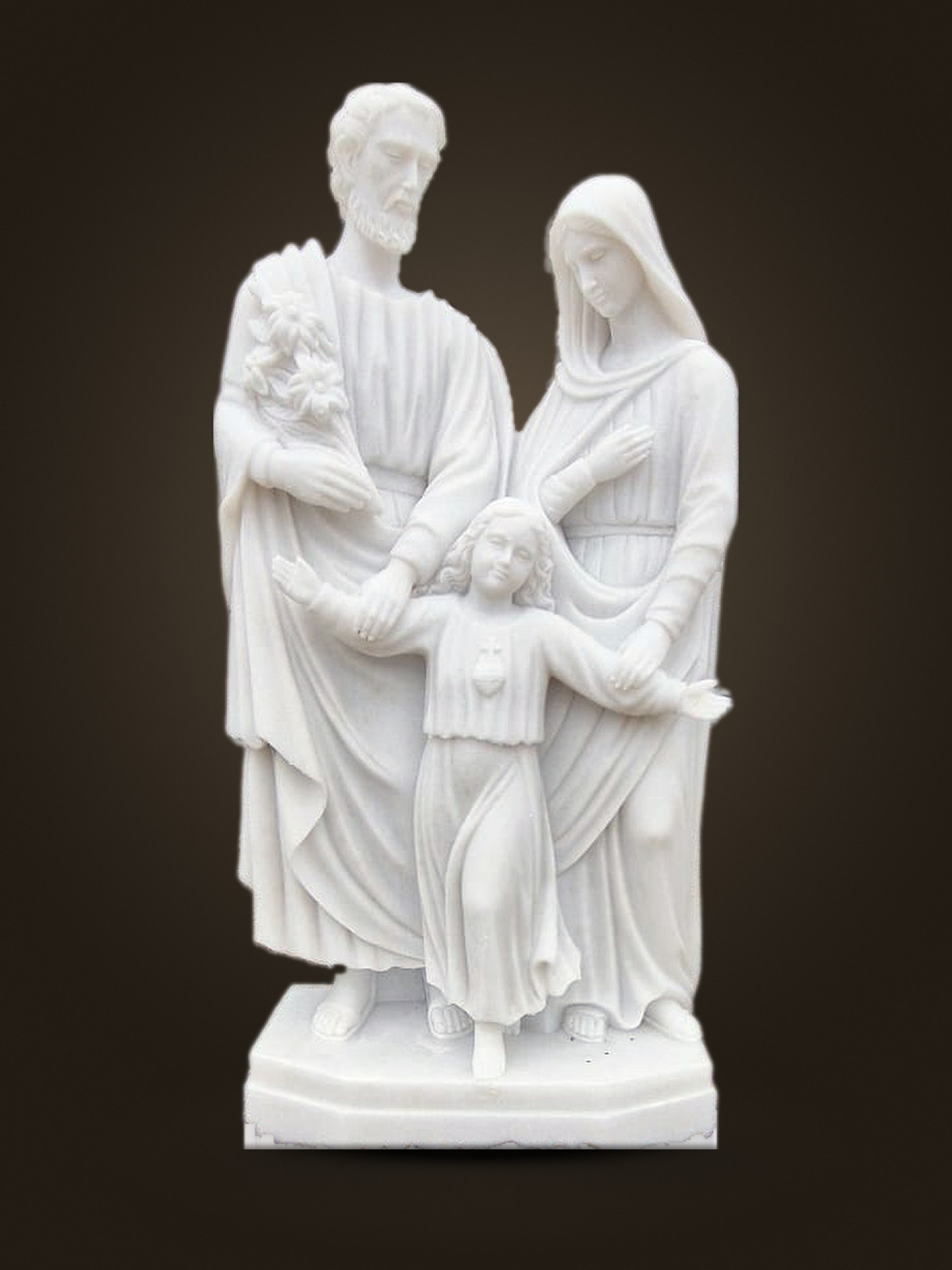
Holy Family
Hand-carved marble
€2,800
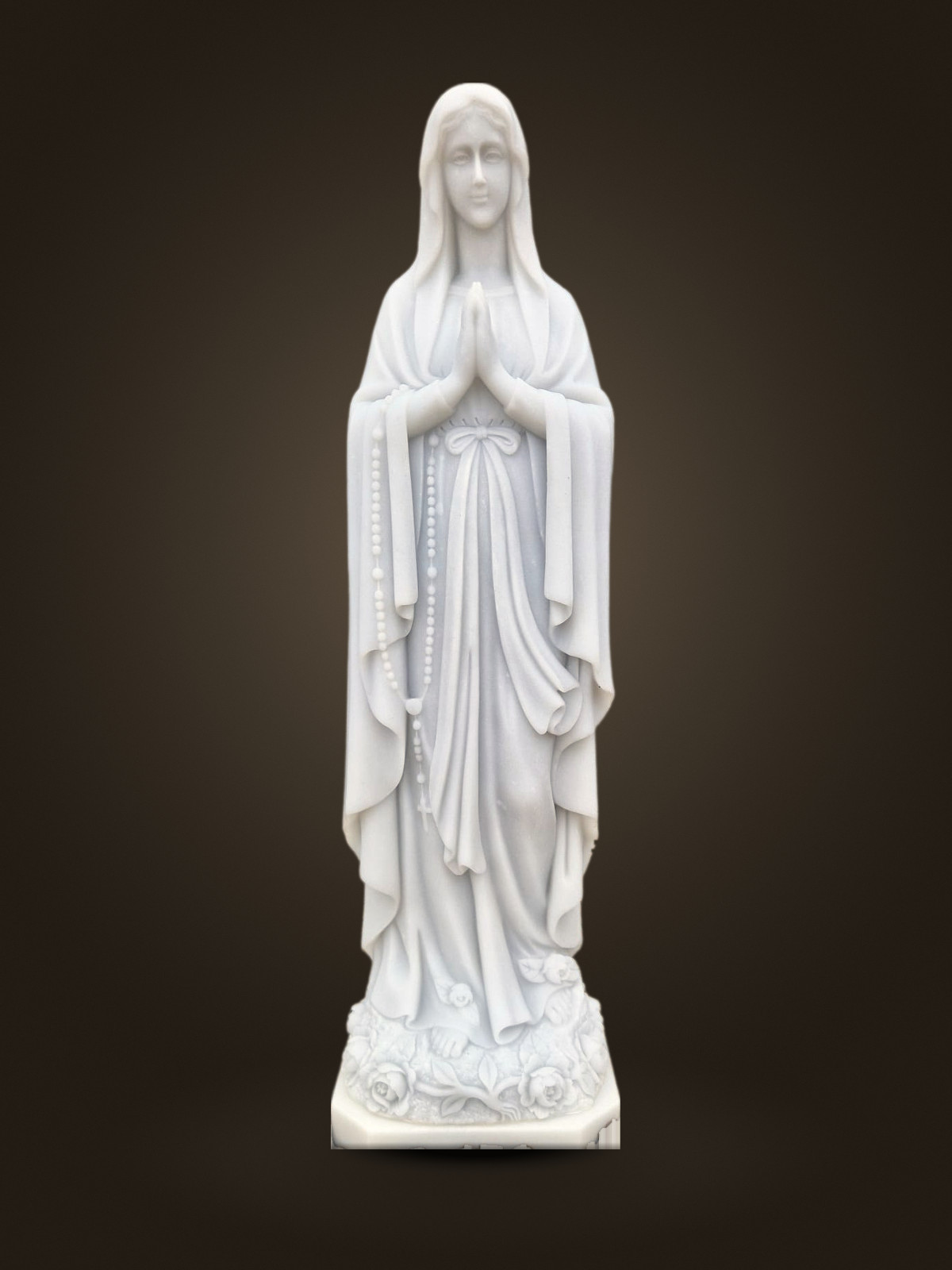
Our Lady of Lourdes (Fine Detail)
Hand-carved marble · 3ft 3in
€2,400
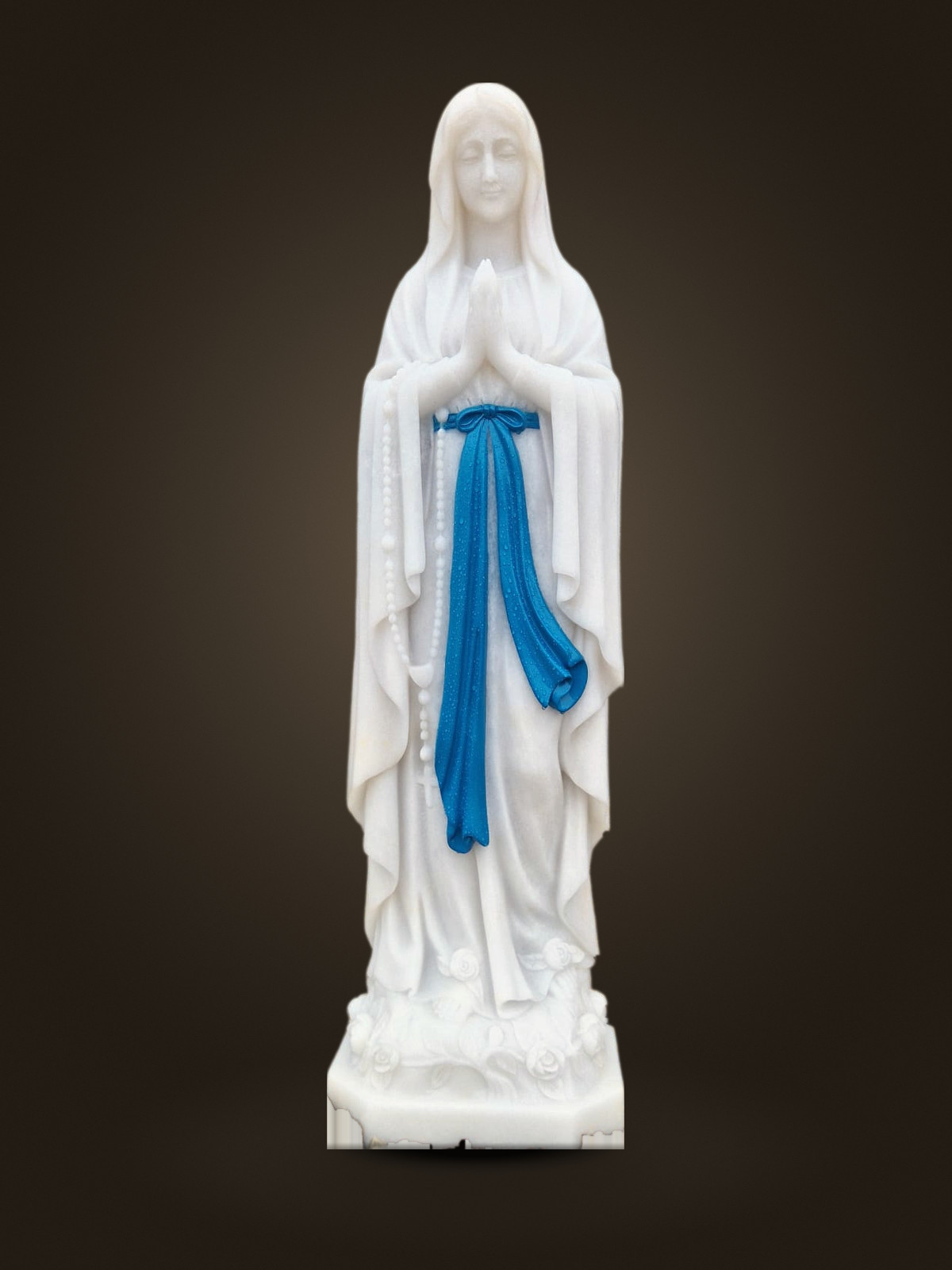
Our Lady of Lourdes (Blue Ribbon)
Hand-carved marble · blue ribbon
€2,100
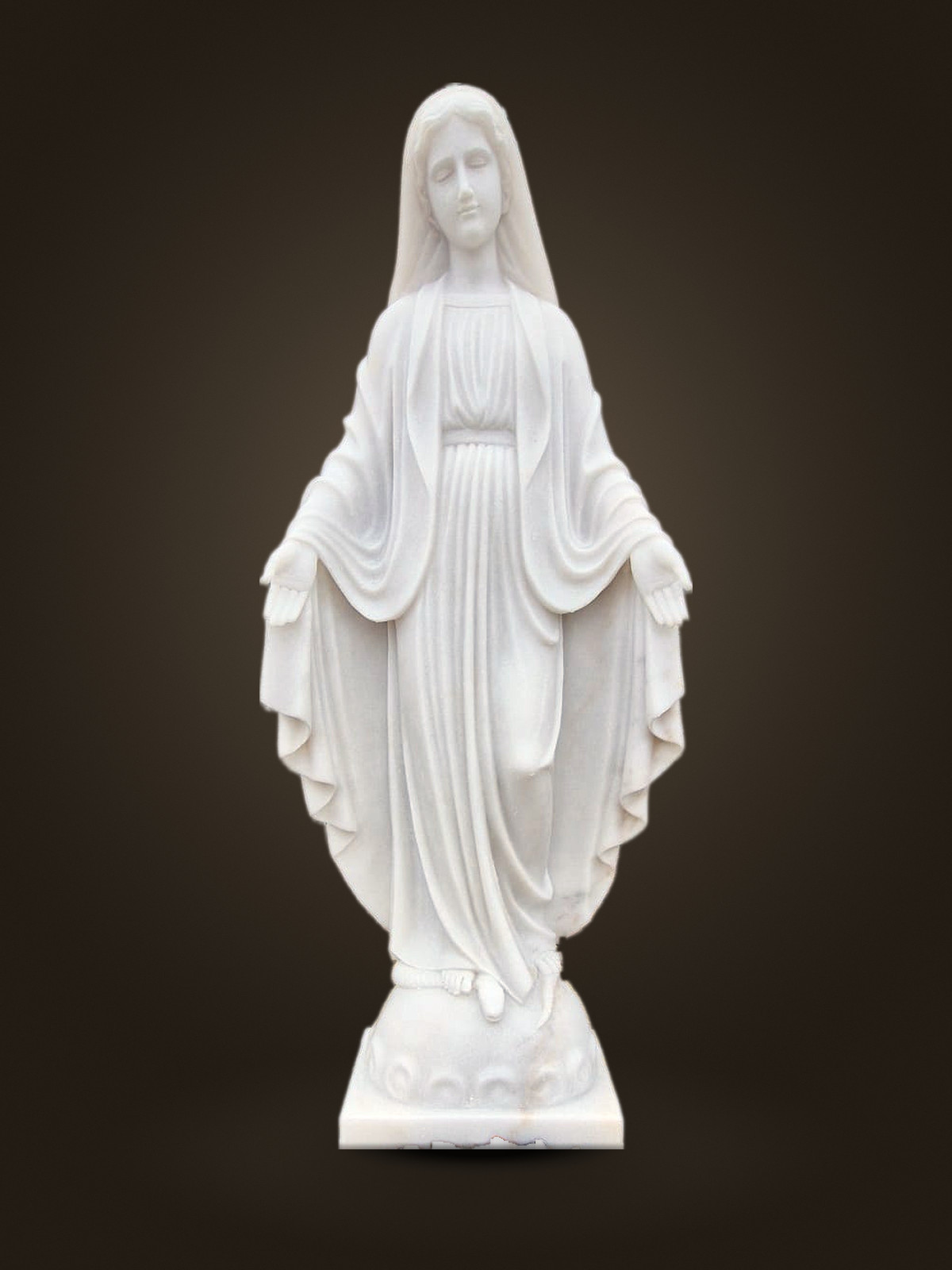
Our Lady of Grace
Hand-carved marble
€2,150
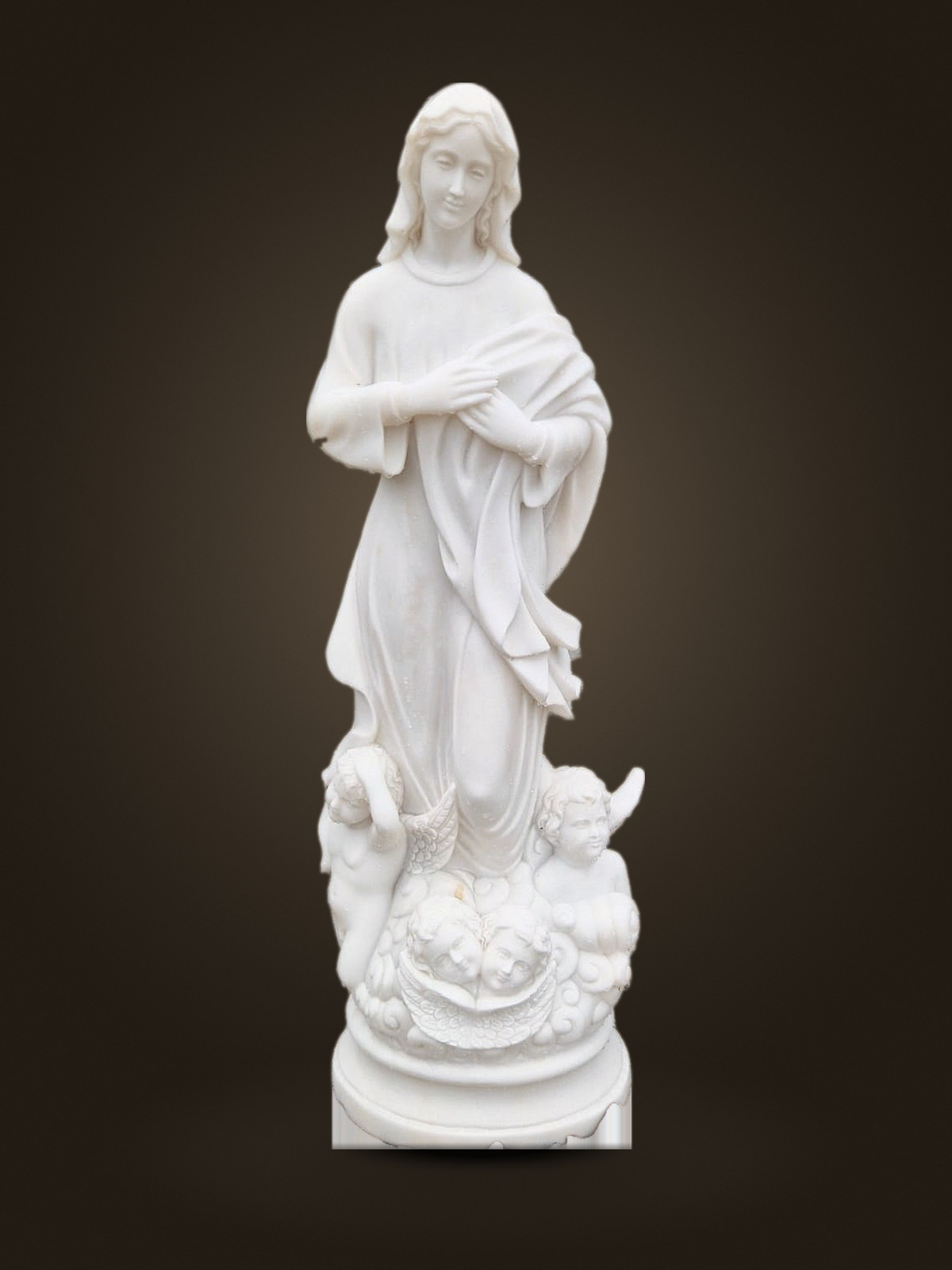
Our Lady of the Assumption
Hand-carved marble
€1,800
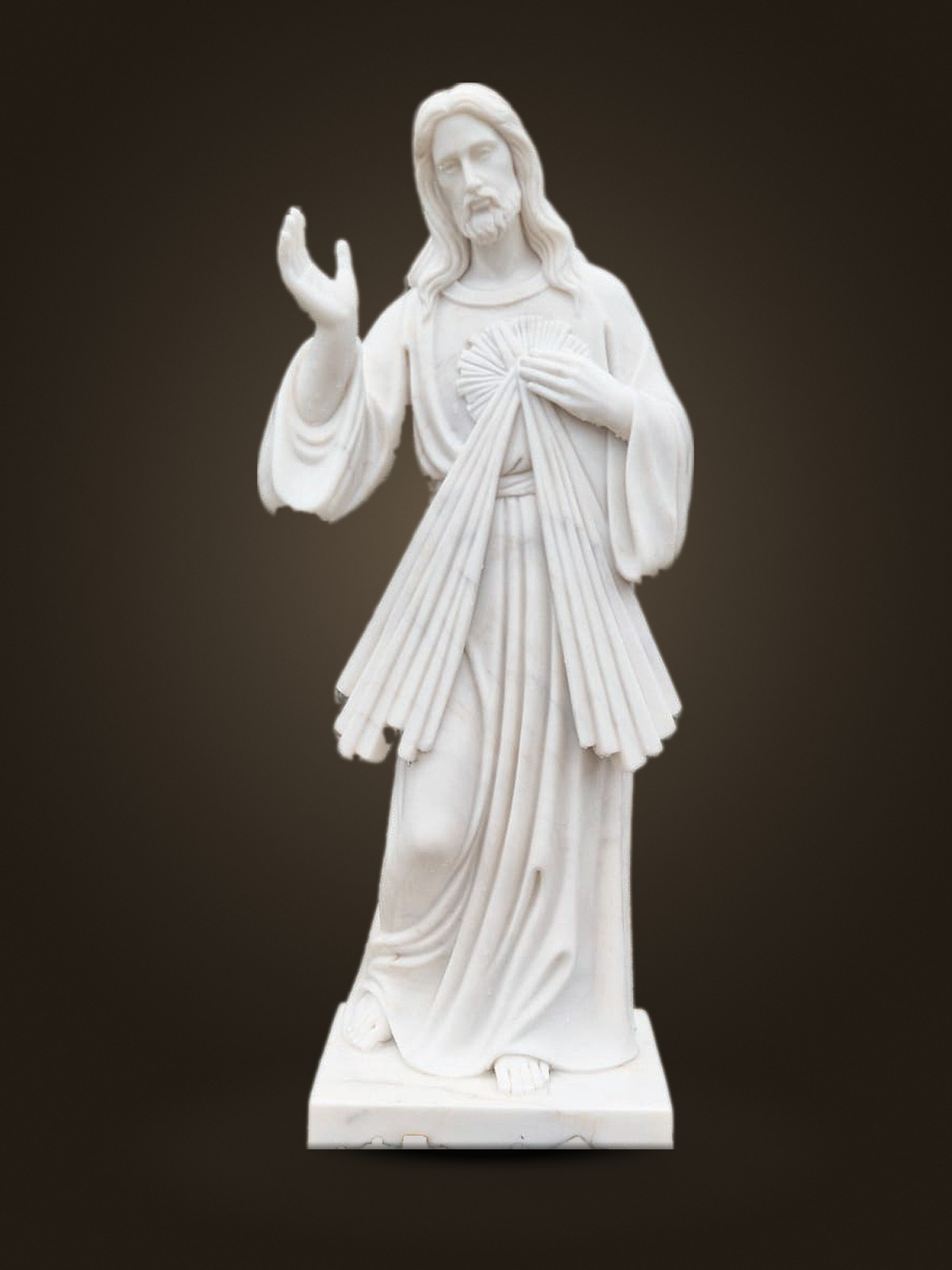
The Divine Mercy
Hand-carved marble
€1,650
Questions people ask
Will a marble statue crack in an Irish frost?
Marble that drains well and stands on a level base copes with Irish winters, which is why it has been used outdoors here for so long. Damage comes when water sits against or inside the stone and freezes, so good drainage matters more than anything.
Should I seal or varnish a marble garden statue?
Generally, no. Sealers can trap moisture or yellow over time, and marble that stands outside is better left to breathe and washed gently once a year. If you want a sealer for a particular reason, ask a stone specialist about one made for marble.
Can I use a pressure washer?
We would not. A pressure washer can roughen the surface of marble and strip paint from resin. A soft brush and lukewarm water take longer but do no harm.
The statue has gone green — what do I do?
That is algae, and it is common on anything shaded and damp in Ireland. Wash it off gently with lukewarm water, a drop of mild soap and a soft brush. Never use bleach on marble.
Do you deliver heavy marble statues to the garden?
We deliver marble ourselves to any county in Ireland; the charge is on each statue’s page. Talk to us about access before delivery day if the statue has to go round the back of the house.
Read next
Updated
Read next
Garden statues
A statue of Our Lady in the garden is one of the oldest sights in Ireland. Getting one to look right — and keep it standing straight winter after winter — is mostly about the base, the spot and the material.
Making a garden grotto
Grottos to Our Lady are part of the Irish landscape — at crossroads, outside schools and churches, in front gardens. A small one at home is within reach of anyone with a free corner and a weekend.
Resin vs marble
Both materials make a good statue. They make different statues, though, and the right one depends on where it will stand, who will move it and how long you mean it to last.
Grotto statues
Almost every Irish parish has one: a rock grotto with Our Lady of Lourdes in a niche above and St Bernadette kneeling below. Here is the story behind it, and how to choose statues for a grotto of your own.