
Guide · Devotion
The Sacred Heart in Irish homes: enthronement, the lamp and the First Fridays
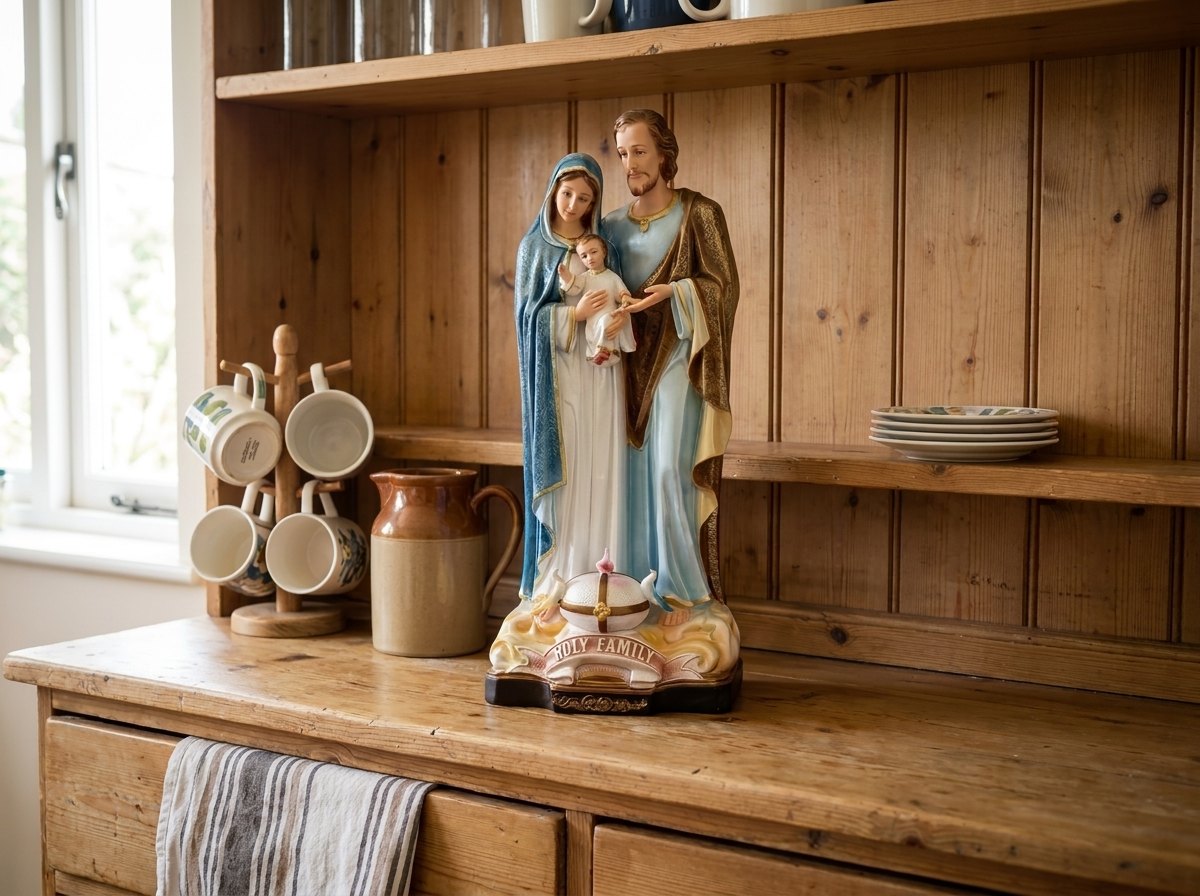
For generations, the Sacred Heart picture in the kitchen, with its small red lamp and the family’s names written underneath, was as much a part of an Irish home as the range. The devotion behind it is easy to renew.
Where the devotion comes from
Devotion to the Heart of Jesus is as old as meditation on the pierced side of Christ on the Cross. Its modern form comes from the visions of St Margaret Mary Alacoque, a Visitation nun at Paray-le-Monial in France, between 1673 and 1675. She saw Christ showing His Heart, burning with love, crowned with thorns and surmounted by a cross, and heard Him lament that it was so little loved in return.
Through her, and her Jesuit director St Claude de la Colombière, the devotion spread: reparation for sin, Holy Communion on the first Friday of the month, an hour of prayer on Thursday night, and a feast of the Sacred Heart. The feast was extended to the whole Church in 1856, and is kept as a solemnity on the Friday after the second Sunday after Pentecost.
The Sacred Heart in Ireland
Ireland took the Sacred Heart to itself. The picture hung in the kitchen, the room where the family actually lived, with a small red lamp burning before it day and night. Below it, in many homes, was a certificate recording the day the house was consecrated, signed by the priest and listing the names of everyone in the family — with new names added as children were born. The Irish Jesuits’ Sacred Heart Messenger came into countless homes every month, and the Pioneer Total Abstinence Association, founded in Dublin in 1898, took the Sacred Heart for its patron.
The lamp is the detail people remember. It was a sign that the house belonged to the Lord, and a reminder that someone was keeping watch. Many people who grew up with it, and now have homes of their own, want to bring the custom back — often with a statue rather than a picture, and with an electric lamp rather than an oil one.
What enthronement means
Enthronement of the Sacred Heart is the family’s public acknowledgement that Christ is king of their home. It was spread worldwide in the early twentieth century by Fr Mateo Crawley-Boevey, a priest of the Congregation of the Sacred Hearts, who began the work after praying at Paray-le-Monial in 1907, with the encouragement of Pope St Pius X.
It is not a one-off ceremony so much as a beginning: the image is given a place of honour, the family consecrates itself to the Sacred Heart, and from then on the image is where the family prays. Among the promises Our Lord made through St Margaret Mary is that He would bless every place where an image of His Heart is set up and honoured.
Enthroning the Sacred Heart at home
Choose the image and the place
A picture or a statue of the Sacred Heart, in the room where the family spends most time — often the kitchen or living room. Give it a shelf or bracket of its own, with room for a lamp or candle.
Prepare
Many families make a short preparation: Confession and Holy Communion, perhaps a novena beforehand. Decide on a date — a First Friday, the feast of the Sacred Heart, or a family anniversary.
Invite the priest
Ask your parish priest to come and bless the image and lead the enthronement. If he cannot come, he can bless the statue beforehand and the family can make the act of consecration together.
Make the consecration
The family gathers before the image; the statue is blessed and set in place; everyone says the Creed and an act of consecration to the Sacred Heart; the names of the family are written on a certificate kept beside it.
Light the lamp
A small red lamp or candle before the image. An electric lamp is safer and can stay on; keep any flame well away from a statue.
Keep it
Pray before it: grace before meals, night prayers, a short act of trust when you pass. Renew the consecration each year on the anniversary.
The First Fridays
Among the promises made to St Margaret Mary is the “great promise”: that those who receive Holy Communion on the first Friday of nine consecutive months will not die without the grace of final repentance. Generations of Irish children and adults made the Nine First Fridays, and many parishes still have Mass, Confession and Adoration on the First Friday.
The simplest prayer of the devotion, said by countless Irish people as they pass the picture or the statue, is a single line: “Sacred Heart of Jesus, I place all my trust in Thee.”
Statues of the Sacred Heart
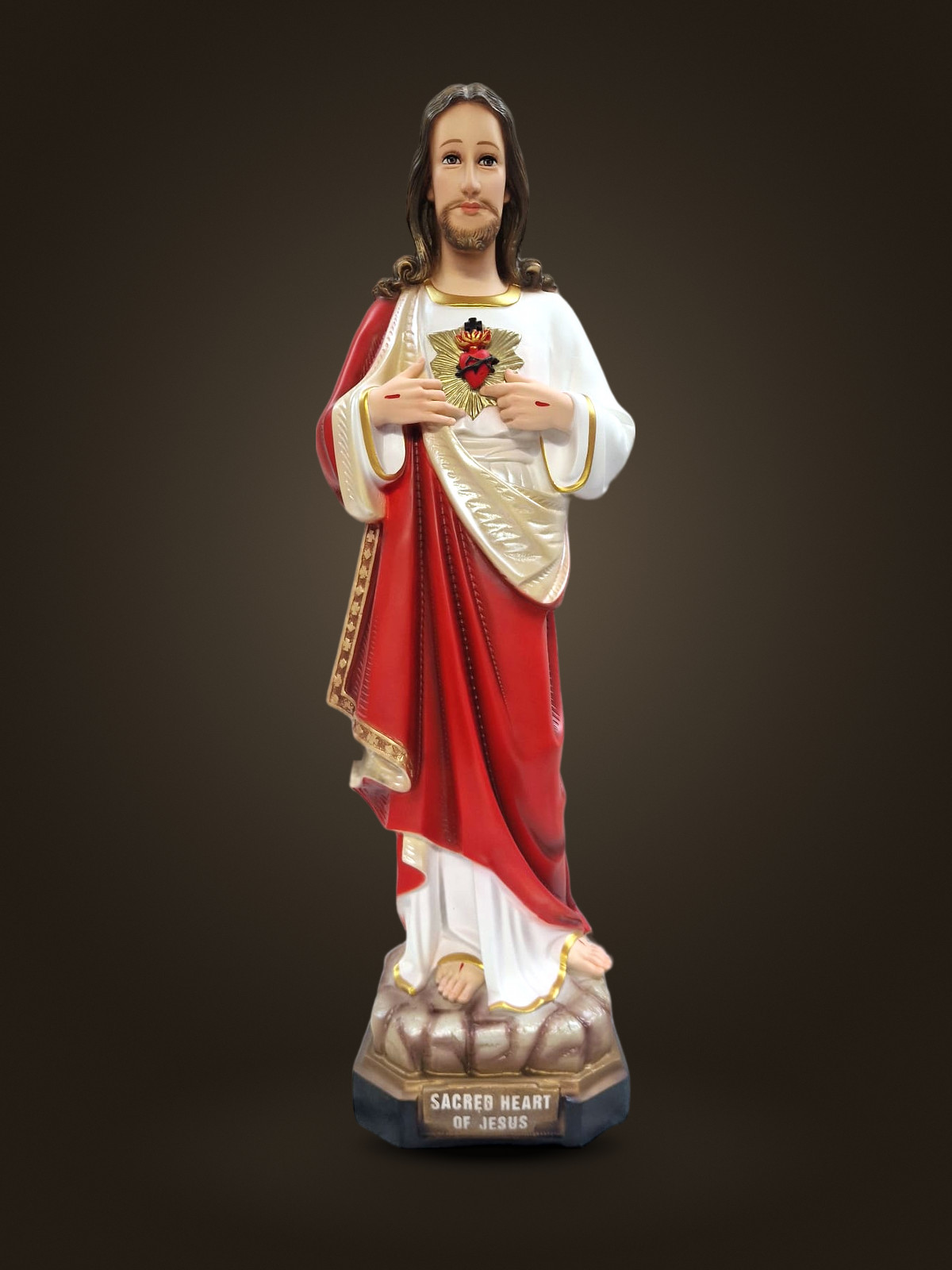
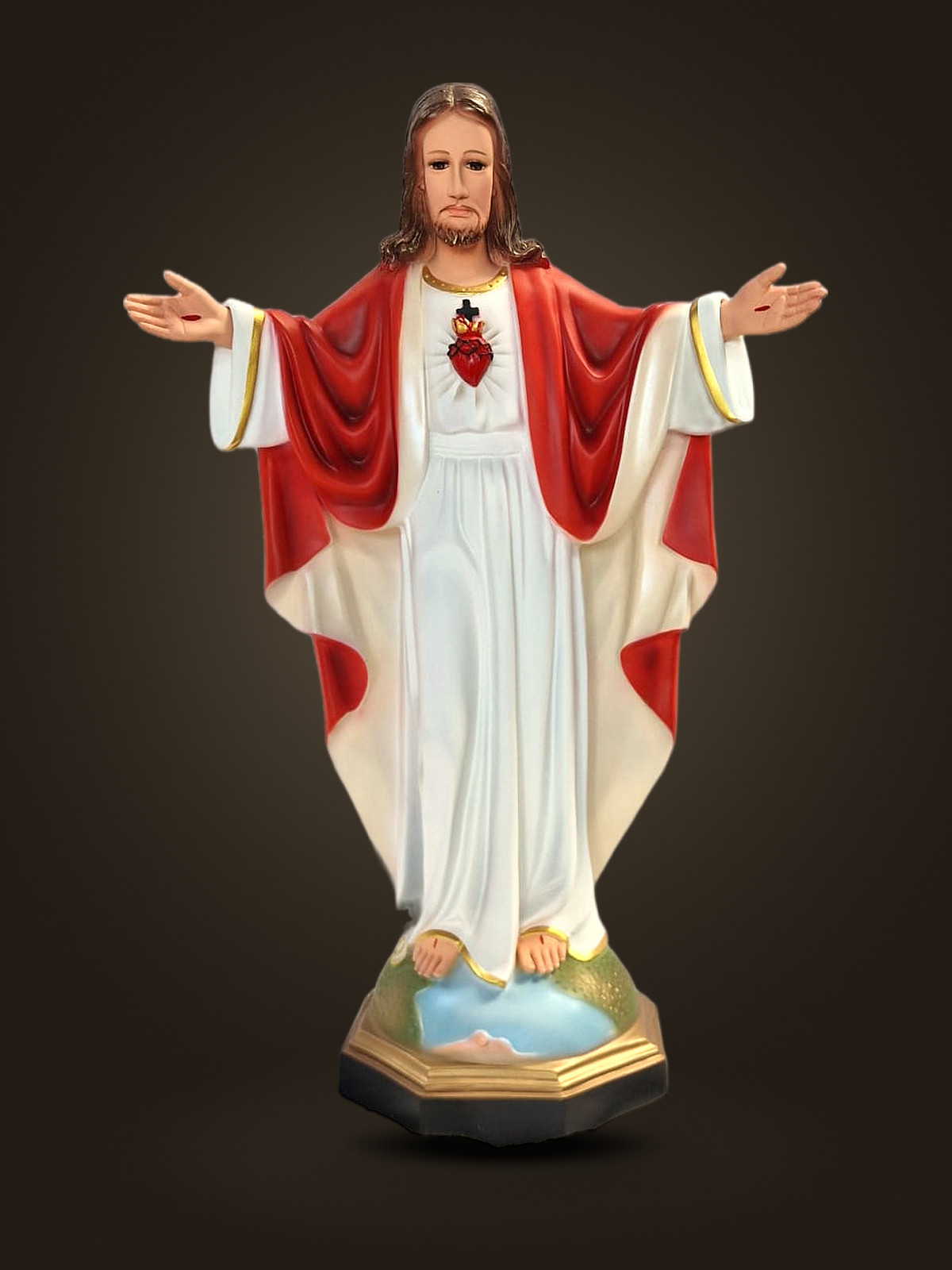
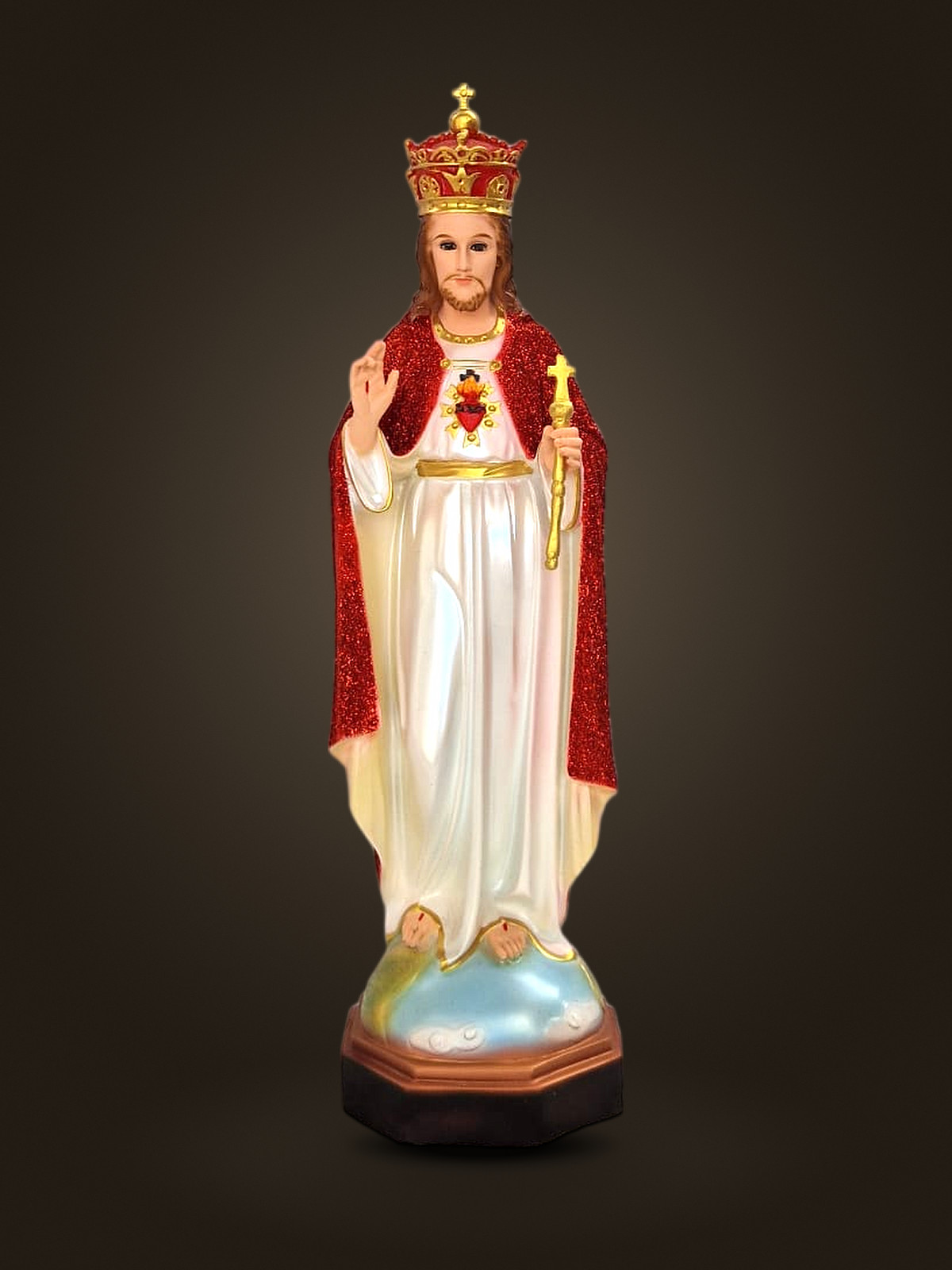
In hand-painted resin and hand-carved marble, as they stand in the catalogue today.
Questions people ask
Should it be a statue or a picture?
Either. The Irish custom was usually a picture, but a statue does just as well, and many families now prefer one. What matters is that it has a place of honour and that the family prays before it.
Can we enthrone the Sacred Heart without a priest?
The priest’s presence is traditional and best, especially to bless the image. If he cannot come, have the statue blessed beforehand and make the consecration together as a family.
When is the feast of the Sacred Heart?
It is a moveable solemnity, on the Friday after the second Sunday after Pentecost — usually in June.
What are the Nine First Fridays?
Receiving Holy Communion, in a state of grace and in a spirit of reparation, on the first Friday of nine consecutive months, in response to the promise made to St Margaret Mary.
Is a Sacred Heart statue a good house-warming gift?
It is one of the most traditional. Pair it with an offer to arrange the house blessing. See house blessing gifts and wedding gifts.
Read next
Updated
Read next
Blessing a statue
A statue is traditionally blessed when it is first set in place, at home or in church. It takes a few minutes, it costs nothing, and your parish priest will gladly do it.
Statues for the home
A statue in the house is a face to turn to at the start of the day and at the end of it. Here is how to choose one for a shelf, a sill or a prayer corner — and which statues Irish homes have kept for generations.
House blessing gifts
For generations the first thing hung or set up in an Irish home was the Sacred Heart. A statue for a new house carries on that custom, and gives the house blessing a focus.
Divine Mercy
Jesus in a white robe, one hand raised in blessing, two rays streaming from His heart, and five words beneath: “Jesus, I trust in You.” The Divine Mercy image is now one of the best-loved in Ireland.