
Guide · Devotion
Blessing a religious statue: what the Church provides and how to ask
A statue is traditionally blessed when it is first set in place, at home or in church. It takes a few minutes, it costs nothing, and your parish priest will gladly do it.
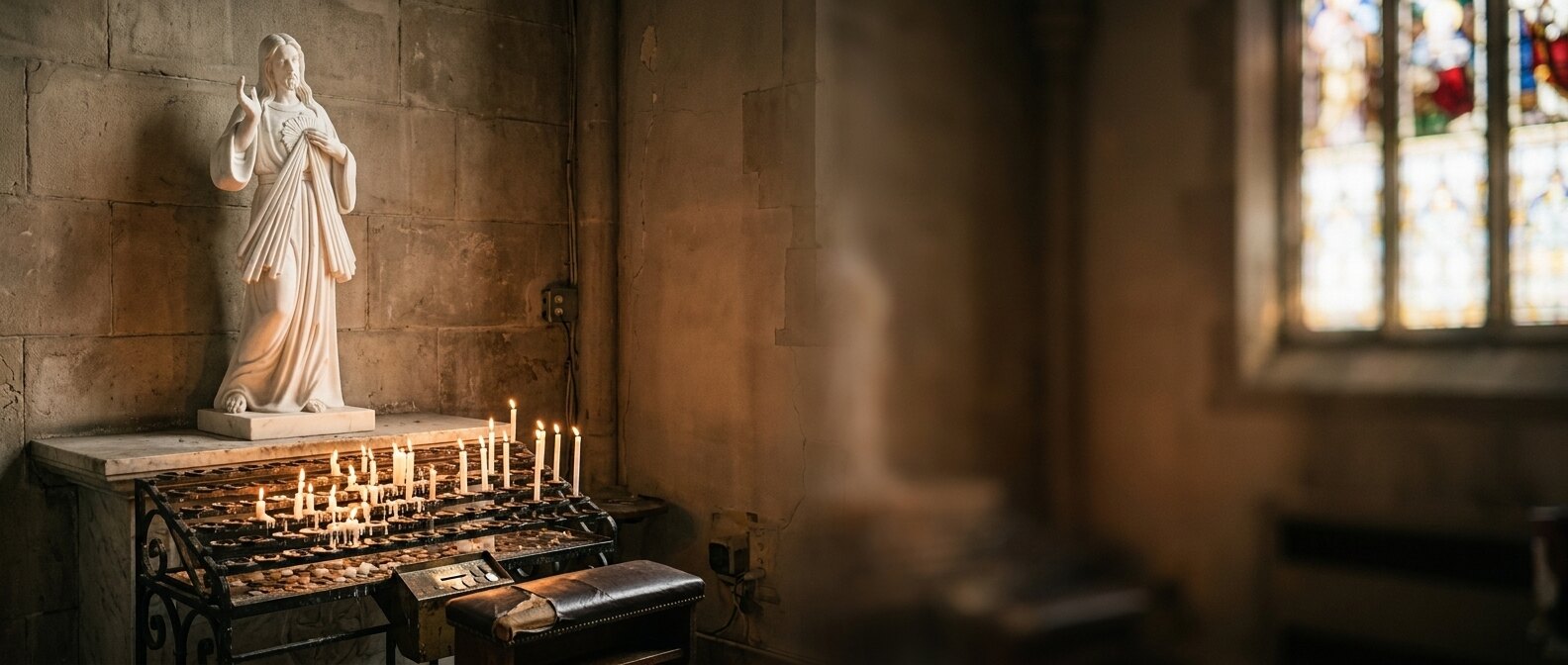
Why Catholics bless statues
A blessing does not turn a statue into something magic, and an unblessed statue is not useless. What a blessing does is set the object apart for prayer: the Church prays over it, asks God that those who look on it may grow in faith and love, and dedicates it to a holy use. From then on it is treated with the reverence due to a sacred object.
Catholics do not worship statues. The image points beyond itself — to Christ, to Our Lady, to the saint it shows — in the way a photograph of a parent on the mantelpiece points to the person. The Church has always taught that the honour given to an image passes to the one it represents.
What the Book of Blessings provides
The Church’s official book of blessings, issued in Latin in 1984 as De Benedictionibus and in English as the Book of Blessings, contains orders for blessing all kinds of things, from homes and families to fields, tools and vehicles. Two parts concern statues.
For a statue that will stand in a church, chapel or oratory for public veneration, there is an order for blessing images for public veneration by the faithful. It is usually celebrated with the community present, sometimes within Mass, with readings from Scripture, a prayer of blessing and, where it is the custom, incense.
For a statue for the home, or any small object of devotion — a rosary, a medal, a crucifix, a holy picture — there is an order for blessing religious articles, which can be very short: a greeting, a brief reading or verse, the prayer of blessing, and the sprinkling of holy water. In practice many priests use this shorter form for a home statue, often right after Mass or at the door of the sacristy.
How to have your statue blessed
Ask your parish priest
Ring the parish office or catch the priest after Mass. Blessings of religious articles are given by a priest or a deacon; there is no charge, and no form to fill in.
Bring it, or invite him home
A small statue can be brought to the church — many priests will bless it after Mass. A large statue, or one already set in a garden or grotto, can be blessed where it stands, and many families combine it with a house blessing.
Prepare the place
At home, clear the shelf or table, put a cloth down if you like, and have a candle ready. Gather the family; children often remember the day.
Take part in the prayers
The blessing is short. Answer the responses and join in the prayer; it is a family prayer as much as the priest’s.
Begin using it
The best thing to do with a blessed statue is to pray in front of it — a decade of the Rosary, a morning offering, a moment of thanks at night.
Blessing a statue for a parish, school or community
When a new statue is installed in a church, school or convent, the blessing is often a small occasion of its own: a feast day, the parish’s patronal feast, or the start of the May devotions. The parish priest, the school chaplain or the community’s chaplain will advise on the rite, and whether it is best done within Mass.
If you are organising it, it helps to have the statue in place and stable before the day, a small table for holy water and candles, and someone to read. For a memorial statue, the family may want a short reading and the names of those remembered. See church statues, statues for schools and memorial statues.
A short prayer before a statue
Any established prayer is fitting. Before a statue of Our Lady, many Irish families say the Memorare, or simply the Hail Mary. Before the Sacred Heart: “Sacred Heart of Jesus, I place all my trust in Thee.” Before a saint, their own prayer, or simply: “Saint N., pray for us.”
Statues for the home and parish
When yours arrives, your own parish priest can bless it where it will stand.
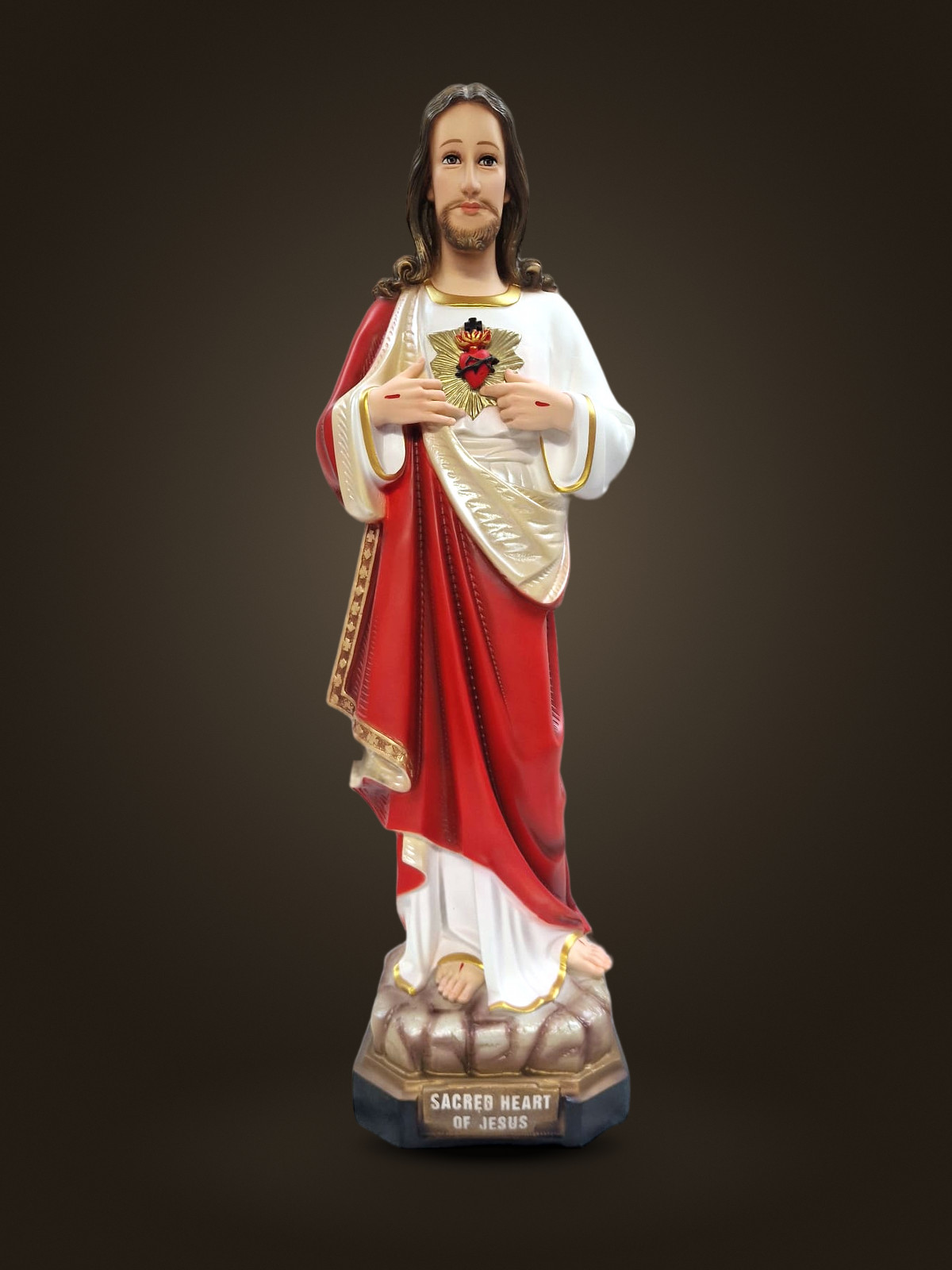
Sacred Heart of Jesus
Hand-painted resin · plain or glitter
From €60
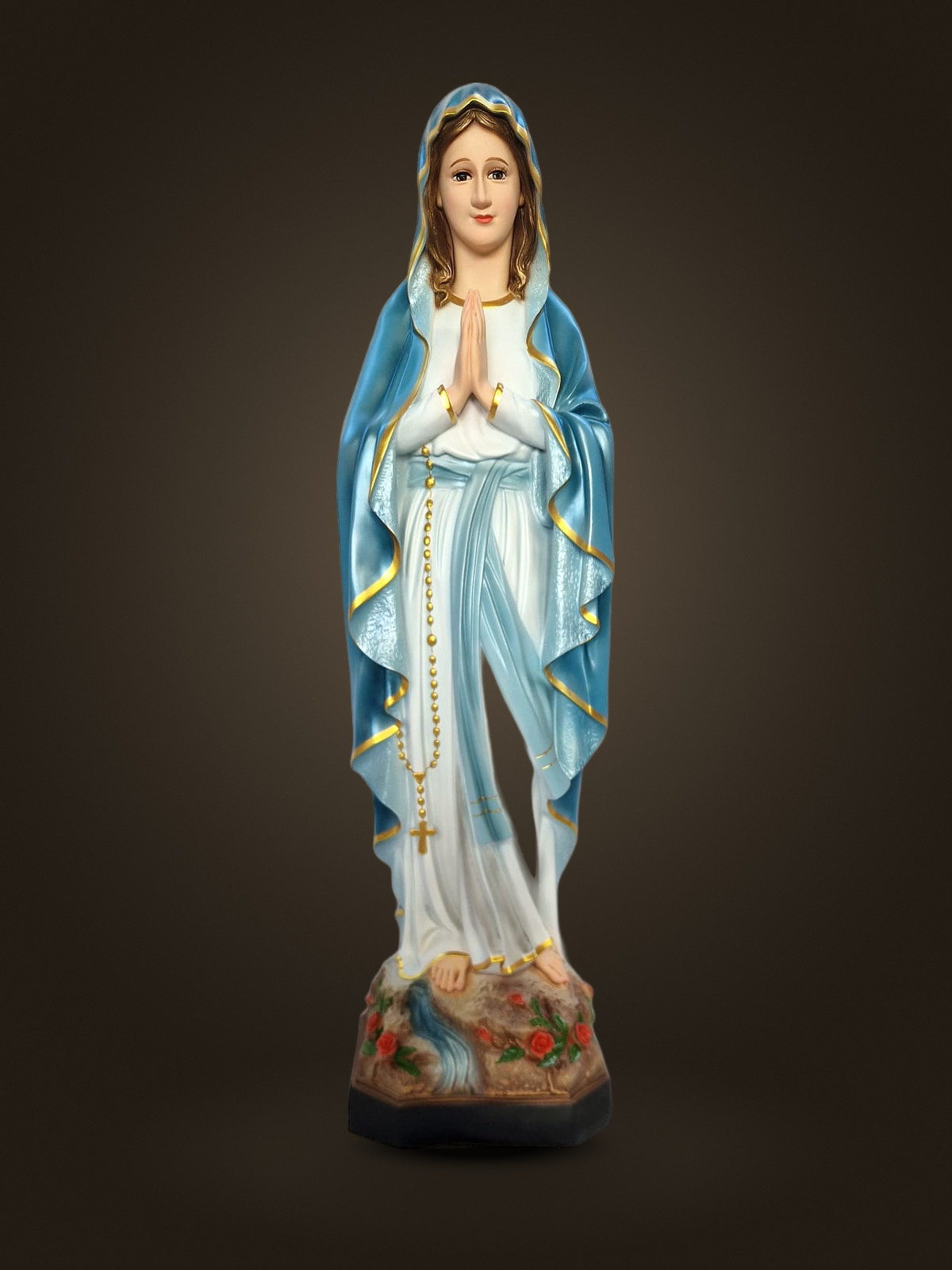
Our Lady of Lourdes
Hand-painted resin
From €55
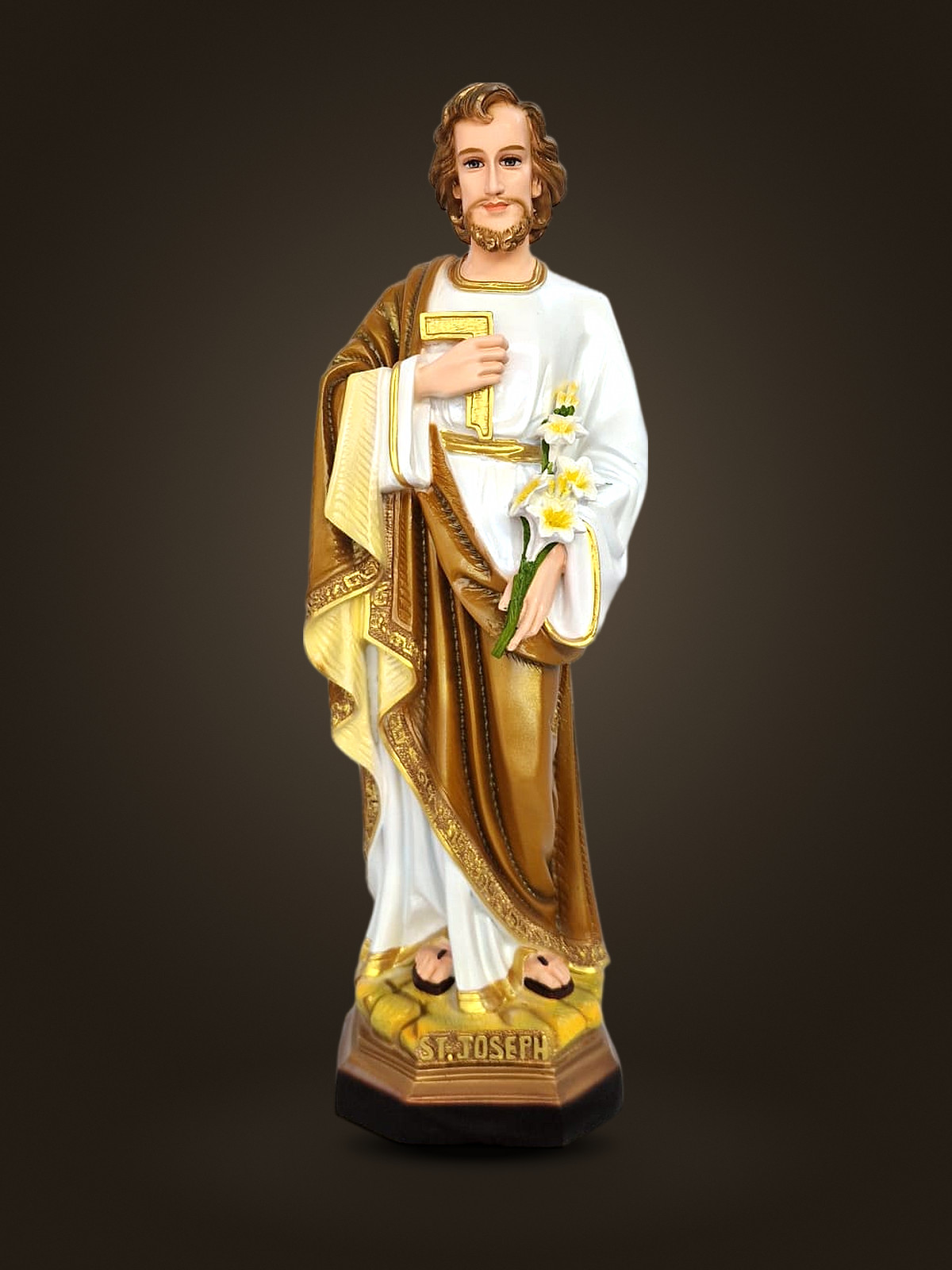
St Joseph
Hand-painted resin · plain or glitter
From €60
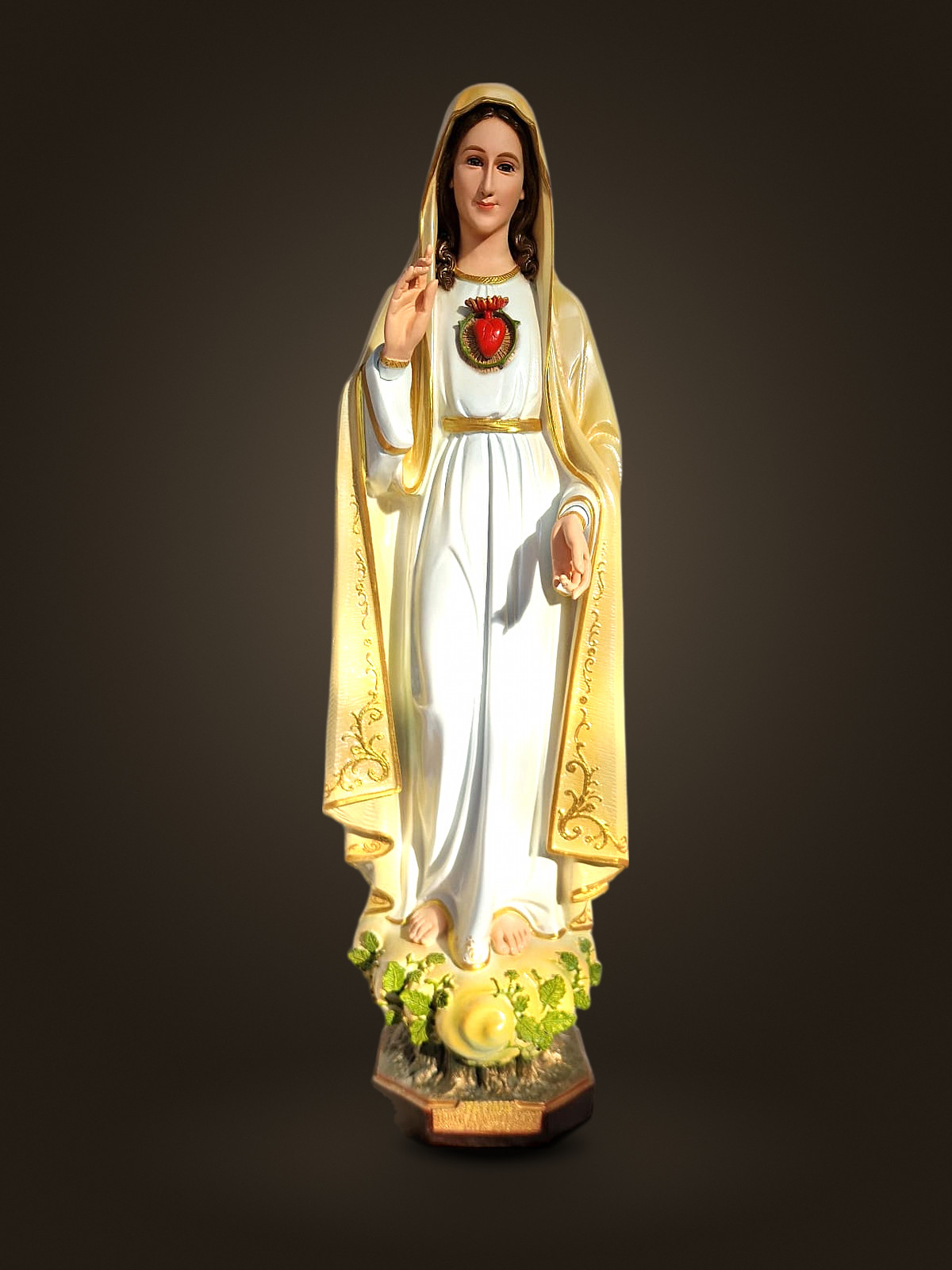
Our Lady of Fatima
Hand-painted resin
€140
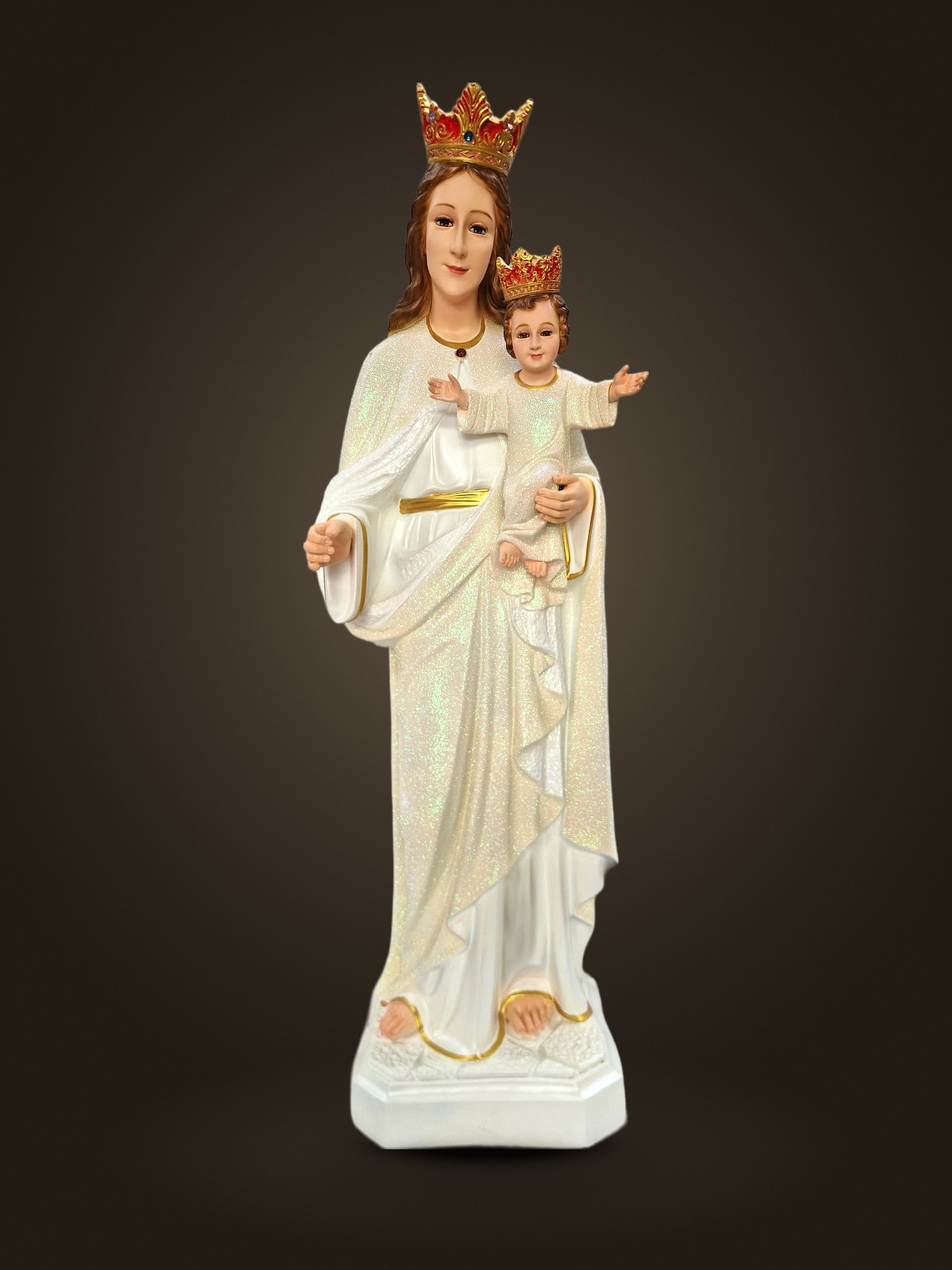
Our Lady Help of Christians
Hand-painted resin · glitter finish
€260
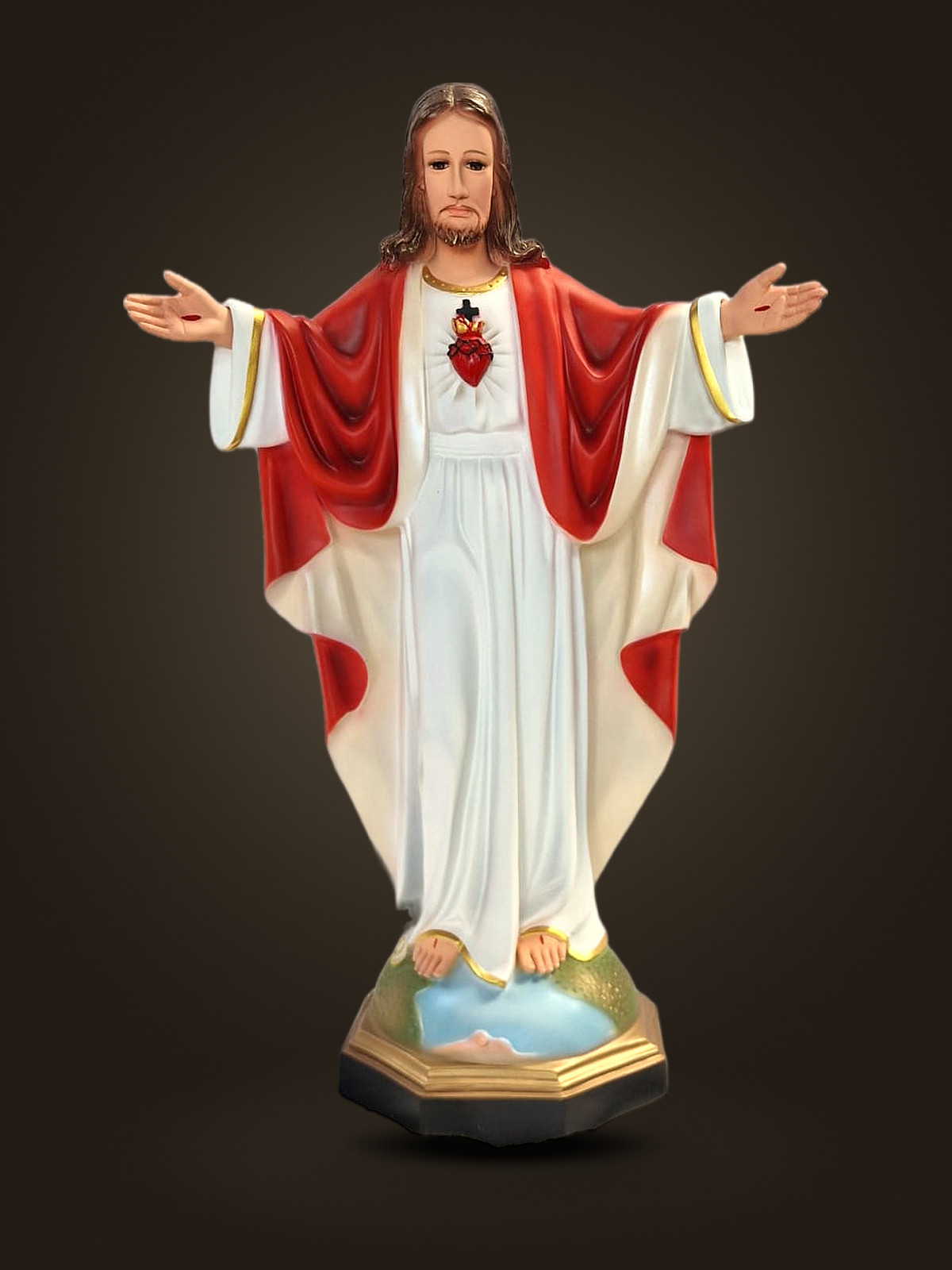
Sacred Heart of Jesus (Open Arms)
Hand-painted resin · plain or glitter
From €55
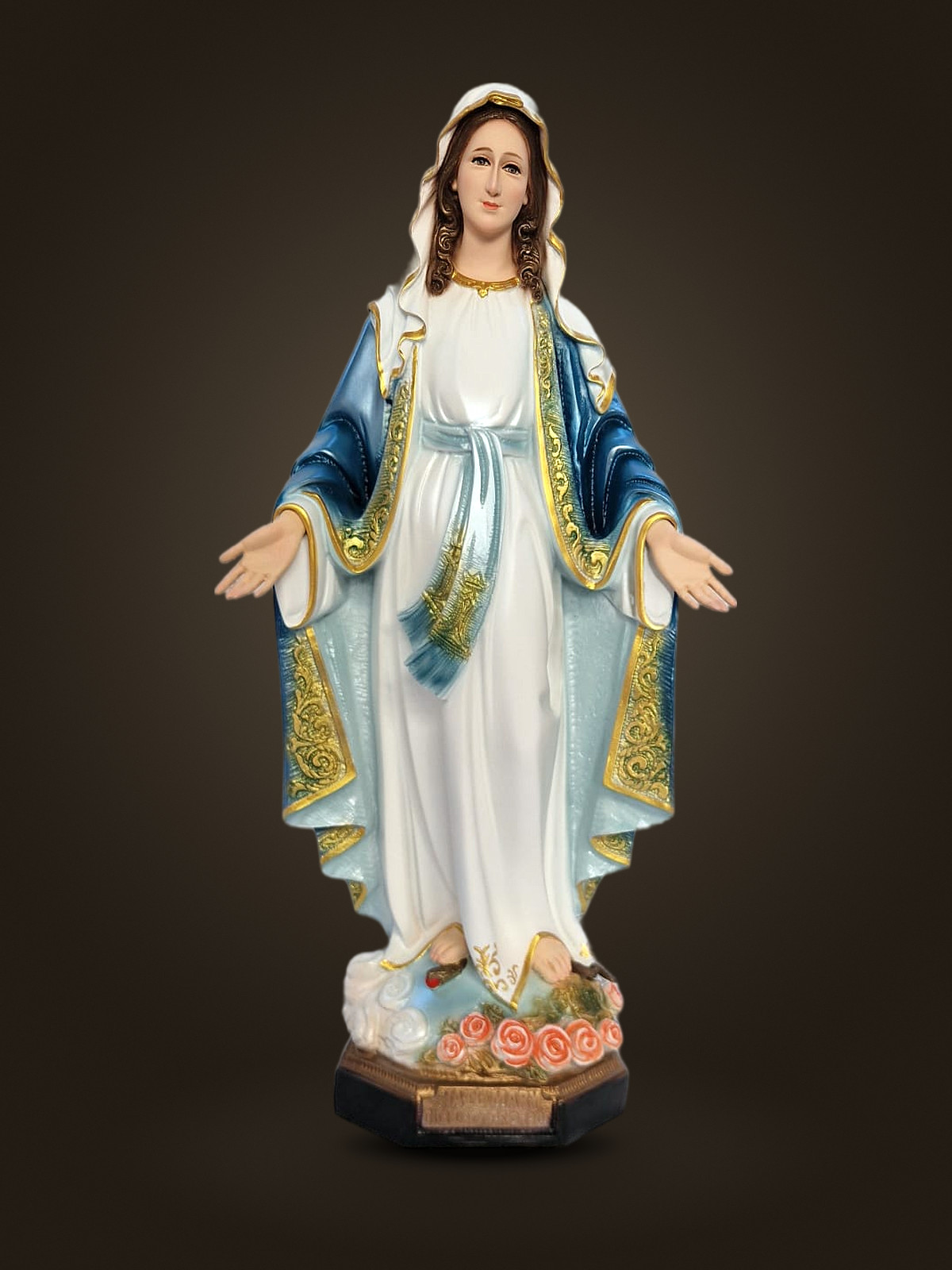
Our Lady of Grace
Hand-painted resin
€60
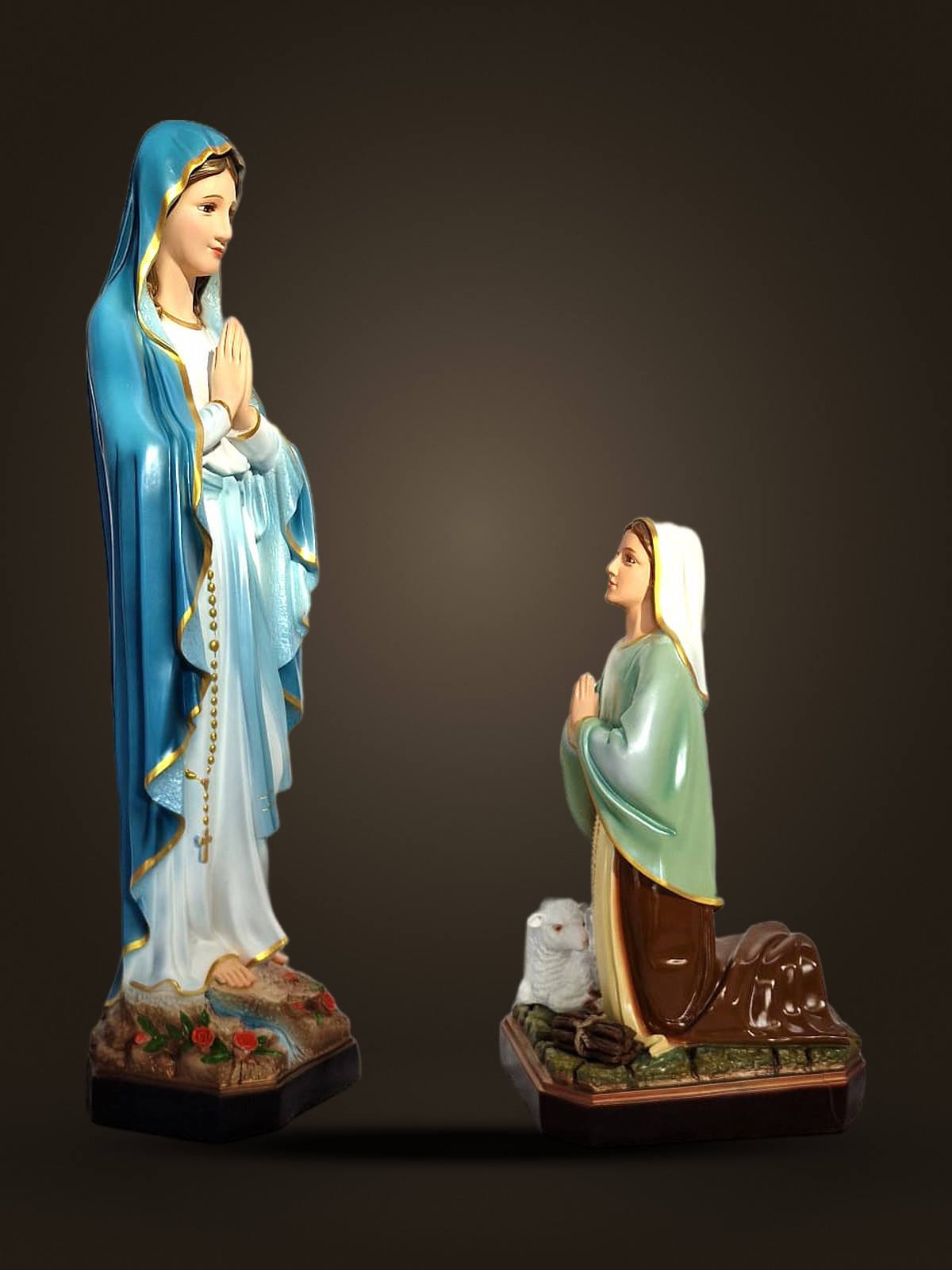
Our Lady of Lourdes and St Bernadette
Hand-painted resin · the pair
€240
Questions people ask
Do your statues come blessed?
We do not describe any statue as blessed. A statue is traditionally blessed by a priest when it is first set in place, so ask your own parish priest once it is in your home or church. It is free, and it takes only a few minutes.
Can a lay person bless a statue?
The blessing of religious articles is given by a priest or a deacon. Lay people can and should pray before a statue, and parents bless their children, but for the Church’s blessing of the object, ask your priest or deacon.
Does a statue need to be blessed again if it is moved?
No. A blessing stays with the object. If it is badly damaged and repaired, or moved to a new public use in a church, the priest may choose to bless it again, but it is not required for a move within the home.
What should I do with a blessed statue that breaks beyond repair?
Blessed objects should not simply be thrown in the bin. The traditional practice is to bury them respectfully, for example in the garden, or to bring them to the parish, which may have its own way of disposing of them. Our repair guide covers what can be fixed.
Is there a charge for a blessing?
No. Blessings are never sold. Some people like to give a small offering to the parish, but nobody will ask you for one.
Can a statue be blessed as part of a house blessing?
Yes, and it is a lovely way to do it. When the priest comes to bless a new home, he can bless the statues and holy pictures at the same time. See house blessing gifts.
Read next
Updated
Read next
The Sacred Heart in Irish homes
For generations, the Sacred Heart picture in the kitchen, with its small red lamp and the family’s names written underneath, was as much a part of an Irish home as the range. The devotion behind it is easy to renew.
House blessing gifts
For generations the first thing hung or set up in an Irish home was the Sacred Heart. A statue for a new house carries on that custom, and gives the house blessing a focus.
Statues for the home
A statue in the house is a face to turn to at the start of the day and at the end of it. Here is how to choose one for a shelf, a sill or a prayer corner — and which statues Irish homes have kept for generations.
Church statues
A statue in a church has to read from the back of the nave, suit the building it stands in, and last longer than any of the people who chose it. This page is for parish priests, sacristans and committees working that out.