
Guide · Measuring
How to choose the right size of statue for a shelf, niche, church or garden
The most common reason a statue disappoints is not the statue: it is the size. A few minutes with a tape measure, and one or two rules of thumb, save a lot of trouble.
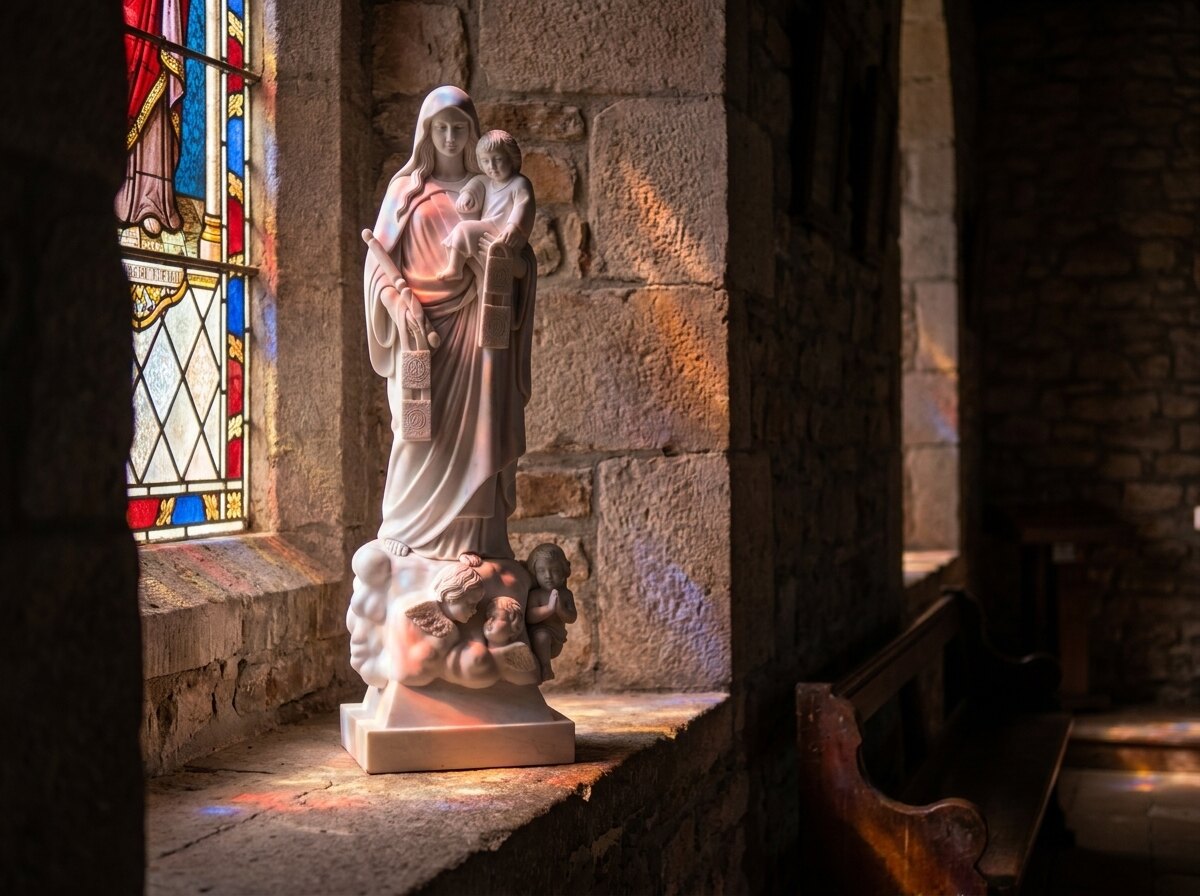
Why size is harder than it looks
Statues are described by height, and height on a screen means very little. A 12in statue sounds small until it is on a narrow kitchen sill; a 24in statue sounds large until it is at the end of a garden, where it looks like an ornament. What matters is the height of the statue against the space around it and the distance from which people will see it.
Two more things catch people out. First, the base: a statue’s footprint is often wider and deeper than you expect, and a niche that is tall enough may still be too shallow. Second, nominal sizes: statues are sold at nominal heights, so a piece described as 24in measures close to that rather than exactly. Each of our statue pages gives height, width, depth and weight measured from the actual piece.
Measure the space in five steps
Measure the height available
For a shelf or niche, measure from the surface to whatever is above it — the next shelf, the top of the arch, a light fitting. Leave a clear gap above the head: a statue that touches the top of a niche looks squeezed.
Measure the depth and width
Measure the usable depth of a sill or niche, front to back. Compare it with the depth given on the statue page, and allow a little extra so a passing elbow does not catch it.
Note the viewing distance
Stand where people will usually see the statue — the kitchen table, a pew, the garden gate — and estimate the distance. The further away, the taller the statue needs to be to read as a figure rather than a shape.
Mock it up
Cut a piece of cardboard to the statue’s height and width, or stack books to the same height, and leave it in place for a day. It is the single most useful thing you can do.
Check the weight and the base
Marble is heavy. Make sure a shelf, plinth or bracket will bear it, and that an outdoor base is level and firm. If in doubt, ask us for the exact weight.
Rules of thumb by place
These are starting points, not rules. Your mock-up always wins.
Bedside, desk or locker
Small statues — around 8in to 12in — sit comfortably without crowding a lamp or a book. They are also the usual size for First Communion and Confirmation gifts.
Kitchen dresser, mantelpiece, window sill
Around 12in to 18in is the usual range. On a deep mantelpiece in a large room, the upper end looks right; on a narrow sill, check the depth before the height.
Hall table, landing or prayer corner
Around 18in to 24in gives the statue presence in a passing space. A prayer corner benefits from a statue you can see clearly from where you kneel or sit.
Church niche, side altar, shrine
Measure the niche and think about the back of the church. A statue for public devotion has to read from the last pew, which usually means larger than people first expect. Our church statues page goes into this.
Garden and grotto
Outside, everything looks smaller. A statue that seems large in the hall can vanish against a hedge. For a front garden or grotto, think in terms of the larger sizes, and see large religious statues.
Proportion with other things in the space
A statue rarely stands alone. On a home altar it shares space with candles, a crucifix, a vase of flowers. A useful habit is to make the statue the tallest thing in the group and keep candles well away from it — a flame too close can mark paint and discolour stone. In a church, think about the statue’s relationship with the altar and the tabernacle: a side statue should not compete with them.
When two statues stand together — Our Lady and St Joseph either side of a sanctuary, or a Holy Family group — choose the same height, or as close as the catalogue allows, so they read as a pair. Marble is carved by hand, so two statues of the same nominal size can differ slightly; if they must match, ask us and we will measure both.
If nothing in the catalogue fits the space, marble can be carved to the dimensions a niche needs. See custom statues.
Statues across the size range
Every page gives height, width, depth and weight, measured from the piece itself.
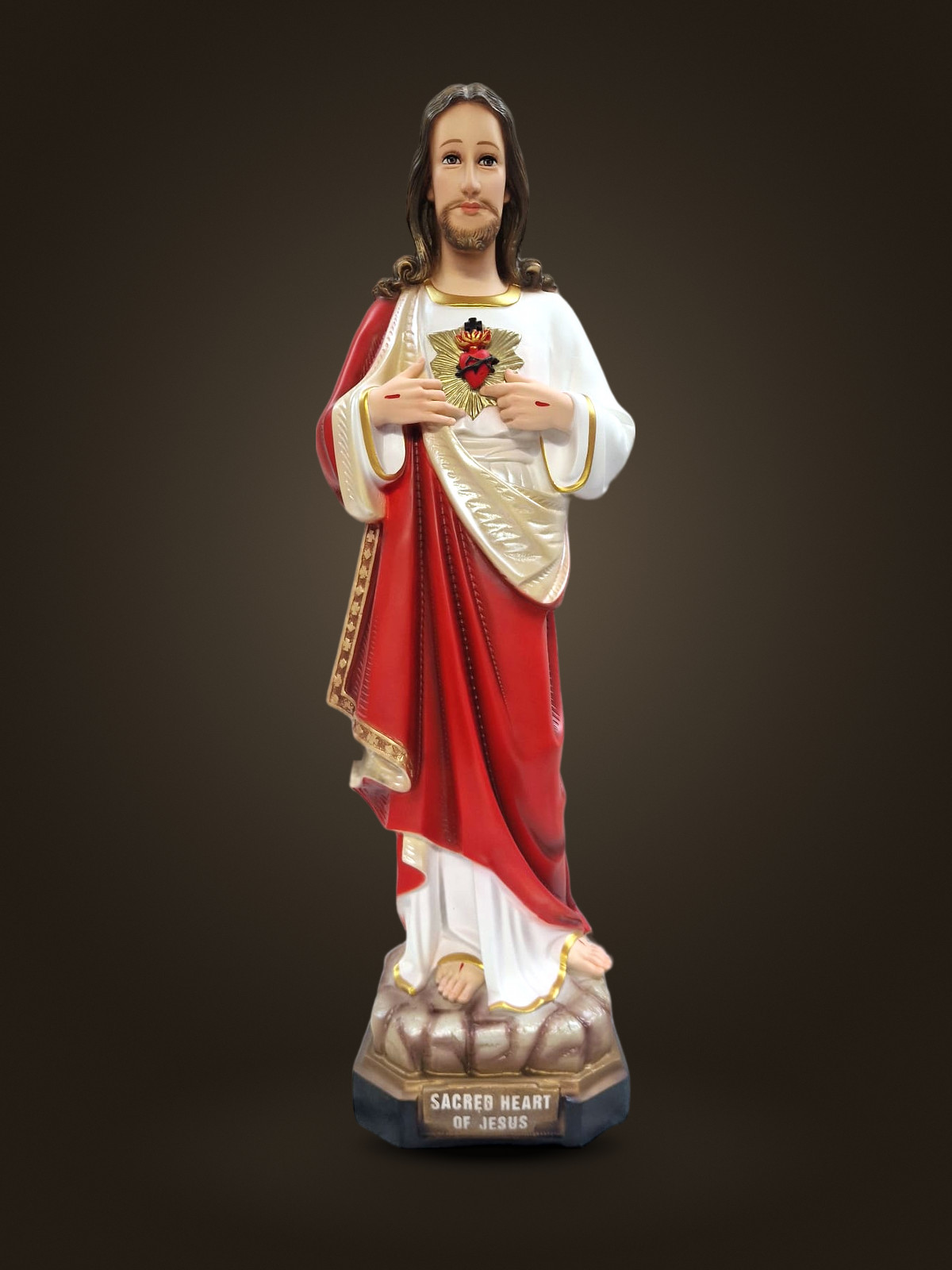
Sacred Heart of Jesus
Hand-painted resin · plain or glitter
From €60
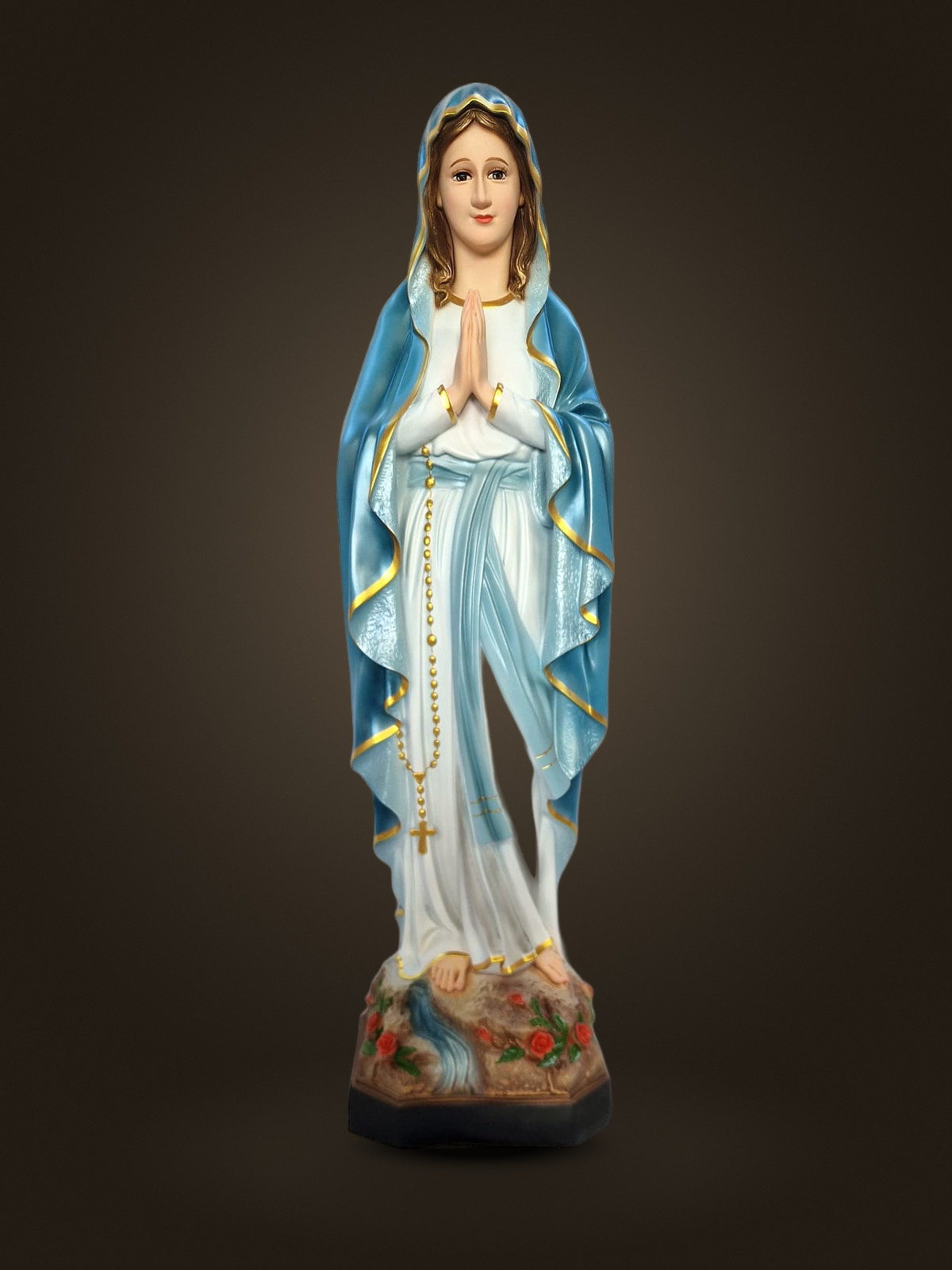
Our Lady of Lourdes
Hand-painted resin
From €55
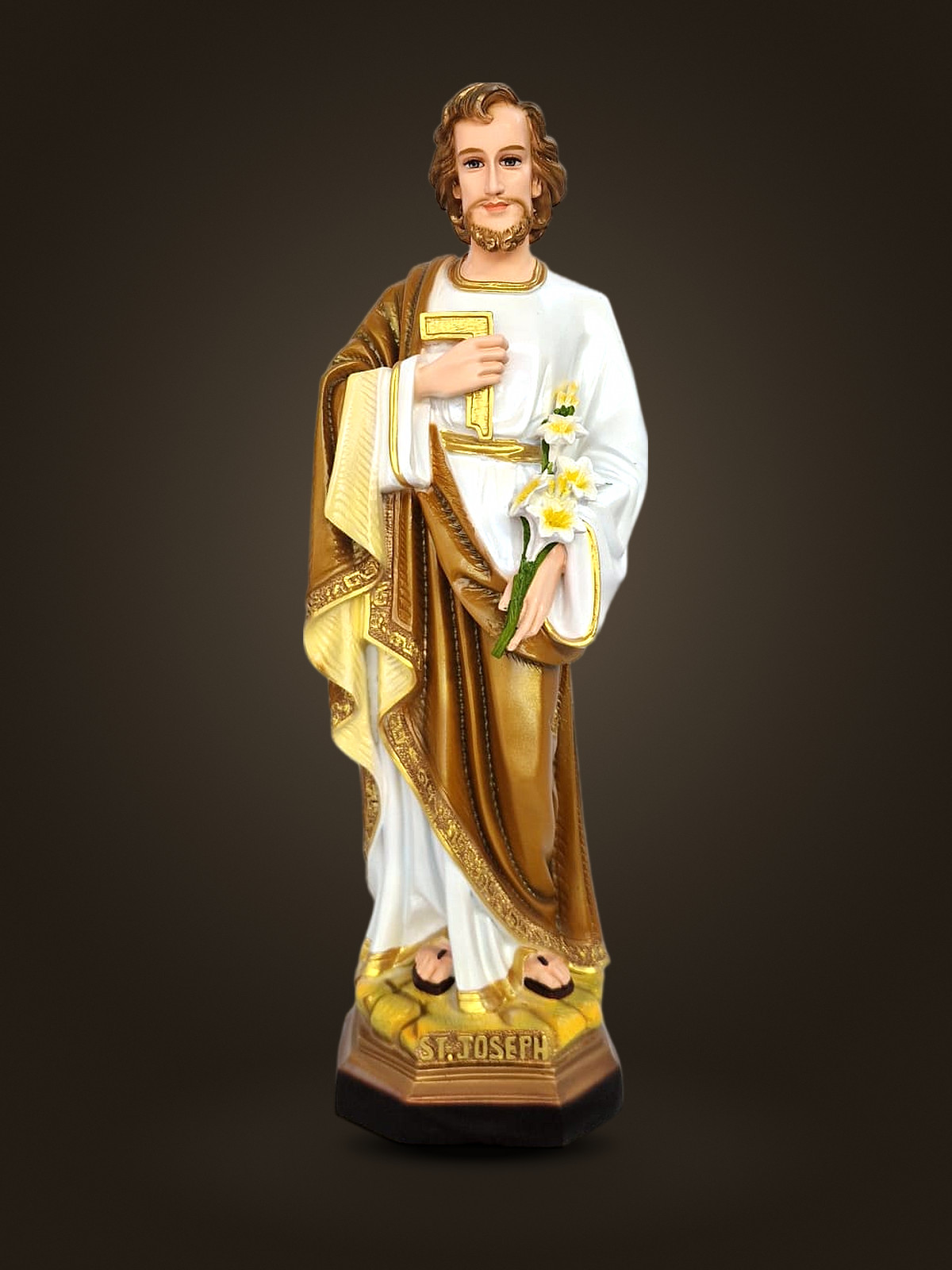
St Joseph
Hand-painted resin · plain or glitter
From €60
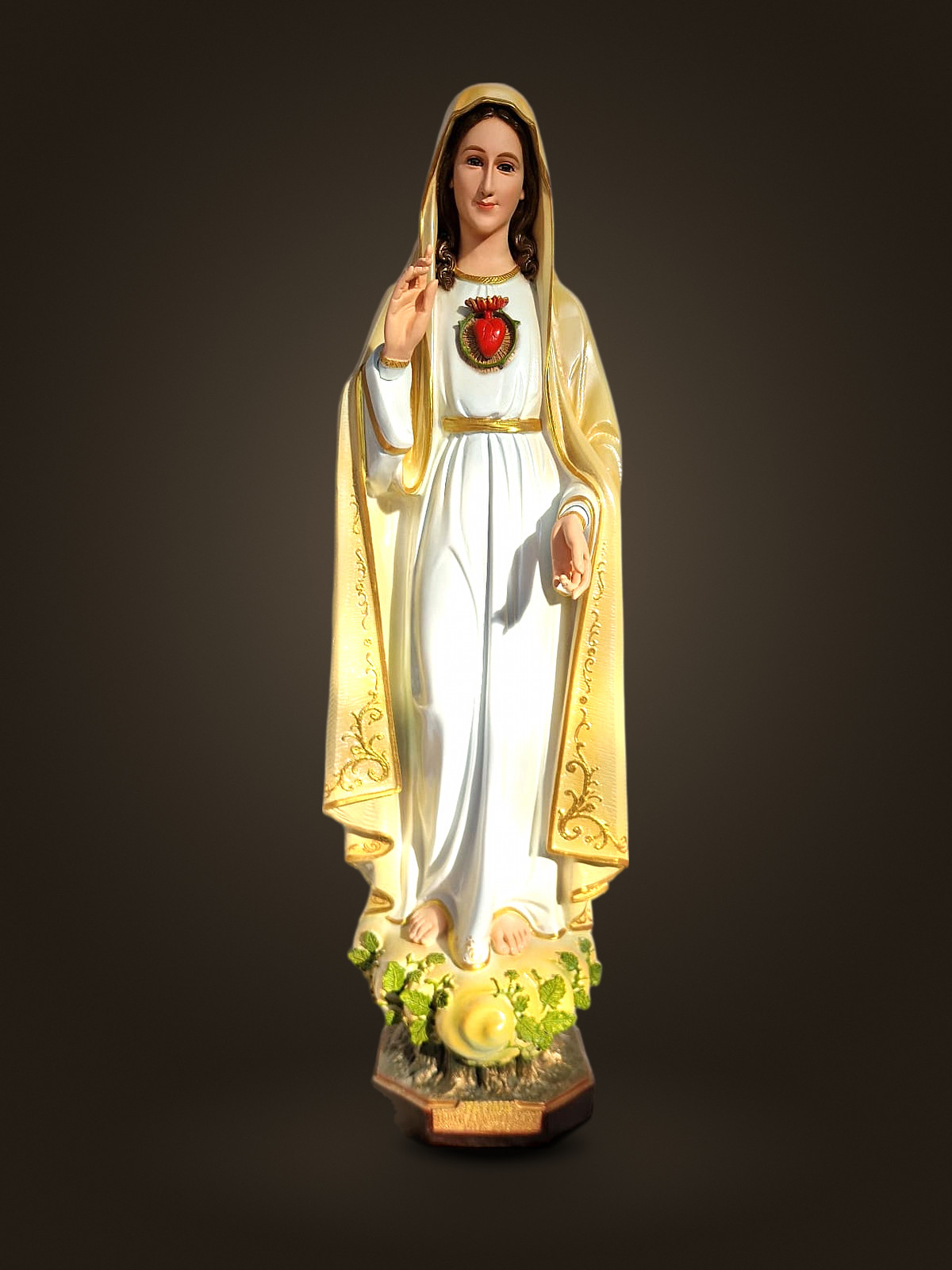
Our Lady of Fatima
Hand-painted resin
€140
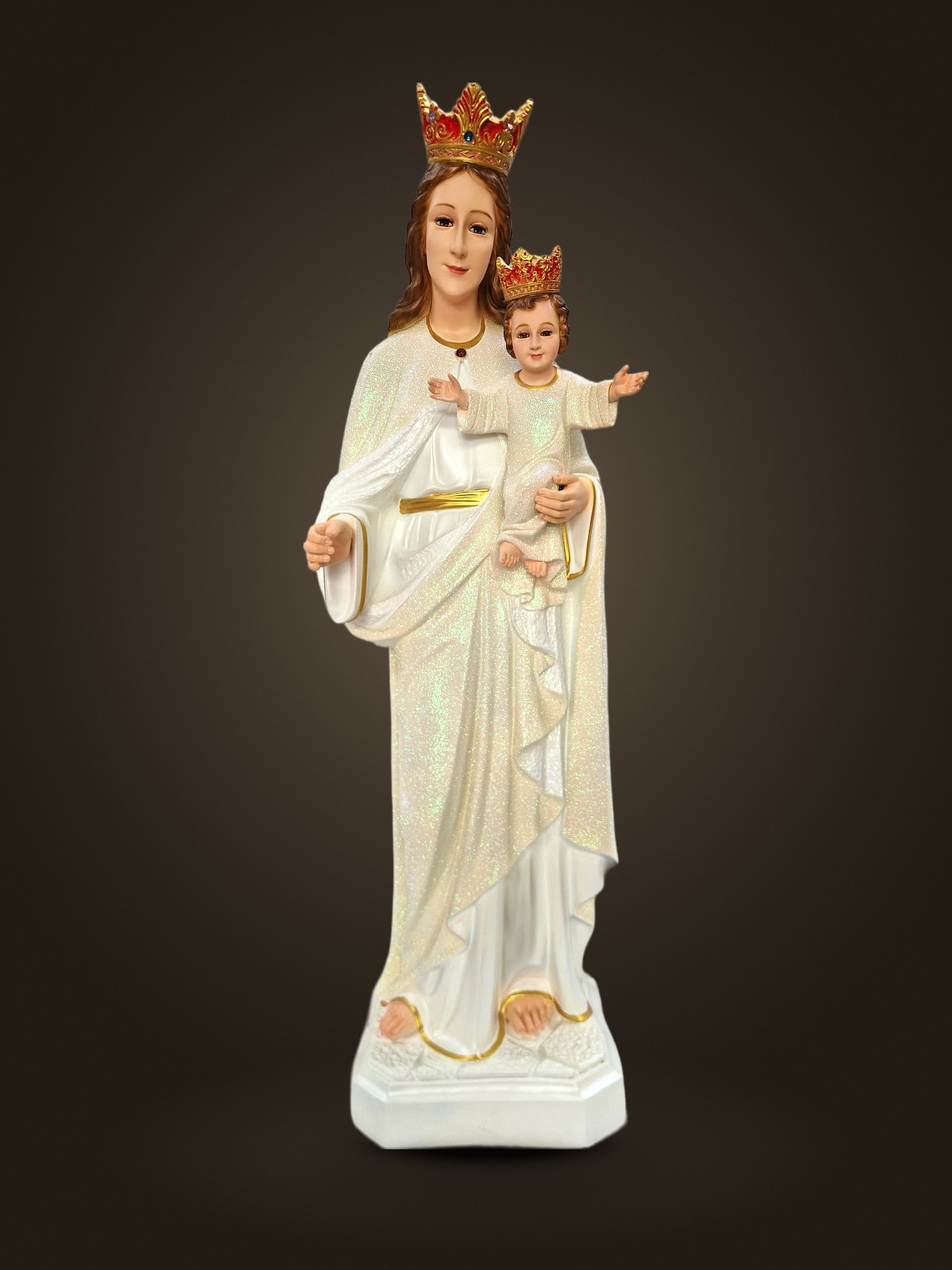
Our Lady Help of Christians
Hand-painted resin · glitter finish
€260
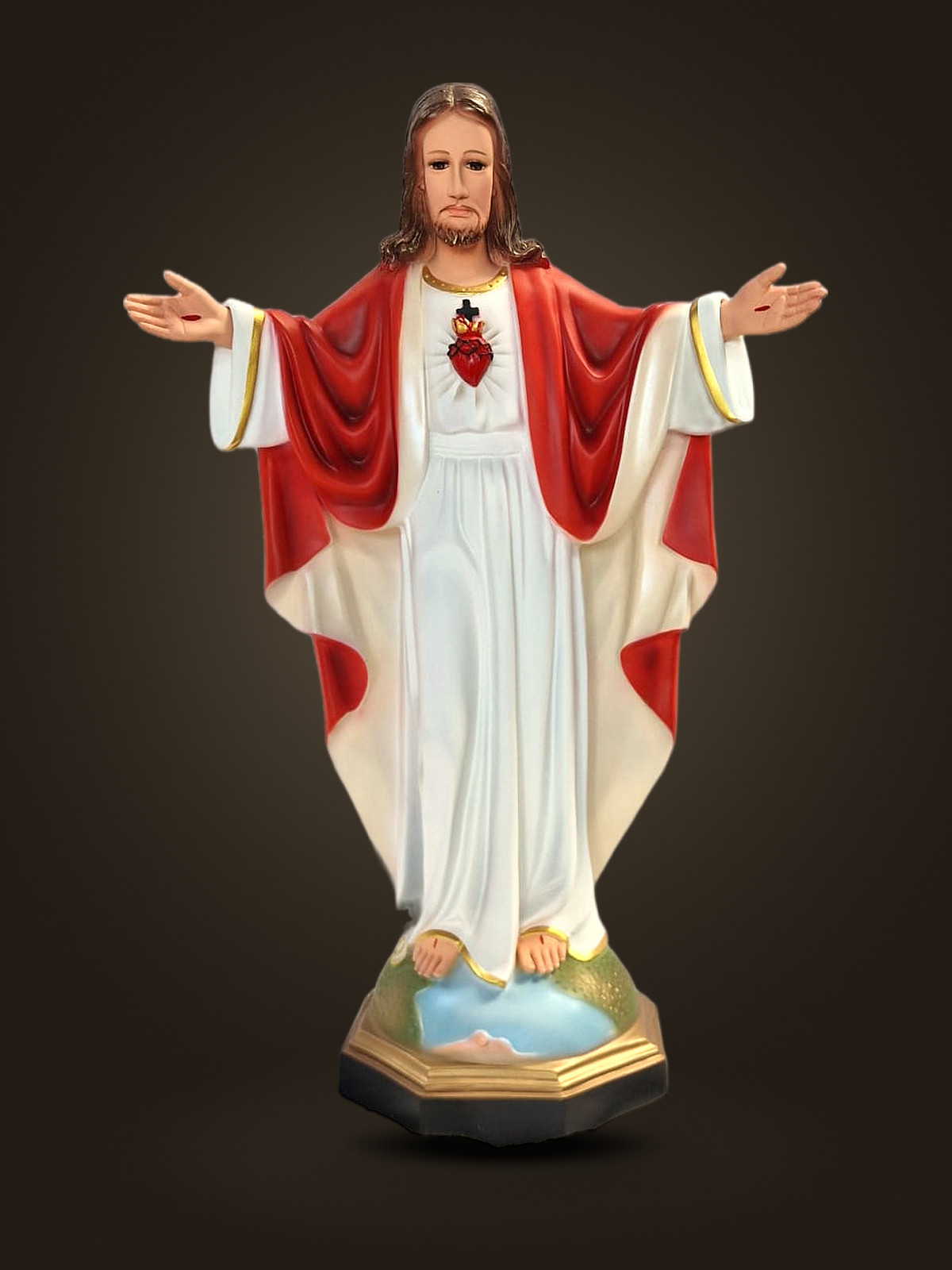
Sacred Heart of Jesus (Open Arms)
Hand-painted resin · plain or glitter
From €55
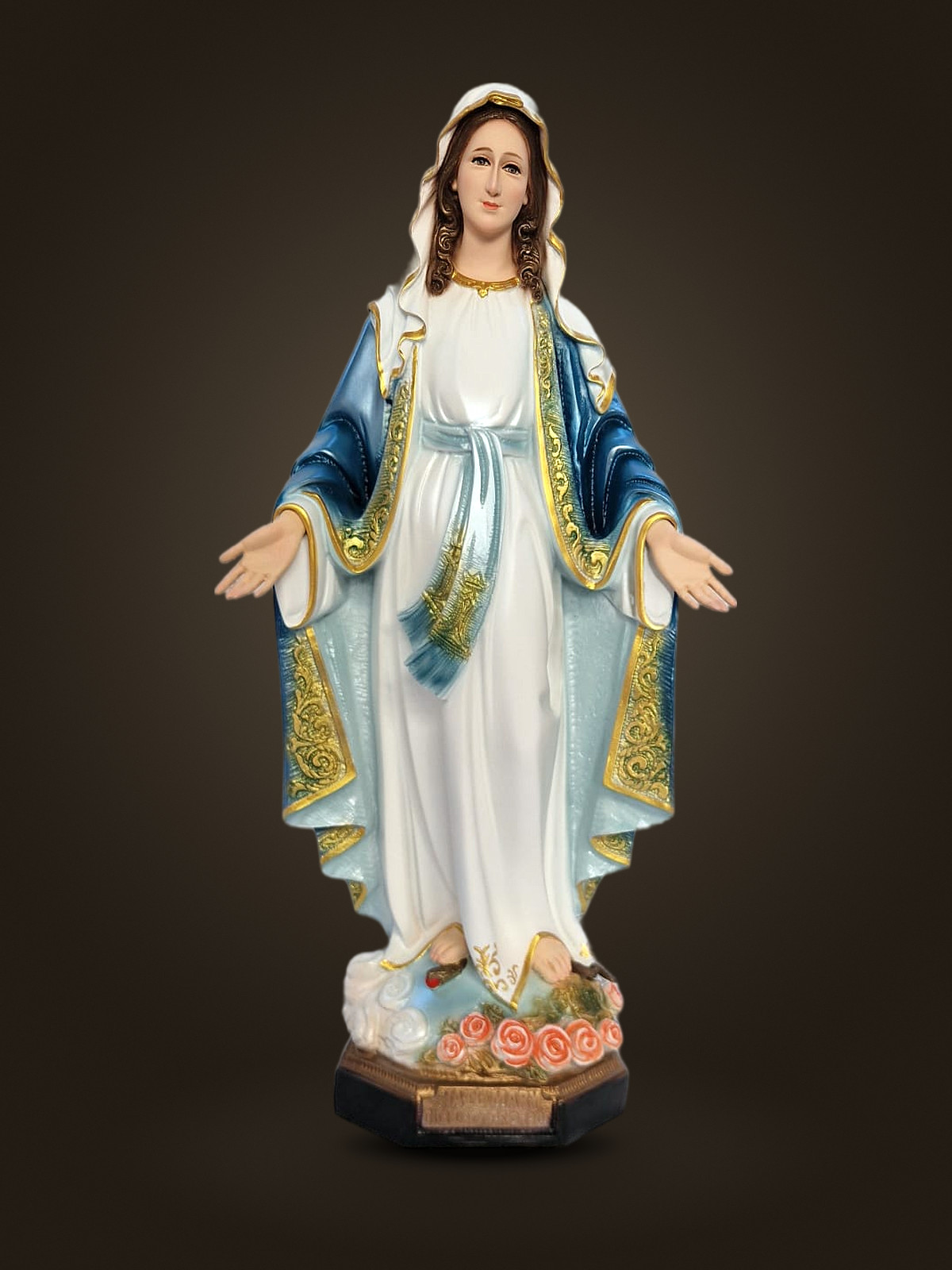
Our Lady of Grace
Hand-painted resin
€60
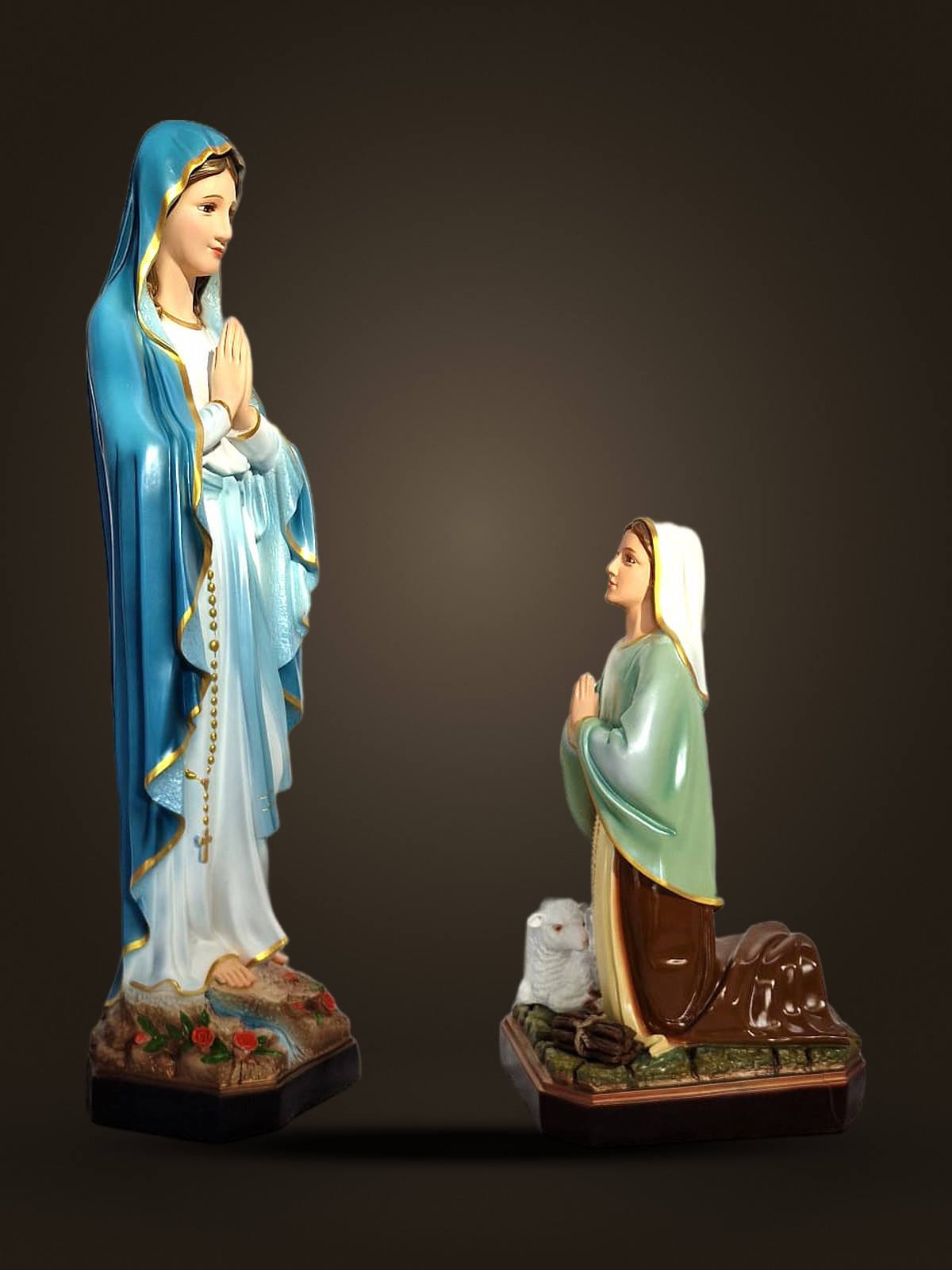
Our Lady of Lourdes and St Bernadette
Hand-painted resin · the pair
€240
Questions people ask
Does the height include the base?
Yes — the height we publish is the overall height of the statue as it stands, base included. If it will stand on a separate plinth, add the plinth’s height to work out the total.
Why is the statue I received slightly different from the stated size?
Statues are sold at nominal sizes, so a 24in statue measures close to 24in, not exactly. If you need an exact figure for a tight space, ask us before ordering and we will measure the piece.
What size statue should a parish choose for the sanctuary?
It depends on the size of the church and where the statue will stand. Measure the niche or plinth, think about the distance from the back pews, and send us the details; we will tell you honestly what will work.
What size makes a good gift?
For a child’s First Communion or Confirmation, a small statue that fits a bedroom shelf is best. For a new home, a slightly larger statue for the kitchen or hall. See religious gifts.
Can you make a statue to a specific size?
In marble, yes, by enquiry. Tell us the dimensions of the space and we will quote before anything is carved.
Read next
Updated
Read next
Resin vs marble
Both materials make a good statue. They make different statues, though, and the right one depends on where it will stand, who will move it and how long you mean it to last.
Church statues
A statue in a church has to read from the back of the nave, suit the building it stands in, and last longer than any of the people who chose it. This page is for parish priests, sacristans and committees working that out.
Large statues
A statue meant to fill a niche, stand at the end of a garden or be seen from the back of a church has to be bigger than people expect. Here is how to judge the size, and what to plan before a heavy statue arrives.
Statues for the home
A statue in the house is a face to turn to at the start of the day and at the end of it. Here is how to choose one for a shelf, a sill or a prayer corner — and which statues Irish homes have kept for generations.