
Guide · Materials
Resin or marble? How to choose the material for a religious statue
Both materials make a good statue. They make different statues, though, and the right one depends on where it will stand, who will move it and how long you mean it to last.
The short answer
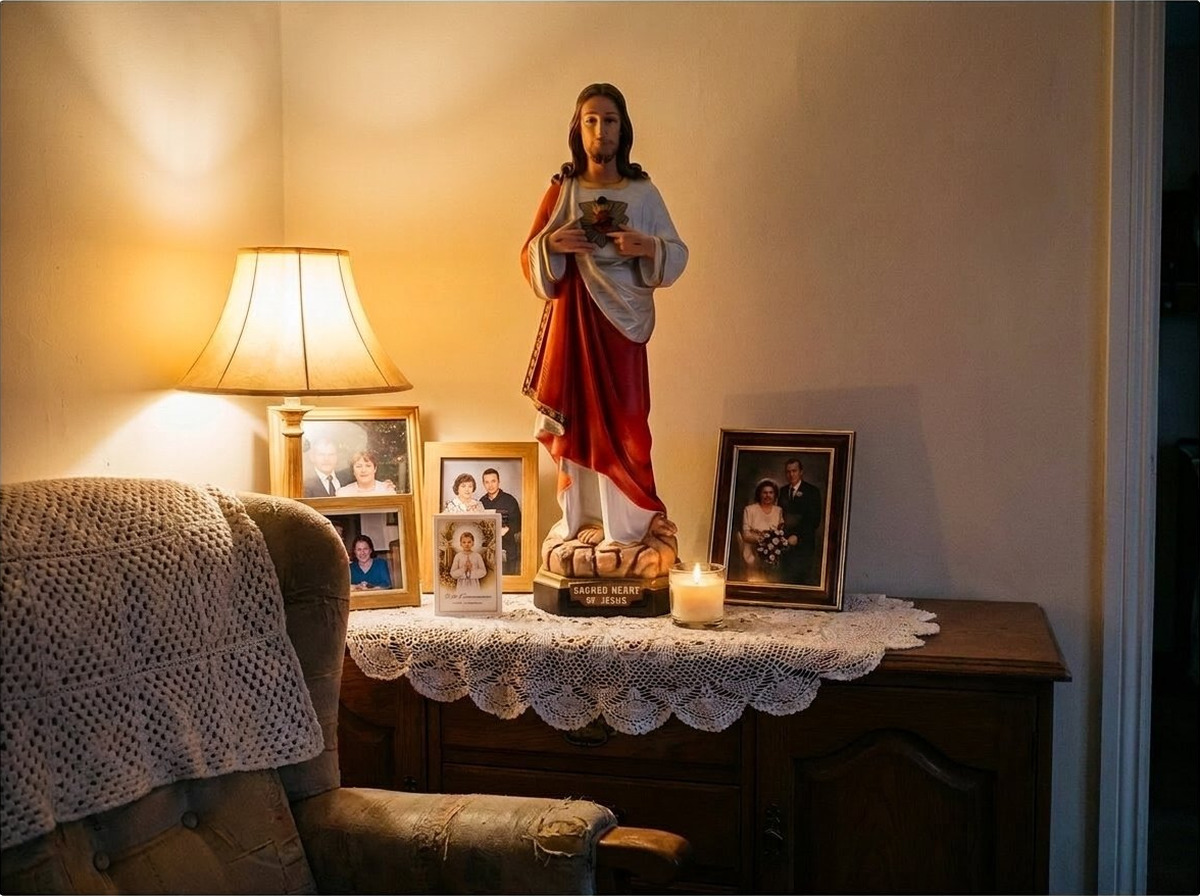
If you want colour — Our Lady’s blue mantle, the red of the Sacred Heart, a painted face — and a statue you can lift with one hand and post anywhere in Ireland, choose hand-painted resin. If you want something that will outlast you, that can stand in a church or a windy garden for decades, and that reads as stone because it is stone, choose hand-carved marble.
Most people who ask us already half know the answer. A First Communion gift for a child’s bedroom is resin almost every time. A statue for a parish grotto, a grave or a convent garden is usually marble. The harder cases are the ones in the middle — a large Sacred Heart for a hall, a statue for a sheltered porch — and the rest of this guide is for those.
Side by side
These are general properties of the two materials, not promises about any one piece. Each statue’s own page gives its measurements and finish.
Look
Resin carries paint, so it can be fully coloured, with gilding and painted eyes. Marble is usually white or near-white, with the natural grain of the stone showing; its beauty is in the carving and the way light falls across it.
Weight
Resin is light for its size. Marble is heavy — a large marble statue is a two-person lift and needs a base that will take the weight.
Detail
Resin is cast from a mould, so fine detail is reproduced the same each time and then brought out by the painter. Marble is carved by hand, so every piece is one of a kind, with small differences from any photograph.
Outdoors
Marble is the traditional material for outdoor statues and memorials. Resin can stand outside when it is finished for it, but painted colour fades in sun and weather over the years; a sheltered spot helps.
Delivery
Resin goes by post for one flat charge per order within Ireland. Marble is too heavy for the post, so we deliver it ourselves to any county, with the charge shown on each statue’s page — or you can collect it free in Termonbarry, Co. Roscommon.
Cost
Size for size, resin costs less than marble. The live prices are on each statue, and the rails below show them as they stand today.
Where each material is at its best
Resin belongs in the places people live: the kitchen dresser, a bedroom shelf, a prayer corner, a window sill, a hospital locker. Colour matters there. A painted statue of the Sacred Heart or Our Lady of Grace is read at a glance from across a room, and children in particular respond to it. Because it is light, resin is also the safer choice anywhere a statue might be knocked, moved often, or carried in procession by young hands at a May crowning.
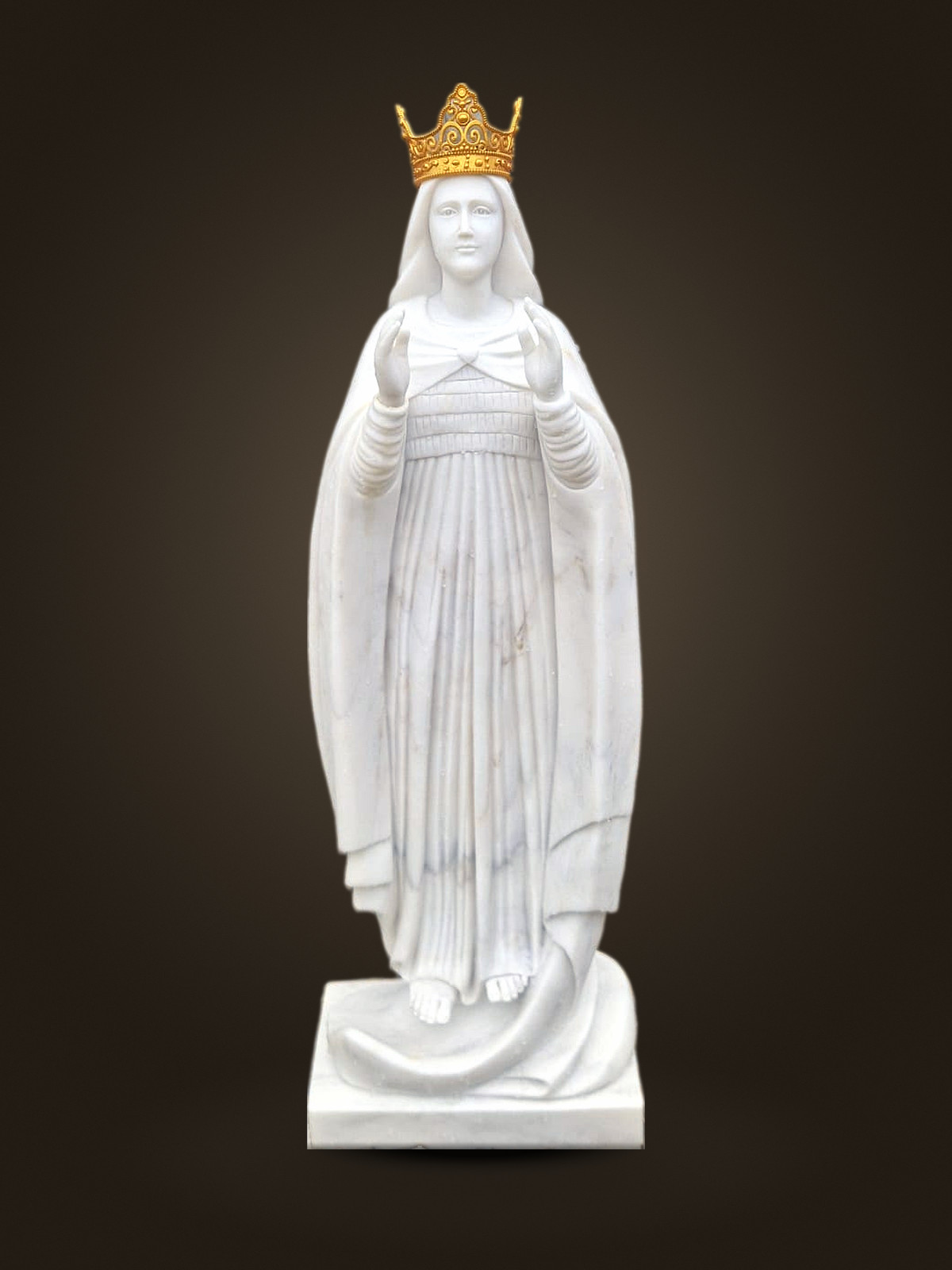
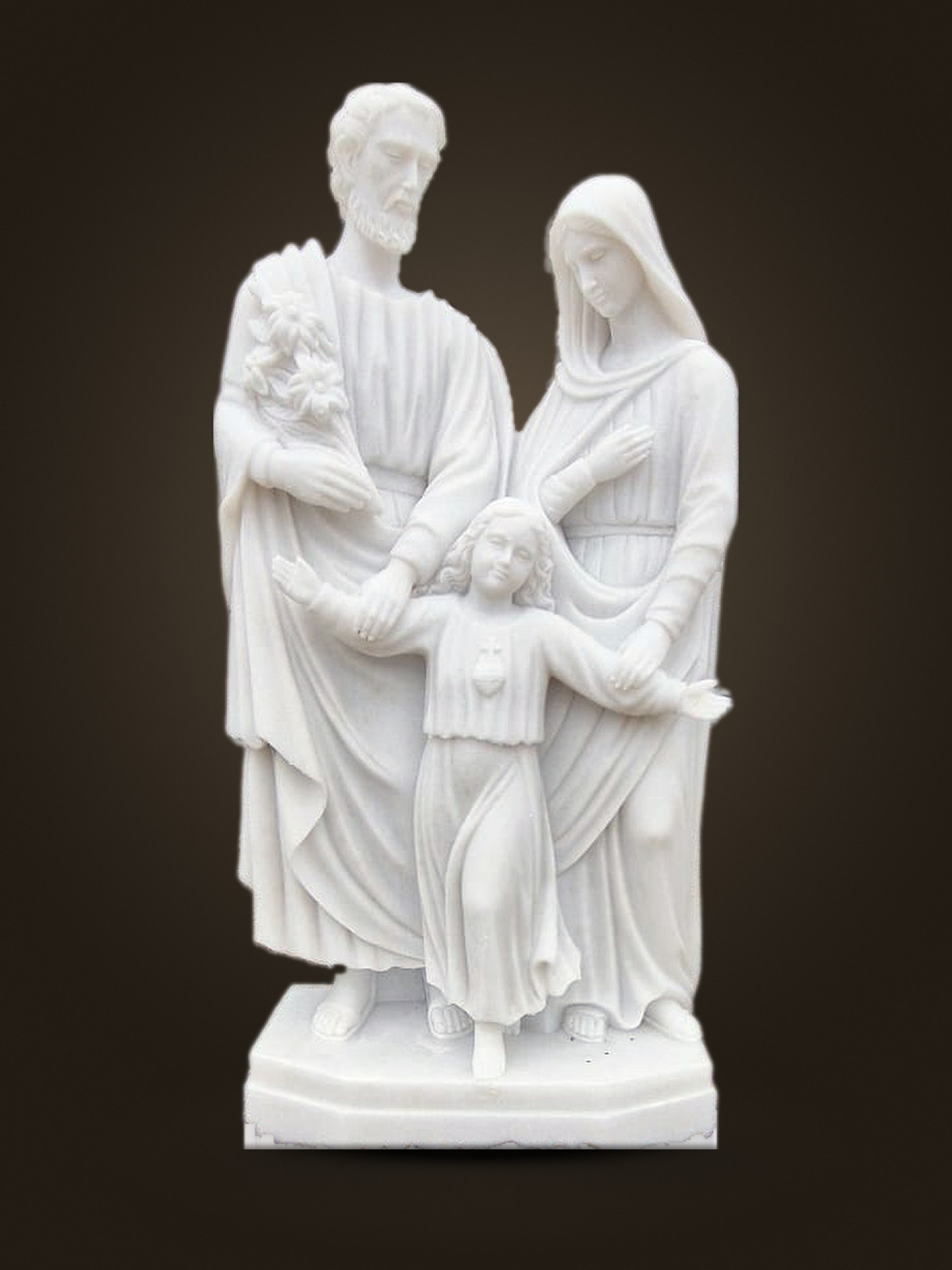
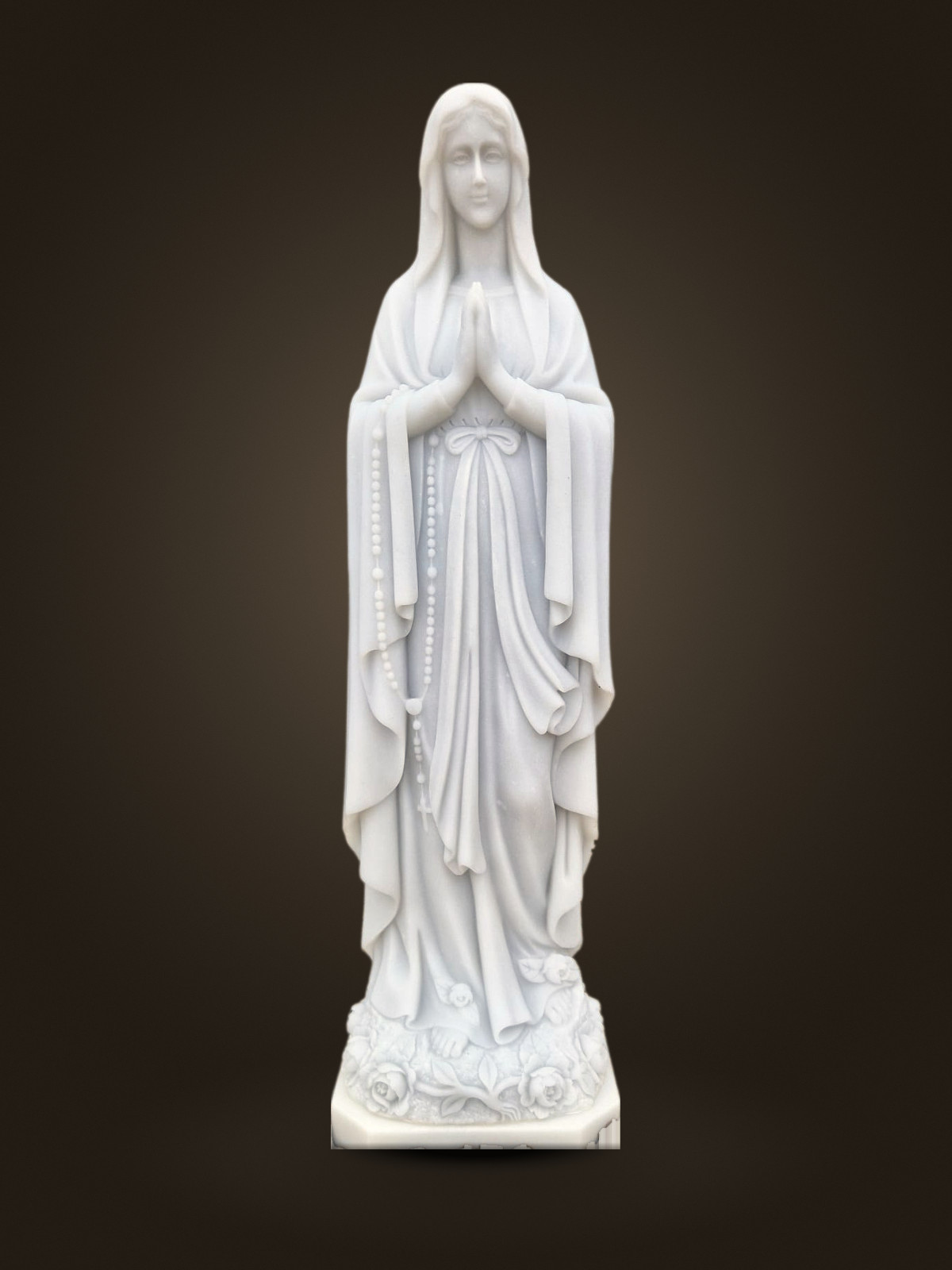
Marble belongs where permanence matters more than colour: a church niche, a side altar, a parish grotto, a memorial garden, a grave, the front garden of a family home where the statue is meant to stay put for a generation. Marble also suits interiors where painted colour would fight with the room — a modern oratory, a stone chapel, a minimalist hall — because white stone sits quietly in almost any setting.
If you are buying for a church, think about distance. A painted statue reads well up close; at the back of a nave, a white marble figure against a darker wall can carry further. Our page on church statues goes into sanctuary sizes in more detail.
Five questions that settle it
Will it stand outside?
If it will face the full Irish weather, all year, with no shelter, marble is the material that has done that for centuries. If it will stand in a porch or a sheltered corner, resin finished for outdoor use is possible.
Do you want colour?
If the statue has to be painted — many people cannot imagine Our Lady of Knock or the Sacred Heart without colour — resin is the answer. Marble is chosen for the stone itself.
Who will lift it?
If an older person needs to move it to dust, or it will travel to a school or a hall, resin. If it will be set in place once, marble.
How long should it last?
A well-kept resin statue lasts many years indoors. A marble statue, looked after, is the kind of thing that passes to grandchildren.
What is the budget?
For the same height, resin is the more affordable choice. If you love marble but the budget is tight, a smaller marble piece is often better than a large resin one you do not love.
Hand-painted resin
Colour, a light weight and a flat postal charge — the current painted range.




Hand-carved marble
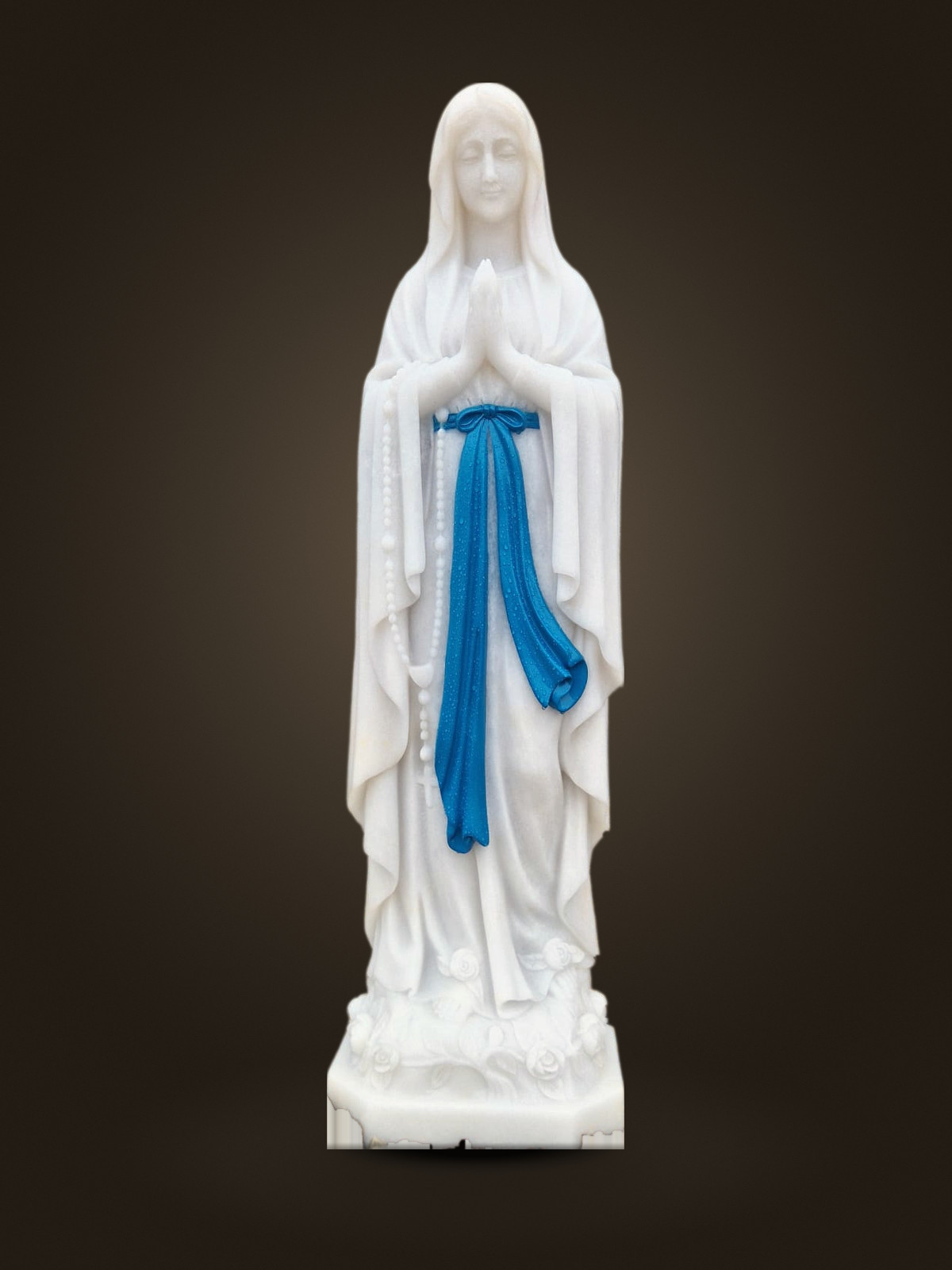
Each marble piece is carved by hand, so no two are quite alike.
What to expect from a hand-made piece
Because resin statues are painted by hand, two castings of the same statue are never quite identical: the line of an eyebrow, the depth of a shadow in a fold. That is a property of the object, not a fault. Marble is natural stone, so expect small differences in grain and colour from one piece to the next, and sometimes a fine vein running through a robe or a face. We photograph the actual statues and take the measurements from the piece itself, so what you see is what is crated.
Material also changes how you measure. A resin casting has the same outline every time; a carved marble figure may sit a little wider in the shoulders or deeper in the base than its neighbour of the same nominal height. If a niche or plinth leaves no room for error, ask us for the figures of the actual piece, and use the guide to choosing a statue size to work out what you need.
Questions people ask
Is resin just plastic?
Resin is a cast material, and it is far denser and heavier than the hollow plastic statues sold as souvenirs. A well-made resin statue takes fine detail and paint very well. It is not stone, though, and it does not pretend to be.
Can a marble statue be painted?
Marble can be painted, and historically many were, but a painted finish on stone needs care and touching up outdoors. Most people choose marble for the white stone itself. If you want colour, a painted resin statue is the simpler route.
Which lasts longer outside in Ireland?
Marble. It has stood outside in Irish churchyards and grottos for generations. Painted resin will last outdoors when it is finished for it, but the colours soften with sun and rain over the years. See our guide to outdoor statues in Irish weather.
Can I have a statue made in marble that you do not stock?
Yes. Marble can be carved to order — a saint we do not stock, or a piece scaled to a particular niche. Send us a photograph or drawing and we will tell you what it takes; see custom statues.
Do you deliver marble outside Ireland?
Our online checkout delivers within Ireland only. For a piece going abroad, write to us and we will tell you honestly whether we can help and what it would cost.
Read next
Updated
Read next
Resin statues
Hand-painted resin is how most people bring a statue into the house: in colour, light enough for a shelf, and posted anywhere in Ireland for one flat charge. Here is what it is good at, and where marble is the better choice.
Marble statues
Hand-carved marble is the statue that outlasts everyone who bought it. It is also heavy, dearer than resin and has its own needs. Here is the honest version, so you can decide whether it is right for you.
Choosing a size
The most common reason a statue disappoints is not the statue: it is the size. A few minutes with a tape measure, and one or two rules of thumb, save a lot of trouble.
Outdoor statues in Irish weather
Ireland is kind to stone in some ways and hard on it in others. Rain is constant, frost comes and goes, and wind off the Atlantic finds anything not fixed down. A little care at the start and once a year does most of the work.