
Guide · Care
Caring for indoor statues: cleaning, placing and repairing
Most damage to indoor statues is done by kindness: a scrub with the wrong cleaner, a candle too close, a statue left where it gets knocked. Here is what is safe and what to leave alone.
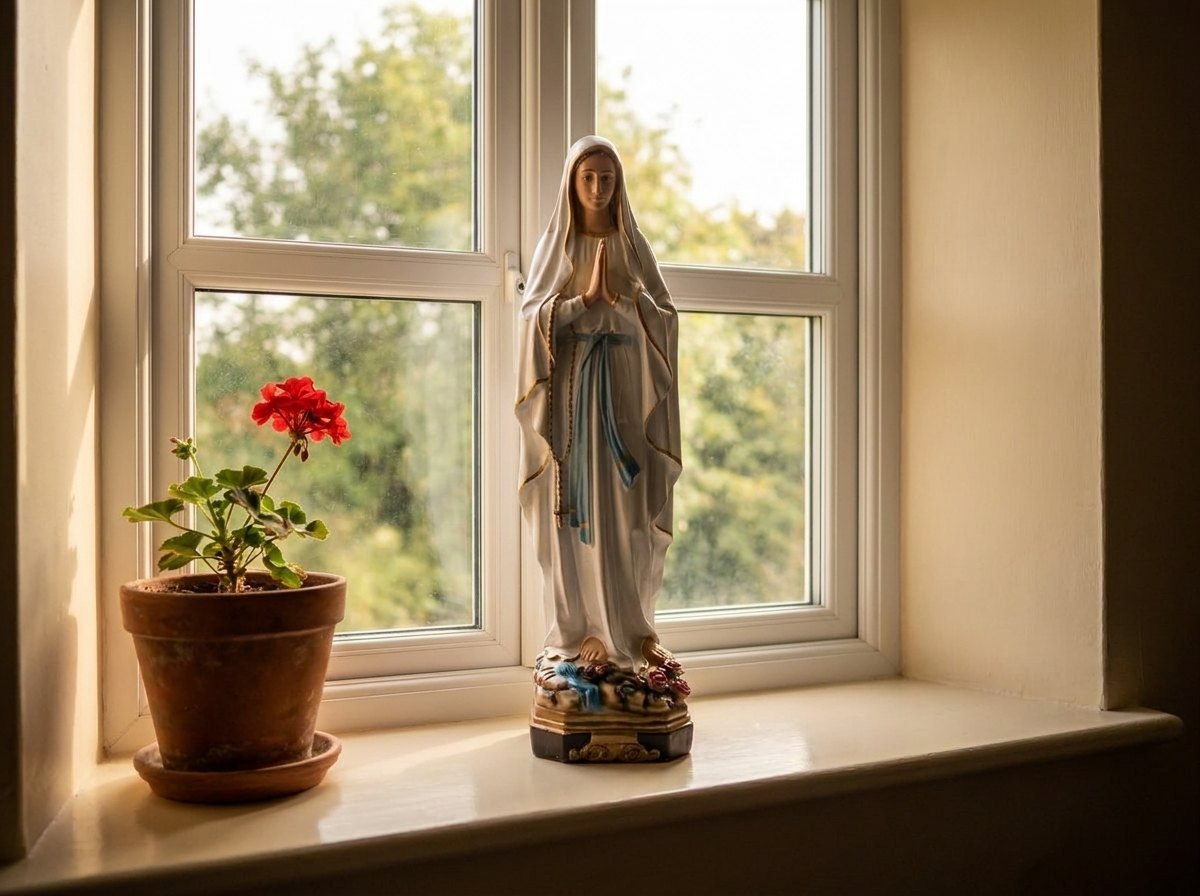
Cleaning painted resin
Dust with a soft cloth or a soft, dry brush — a clean make-up brush or a small paintbrush reaches into folds and around faces. If it needs more than dusting, use a barely damp cloth, with a drop of mild washing-up liquid in the water if it is greasy (a kitchen statue often is), then wipe with clean water and dry it gently.
Never scrub, and never use solvents: no nail-varnish remover, white spirit, alcohol wipes, bleach or abrasive kitchen cleaners. They lift paint, and the damage cannot be undone. Never put a resin statue in a dishwasher or soak it. A sheltered spot out of strong direct sunlight keeps the painted colours freshest for longest.
Cleaning marble
Dust with a soft, dry cloth. For marks, use lukewarm water with a drop of mild soap on a soft cloth, then dry it thoroughly so it does not leave water marks.
Keep vinegar, lemon, bleach, limescale removers and abrasive cleaners well away. Marble is a calcium-based stone and acids etch it, leaving a dull patch that cannot be polished out at home. Be careful with the things around it too: a glass of wine, a slice of lemon or a fruit bowl set down on a marble statue’s base can leave a mark. If an old marble statue has deep staining, a stone conservator is the person to ask.
Where to place a statue indoors
On a stable, level surface
A statue that rocks will eventually fall. Check the shelf is level and deep enough for the base, and for marble, that it will take the weight.
Away from the edge
Set it back from the front edge of a sill or shelf, out of the way of elbows, curtains, doors and the dog’s tail.
Clear of flames and heat
A candle too close blackens paint and stone with soot and can crack a finish. Keep candles a good hand’s width away and to the front, never directly under the statue. Avoid standing statues on radiators or over a stove.
Out of strong sun
Painted colours fade in strong direct sunlight over the years. A bright room is fine; the full glare of a south-facing window every afternoon is not ideal.
Secure in busy places
In a school, hall or care home, a small dab of museum putty or wax under the base helps a resin statue stay put if it is brushed against.
Repairs you can sensibly do at home
A clean break on a resin statue — a finger, a crown, a lily stem — can usually be mended. Keep every piece, including the tiny ones. Clean and dry both surfaces, use a clear two-part epoxy or a strong adhesive suited to resin, press the pieces together and support them, with tape or a bed of rice in a bowl, until it has set fully. Wipe away any glue that squeezes out before it hardens.
Small chips in paint can be touched up with artist’s acrylic paint and a fine brush. Match the colour on a scrap first, build it up in thin coats, and stop before you think you should: a small, honest touch-up looks better than a large repaint. For a much-loved older statue, or any repair to a face, a professional restorer or church-art studio will do far better than most of us can.
Marble repairs are harder. A clean break can be joined with an epoxy made for stone, but chips and cracks in marble are best left to a stonemason or conservator, who can match the stone. Do not try to fill or polish marble with household products.
If a statue from us arrives damaged
Statues are heavy and breakable, so every order is packed by hand and checked before it leaves us. If a piece does arrive damaged, send us a photograph within 48 hours of delivery and we will replace it or refund it in full, including the postage. Please keep the packaging until the claim is settled. The details are on our shipping and returns page.
Statues for the home
Painted resin and carved marble pieces for shelves, sills and prayer corners.
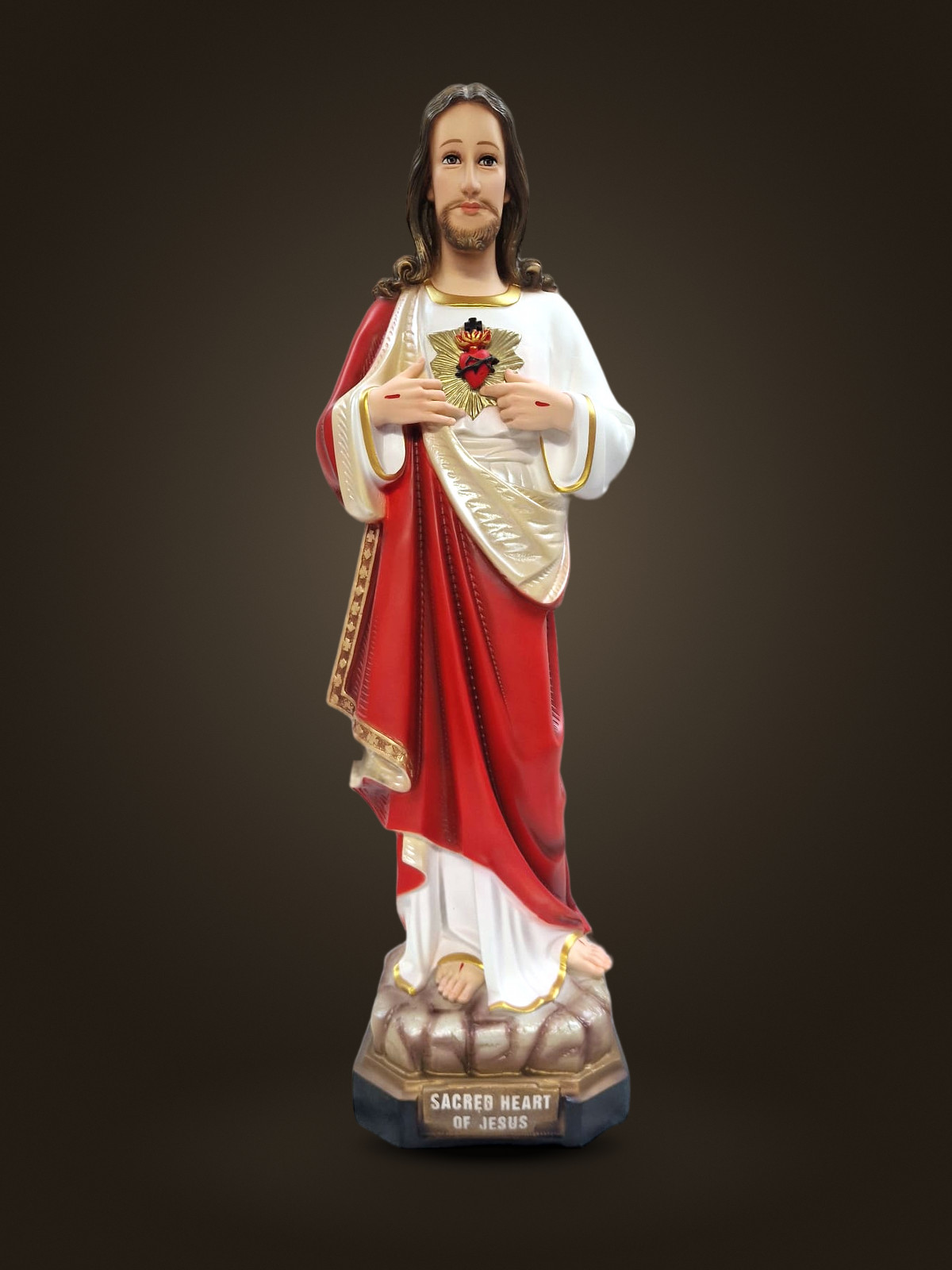
Sacred Heart of Jesus
Hand-painted resin · plain or glitter
From €60
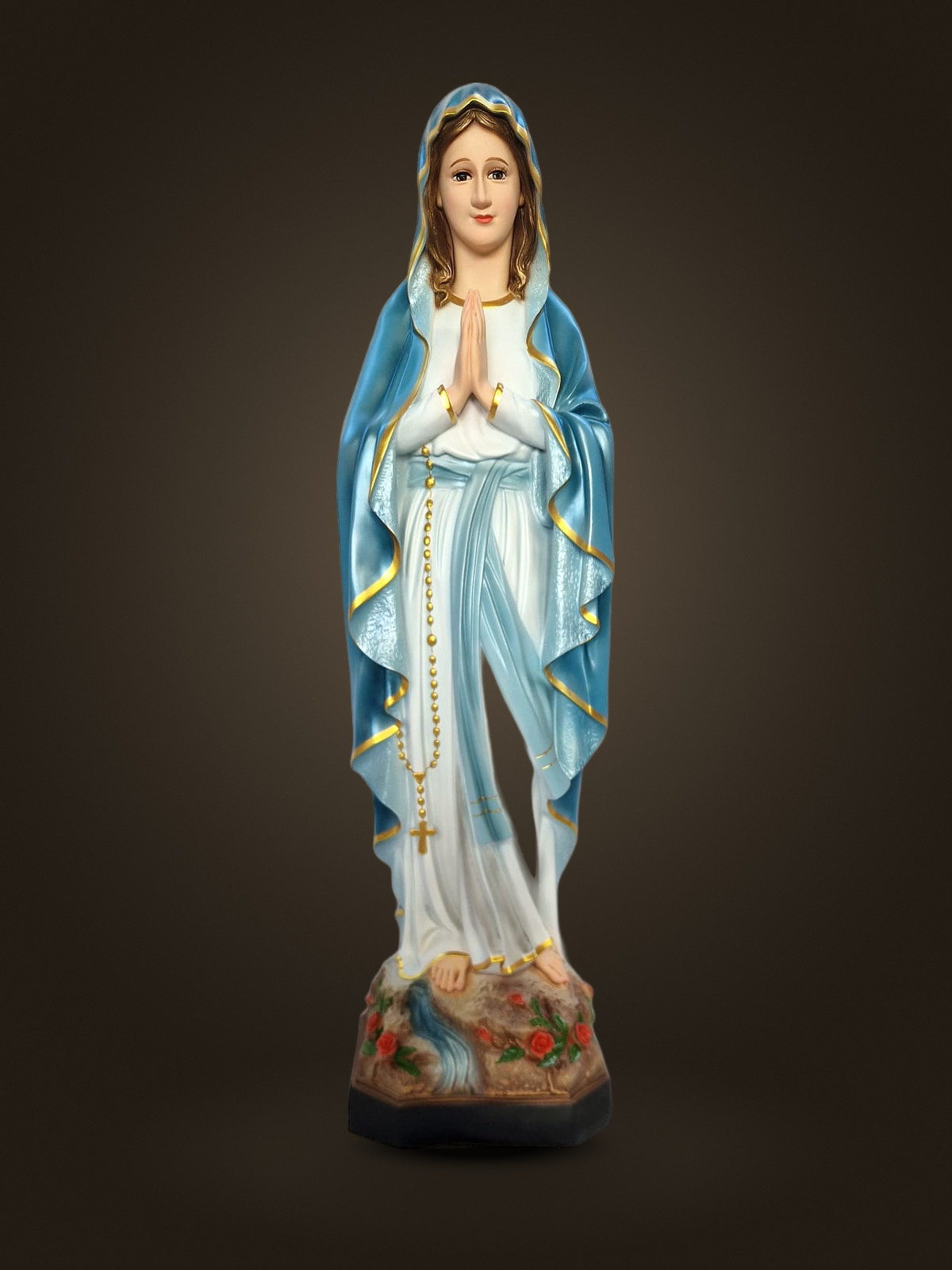
Our Lady of Lourdes
Hand-painted resin
From €55
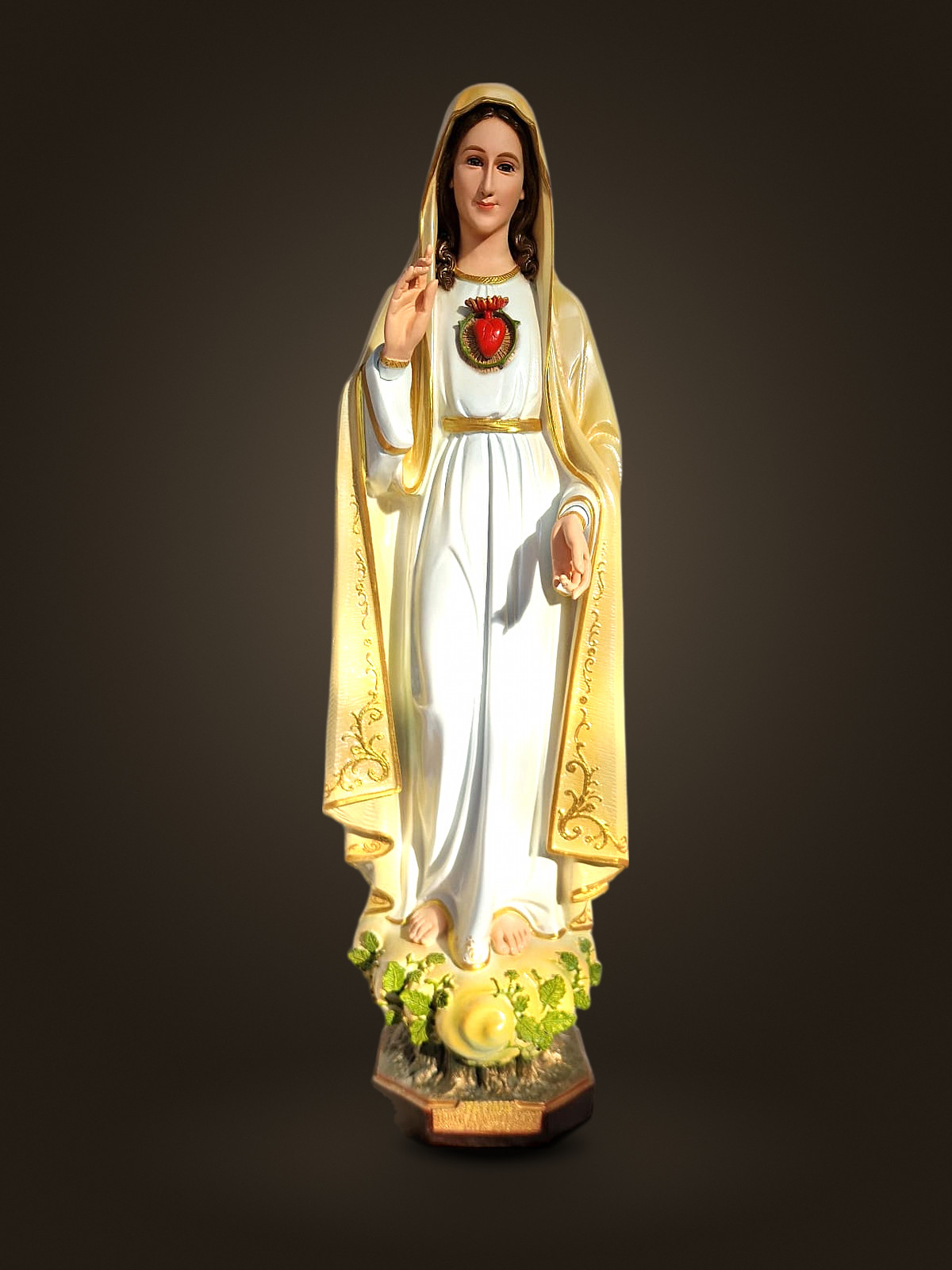
Our Lady of Fatima
Hand-painted resin
€140
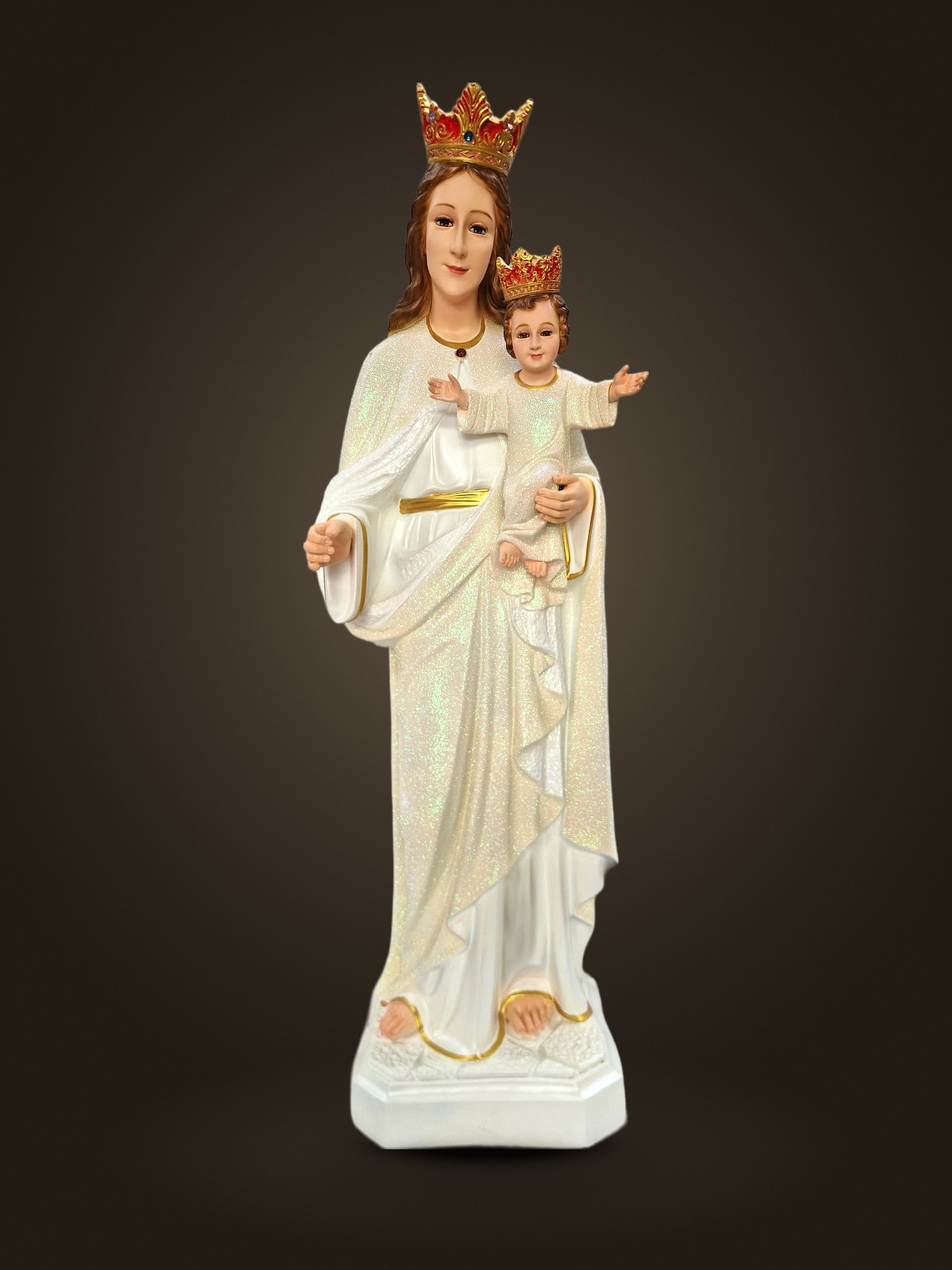
Our Lady Help of Christians
Hand-painted resin · glitter finish
€260
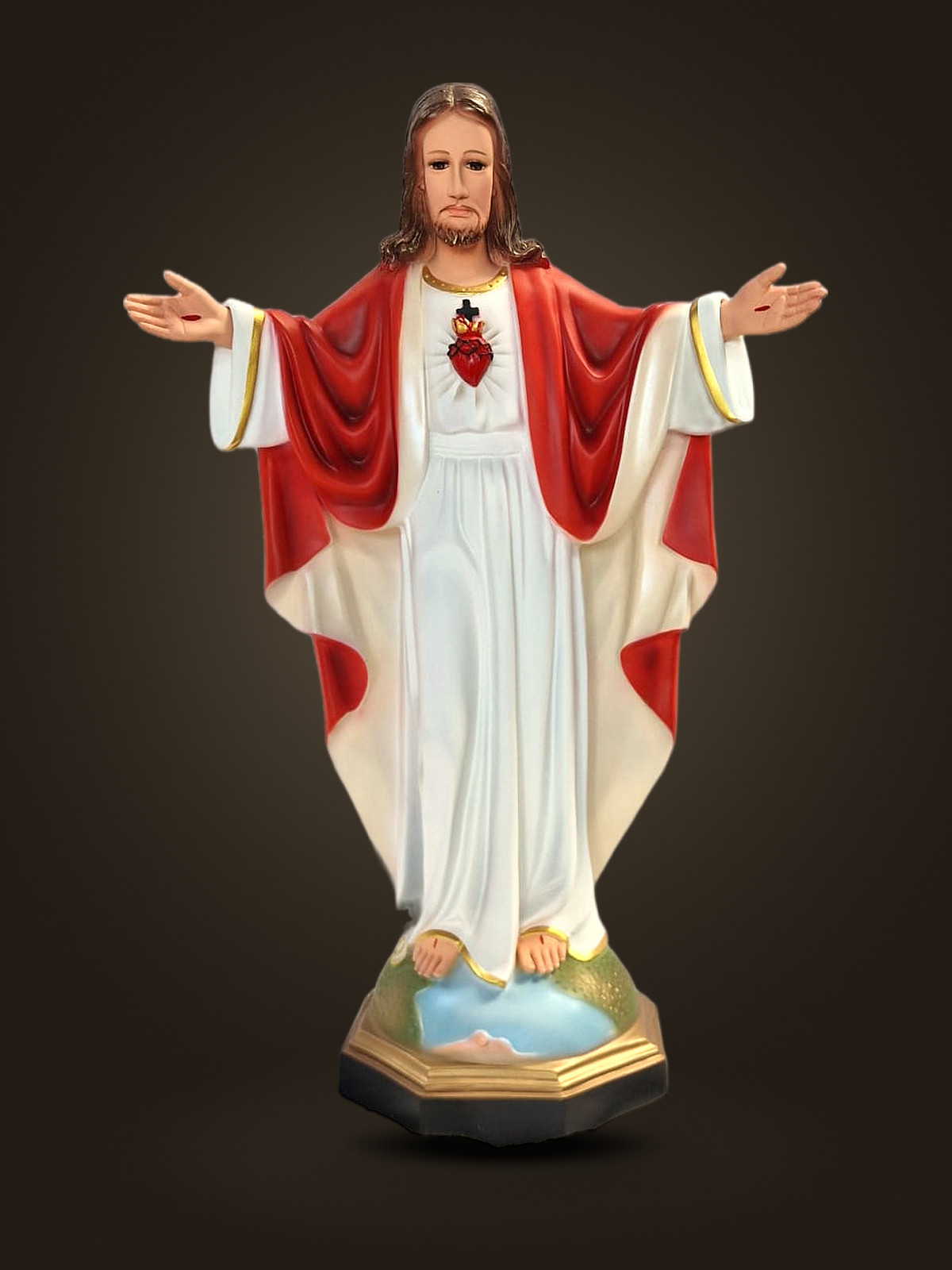
Sacred Heart of Jesus (Open Arms)
Hand-painted resin · plain or glitter
From €55
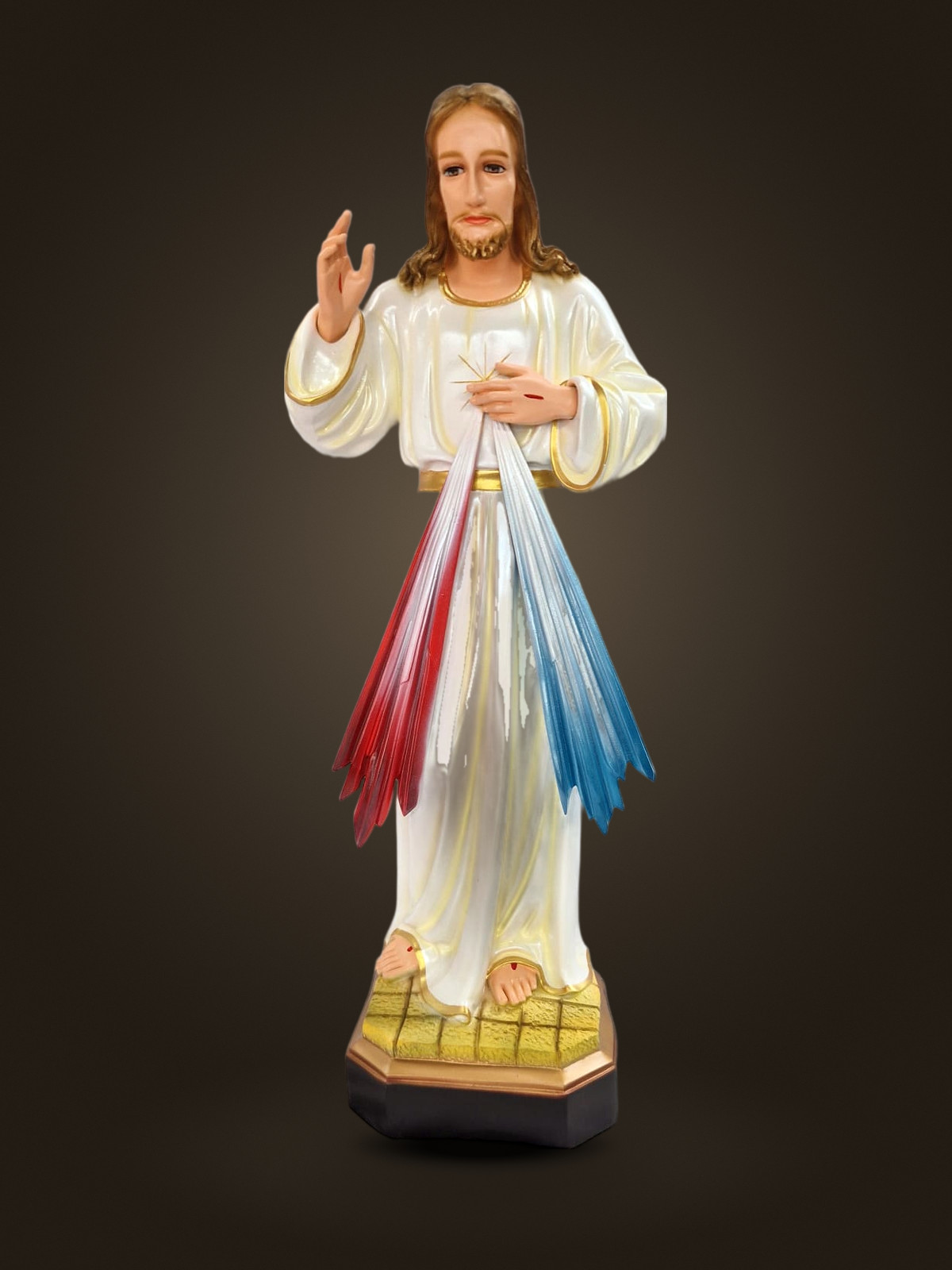
Merciful Jesus
Hand-painted resin · plain or glitter
From €95
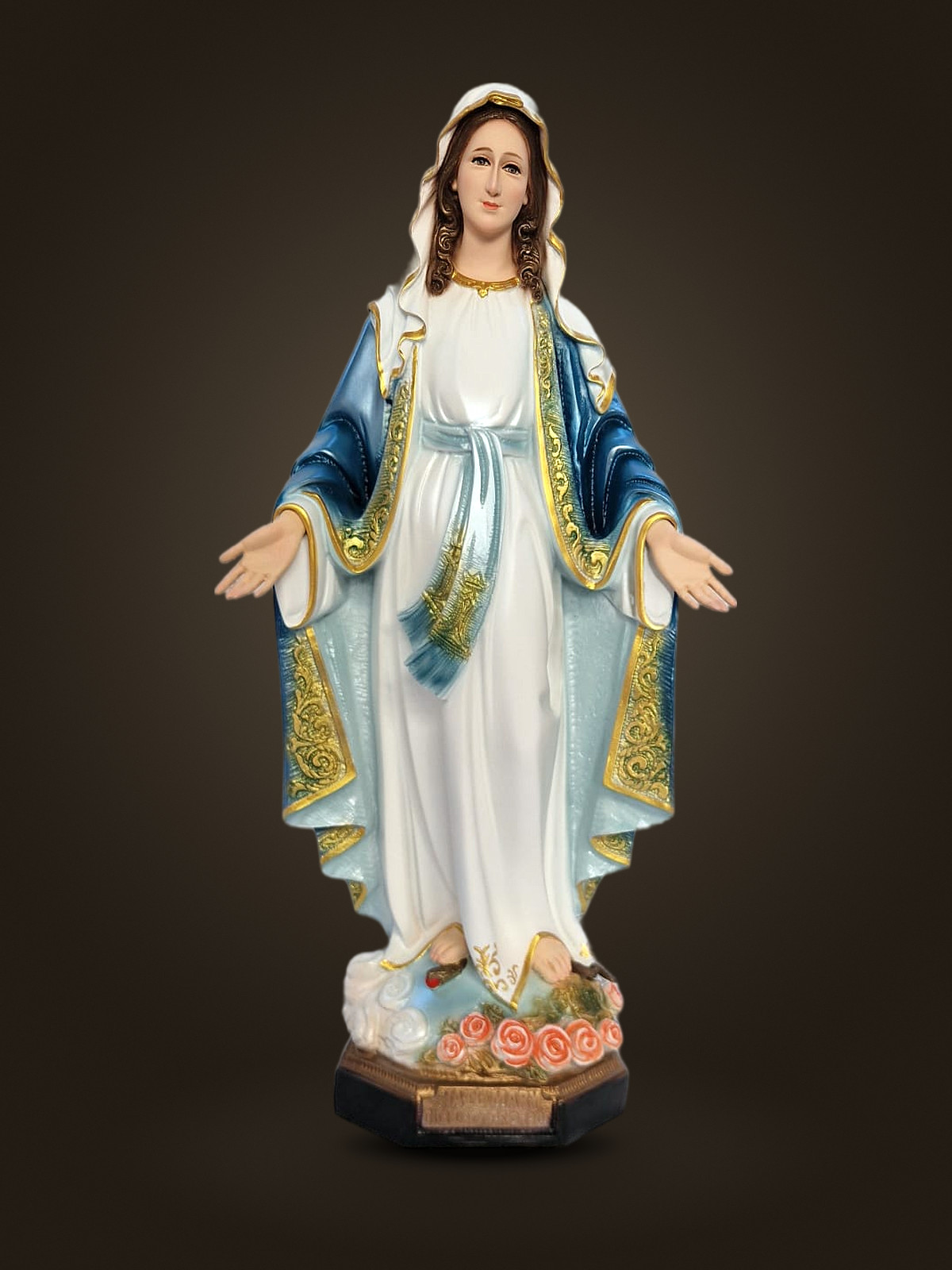
Our Lady of Grace
Hand-painted resin
€60
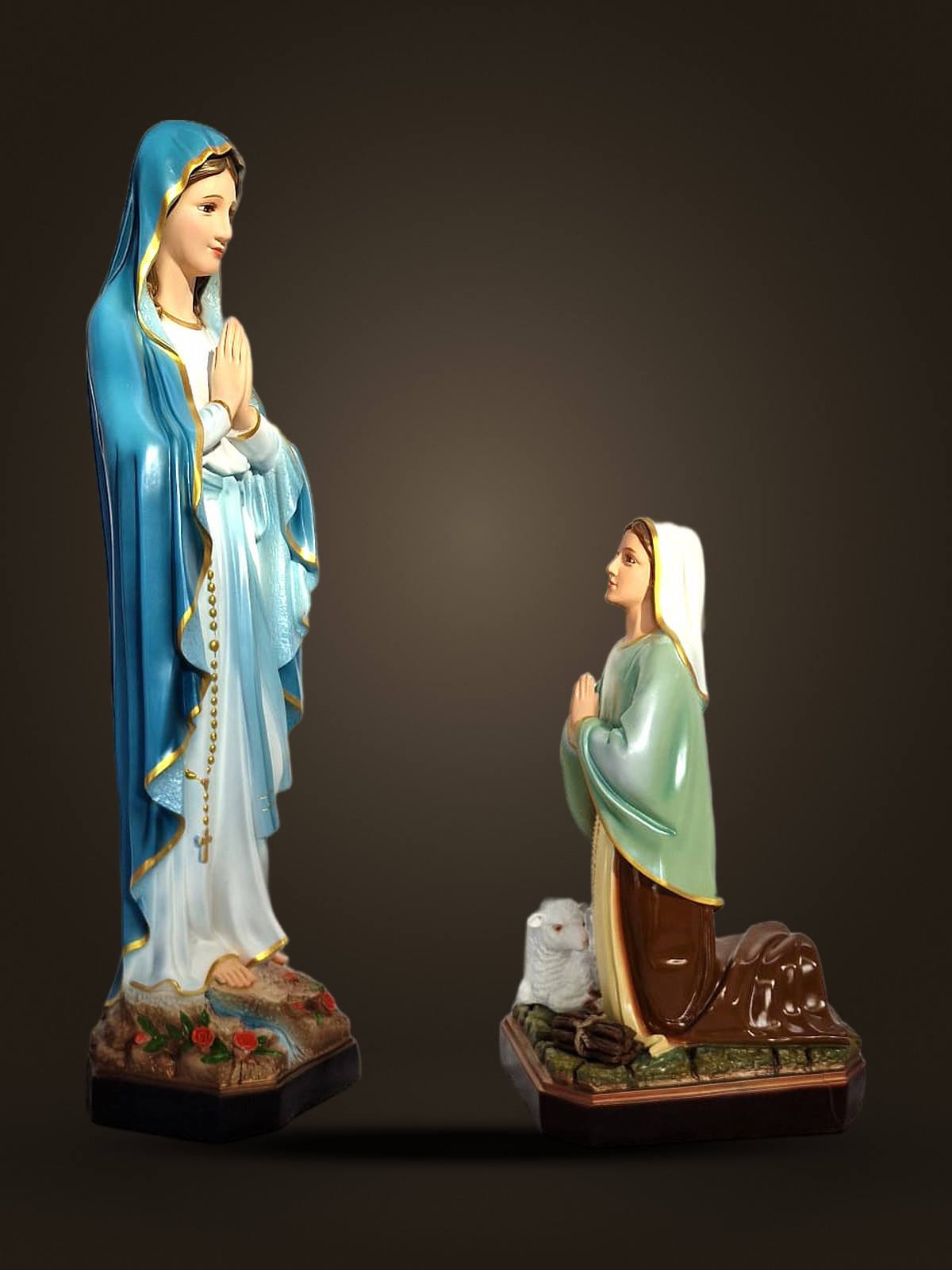
Our Lady of Lourdes and St Bernadette
Hand-painted resin · the pair
€240
Questions people ask
Can I wash a resin statue under the tap?
Better not. Water can get into joins and under paint. Wipe with a barely damp cloth instead, then dry it.
How do I get candle soot off a statue?
Dust off what you can with a soft dry brush first. On marble, then use lukewarm water with a drop of mild soap. On painted resin, a barely damp cloth, very gently. If the soot is heavy, or on a painted face, stop and ask a restorer rather than rub it in.
The paint on our old statue is flaking. Can I repaint it?
You can, but a full repaint changes the statue, and old paint may hide plaster that needs care. For a family heirloom or a parish statue, ask a church-art restorer first.
Should a broken blessed statue be thrown out?
If it cannot be repaired, it should be disposed of respectfully, traditionally by burying it, rather than put in the bin. See blessing a religious statue.
Can I use furniture polish on marble?
No. Many polishes contain solvents or waxes that can stain or yellow marble. A soft dry cloth is all it needs.
Read next
Updated
Read next
Outdoor statues in Irish weather
Ireland is kind to stone in some ways and hard on it in others. Rain is constant, frost comes and goes, and wind off the Atlantic finds anything not fixed down. A little care at the start and once a year does most of the work.
Resin vs marble
Both materials make a good statue. They make different statues, though, and the right one depends on where it will stand, who will move it and how long you mean it to last.
Statues for the home
A statue in the house is a face to turn to at the start of the day and at the end of it. Here is how to choose one for a shelf, a sill or a prayer corner — and which statues Irish homes have kept for generations.
Blessing a statue
A statue is traditionally blessed when it is first set in place, at home or in church. It takes a few minutes, it costs nothing, and your parish priest will gladly do it.