
Guide · Garden
How to make a garden grotto to Our Lady
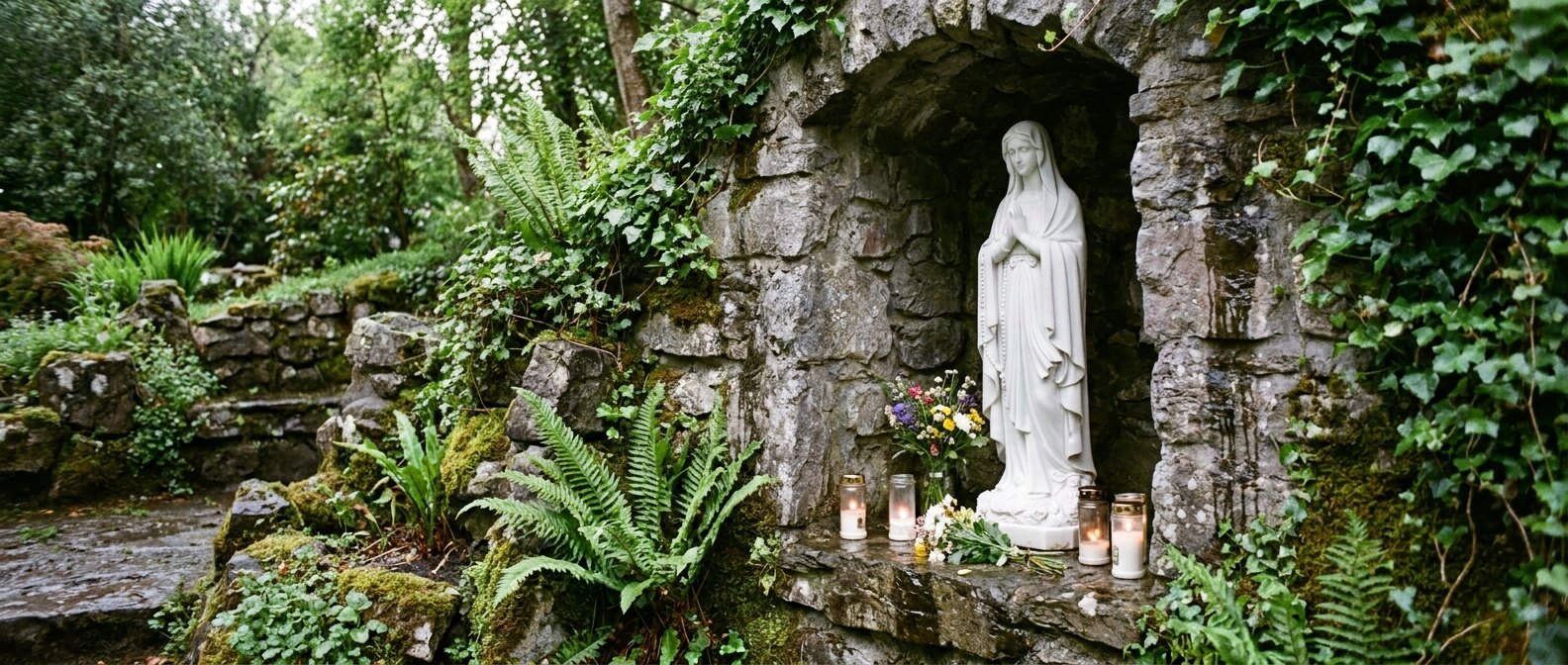
Grottos to Our Lady are part of the Irish landscape — at crossroads, outside schools and churches, in front gardens. A small one at home is within reach of anyone with a free corner and a weekend.
Why Ireland has so many grottos
The grotto takes its shape from Massabielle, the rock cave at Lourdes where Our Lady appeared to St Bernadette in 1858. Across the Catholic world, parishes and families began building small copies of it, with a white statue of Our Lady set in a rocky niche, often with St Bernadette kneeling below. In Ireland a great many were built for the Marian Year of 1954, and they still stand at crossroads and church gates up and down the country.
A grotto does not have to be large or an exact copy of Lourdes. At its simplest it is a sheltered niche for a statue of Our Lady, a place to light a candle, and a reason to stop for a decade of the Rosary. Many families build one in memory of someone, or to mark a jubilee, a wedding or a new home. Our Lourdes guide tells the story behind it.
Building it, step by step
Choose the site
Look for a spot that can be seen from the house or the path, with a wall, hedge or bank behind it. Avoid low ground that floods and the drip line of trees. If it is a parish or school grotto, check with the parish priest or board of management and, for anything large, whether planning rules apply.
Choose the statue first
Decide on the statue before you build the niche, so the niche fits it rather than the other way round. Mark out the statue’s height, width and depth on the ground and add a generous margin all round.
Lay a firm base
Dig out and lay a level concrete pad or paving slab for the statue to stand on, with a slight fall so rainwater runs away. This is the most important step for a heavy marble statue.
Build the niche
Local stone, dry-stacked or mortared, is the traditional choice and looks right in an Irish garden. Rockery stone, reclaimed brick or a rendered block wall all work too. Build up the sides and, if you can, an arch or overhang that shelters the statue’s head and shoulders.
Add a ledge for candles and flowers
A flat stone in front of the statue gives a place for a candle in a glass holder, a jar of flowers or a rosary. Keep the flame well clear of the statue.
Plant around it
Low planting softens the stone: ivy or ferns in the shade, lavender, roses or blue and white flowers in the sun. Keep plants from growing tight against the statue, where they hold moisture.
Ask for a blessing
When it is finished, ask your parish priest to bless the grotto and the statue. See blessing a religious statue.
Which statue for a grotto?
Any statue of Our Lady can stand in a grotto. These are the traditional choices in Ireland.
Our Lady of Lourdes
The classic grotto statue: white robe, blue sash, hands joined, roses at her feet. Pairs naturally with a kneeling St Bernadette.
Our Lady of Knock
Ireland’s own apparition, crowned, with hands raised in prayer — a natural choice for an Irish grotto.
Our Lady of Fatima
Popular in grottos built for Rosary devotion, sometimes with the three shepherd children.
Our Lady of Grace
Arms open and lowered, a gentle figure that suits a memorial grotto or a quiet corner.
Marble or resin for a grotto?
For a grotto that stands open to the weather all year, marble is the traditional and longest-lasting choice: white stone set against dark rock is the look most people picture. A painted resin statue suits a grotto where the niche gives real shelter — a deep arch, a covered porch — and brings colour, especially the blue of Our Lady’s sash. Our resin or marble guide and outdoor care guide go into the details.
Size is the other decision. Outdoors, a statue looks smaller than it does indoors, so a grotto usually wants a larger statue than people first think. Our size guide explains how to mock it up before you buy. If you need a statue carved to fit an existing grotto, see custom statues.
Grotto statues
Statues of Our Lady and St Bernadette suited to a grotto, as they stand in the catalogue today.
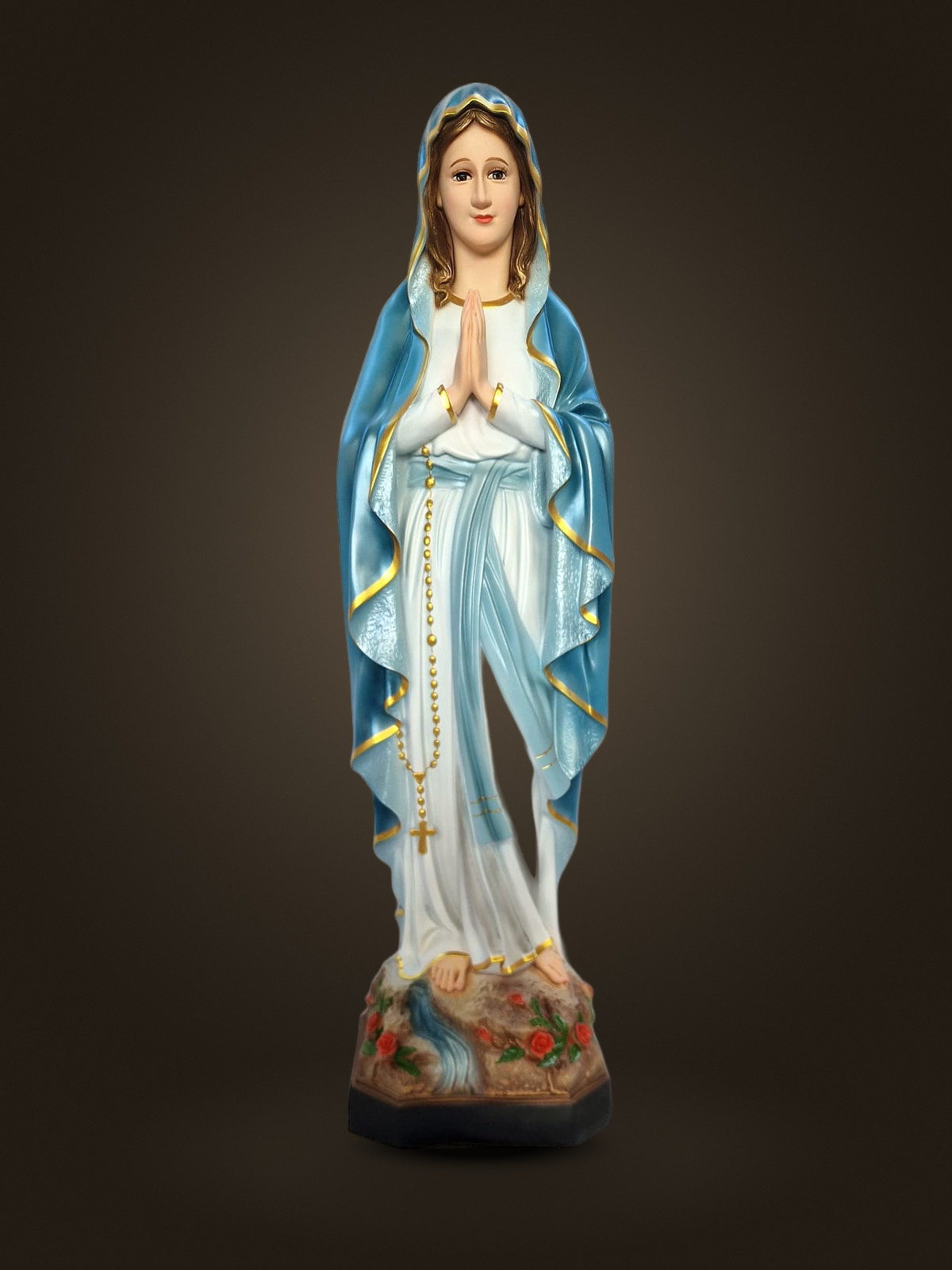
Our Lady of Lourdes
Hand-painted resin
From €55
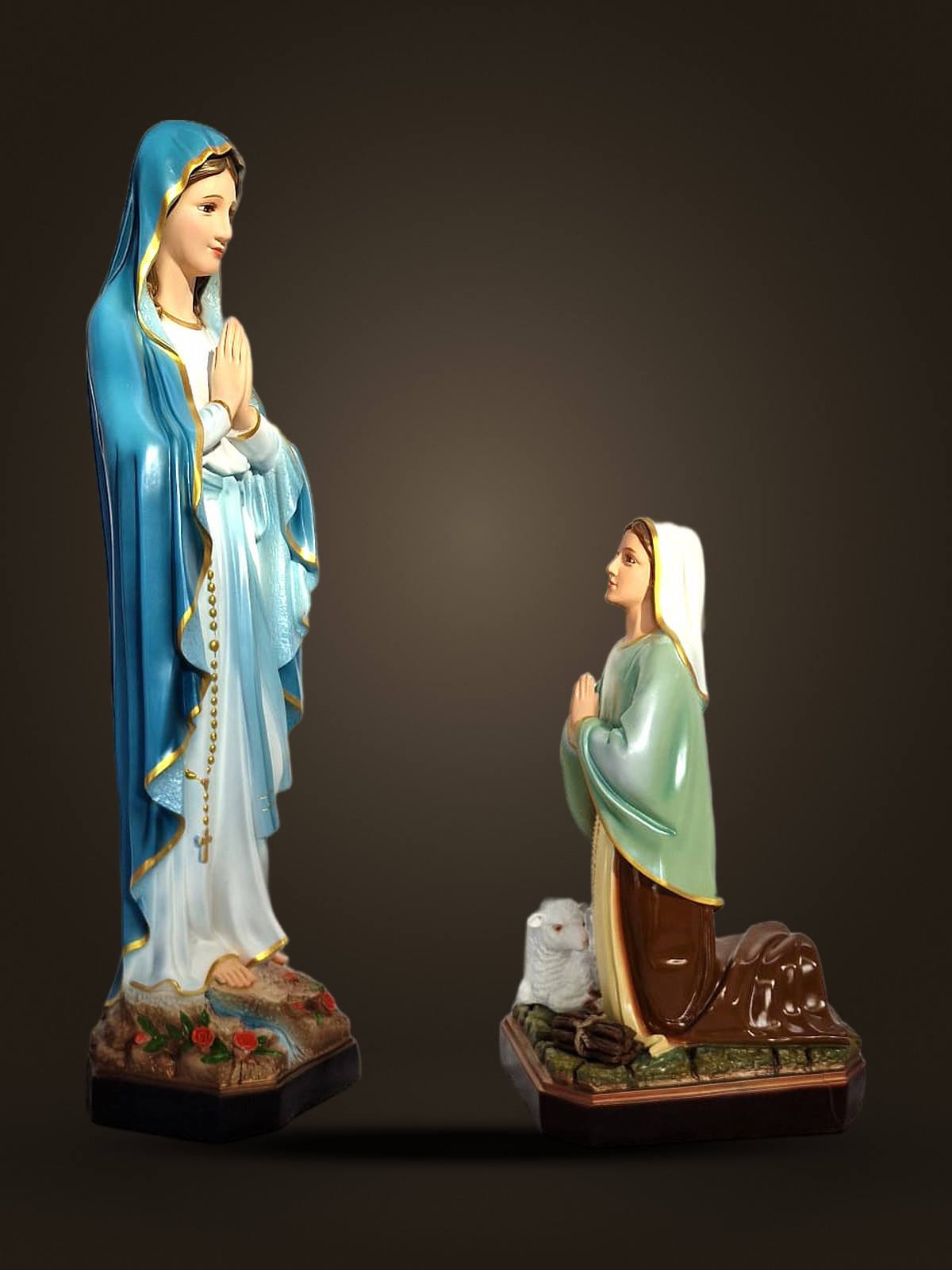
Our Lady of Lourdes and St Bernadette
Hand-painted resin · the pair
€240
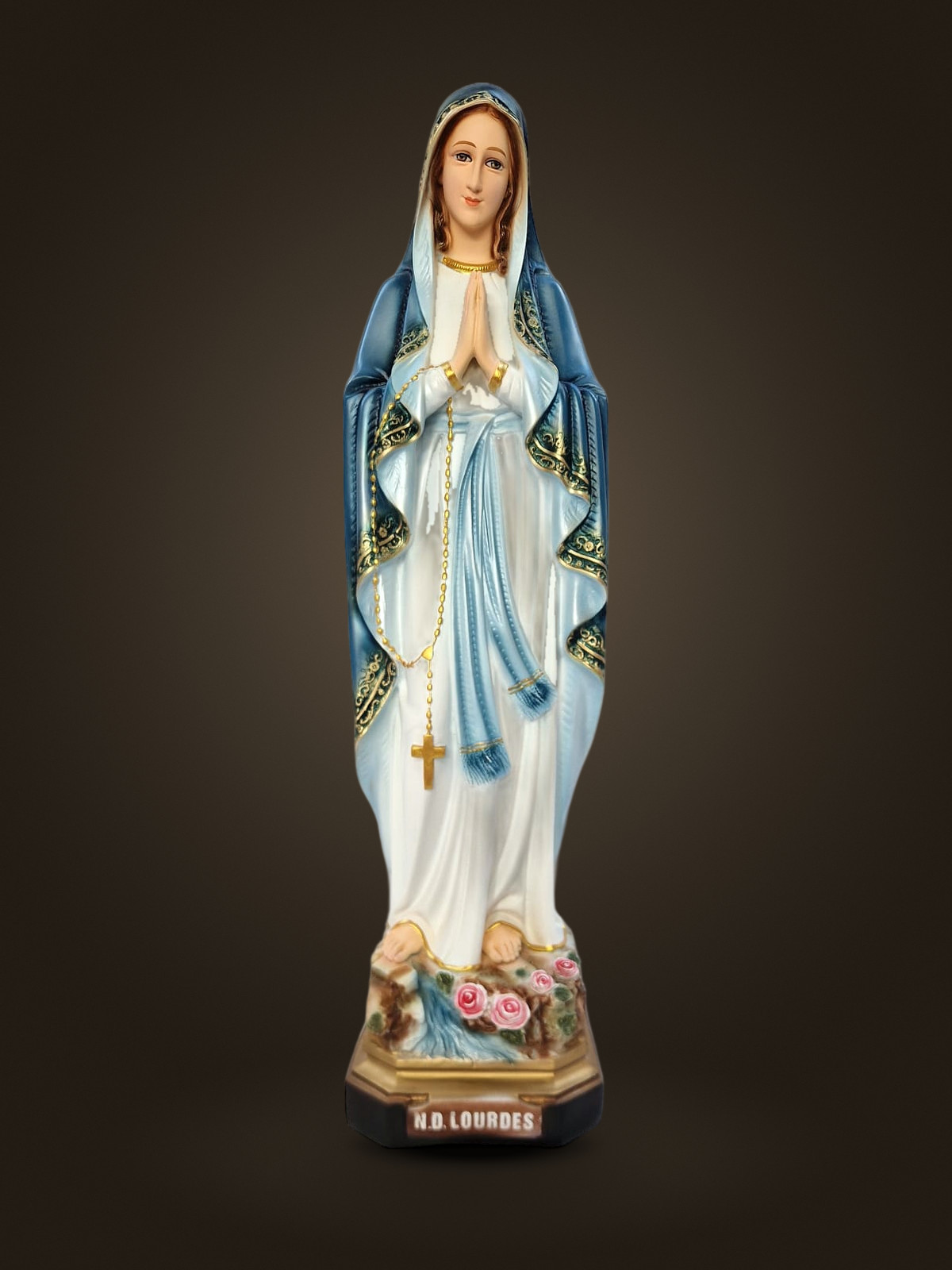
Our Lady of Lourdes (Hand-Painted)
Hand-painted resin · shaded finish
€95
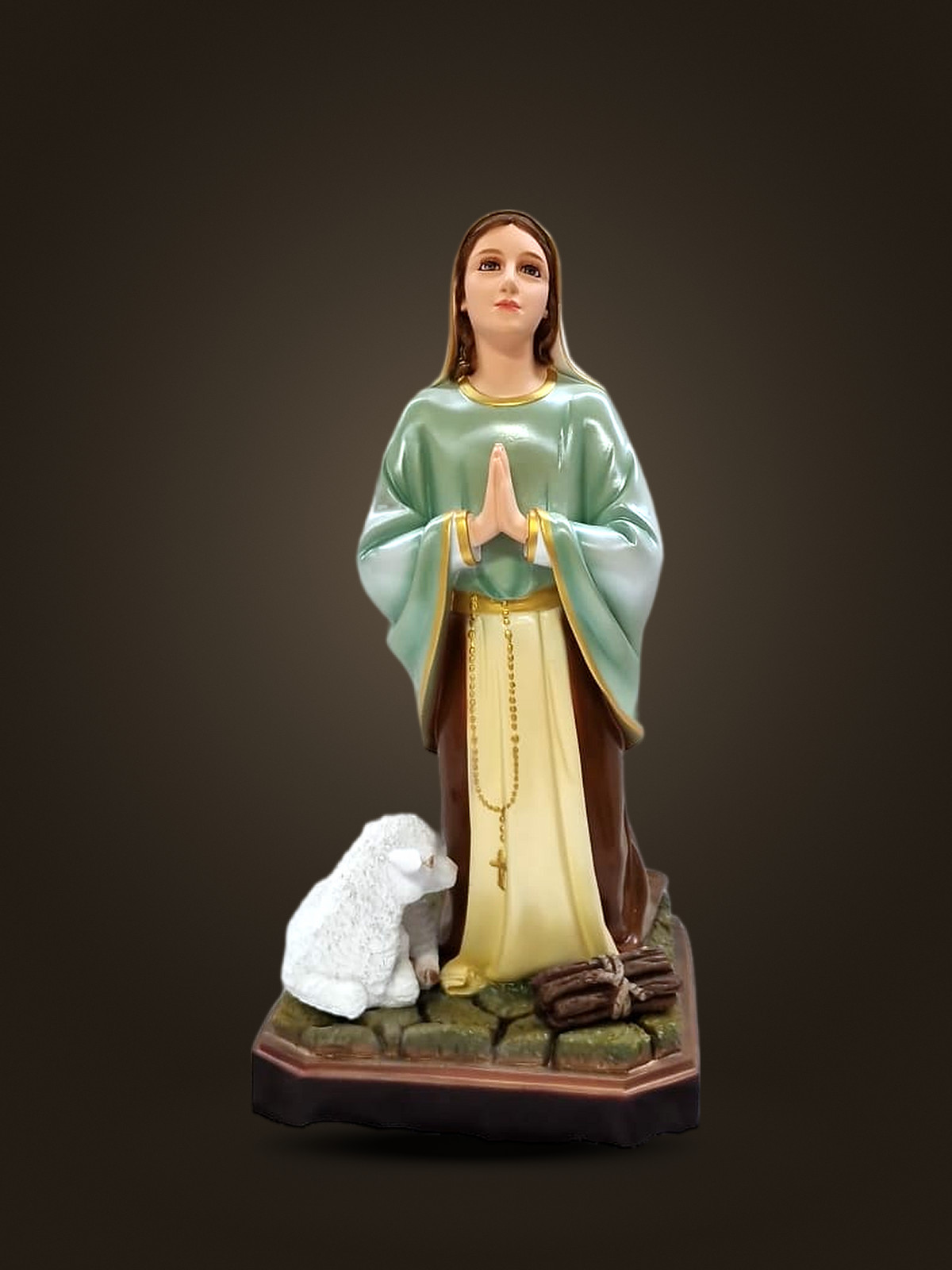
St Bernadette
Hand-painted resin
€120
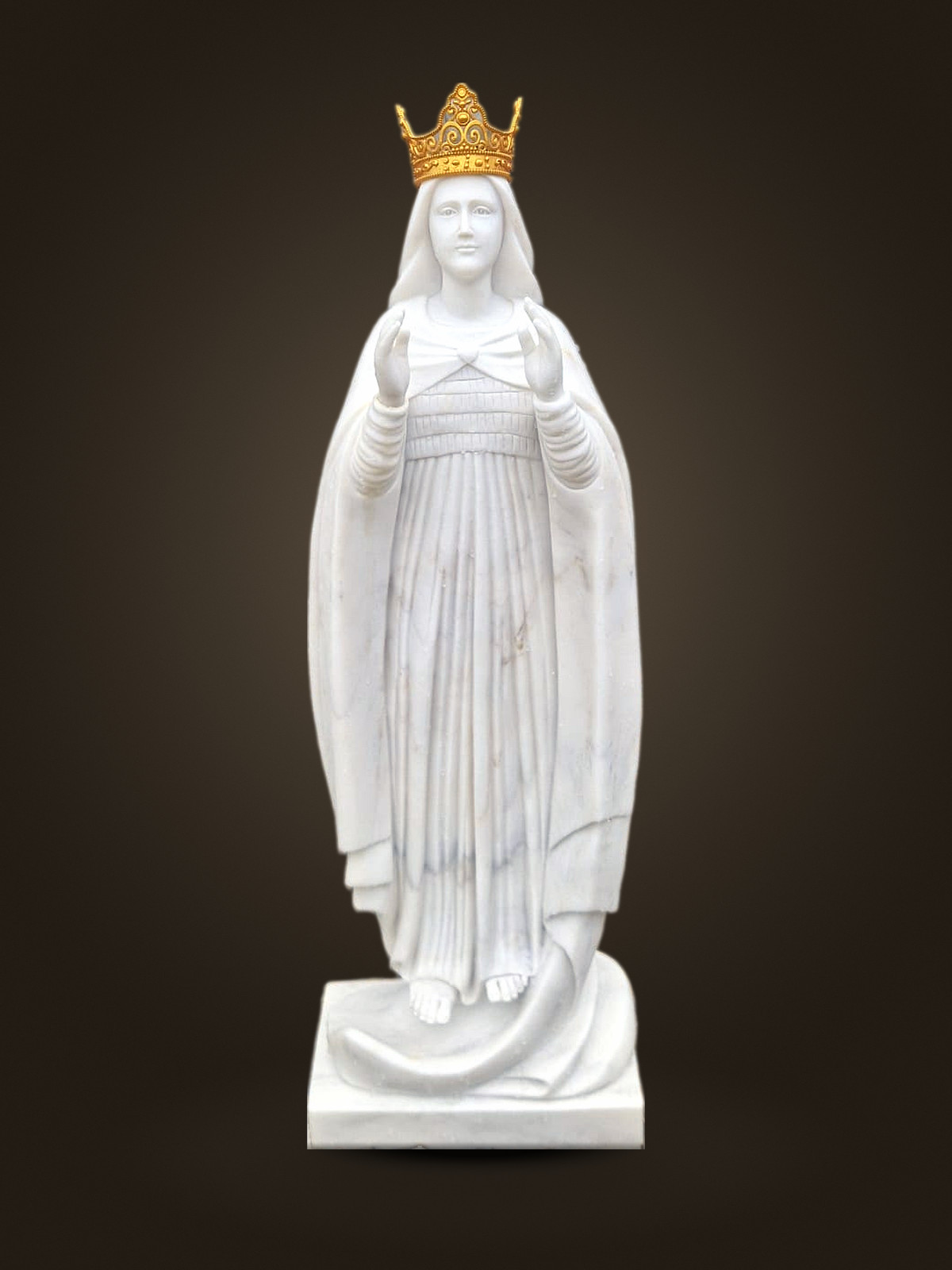
Our Lady of Knock
Hand-carved marble
€1,600
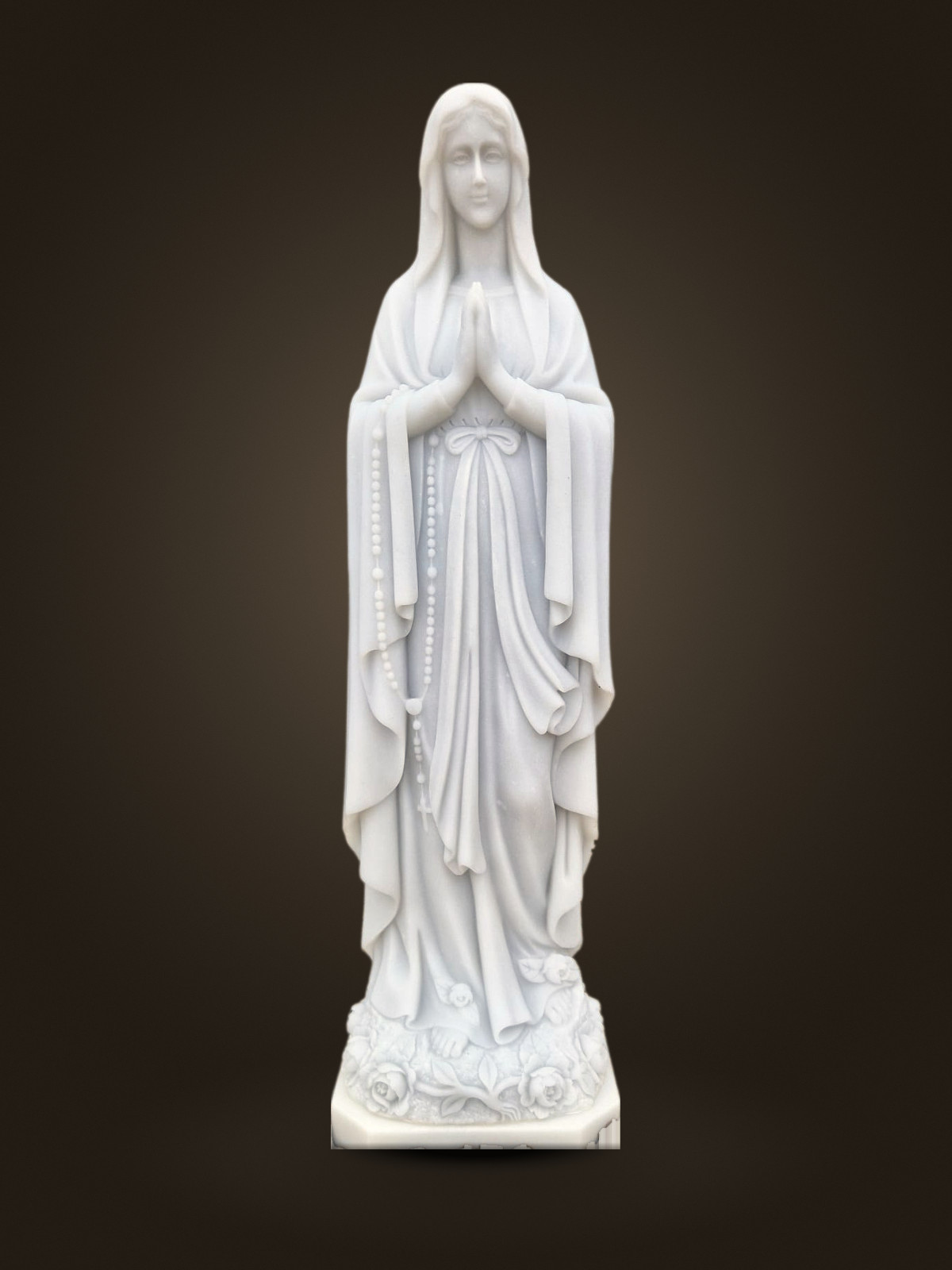
Our Lady of Lourdes (Fine Detail)
Hand-carved marble · 3ft 3in
€2,400
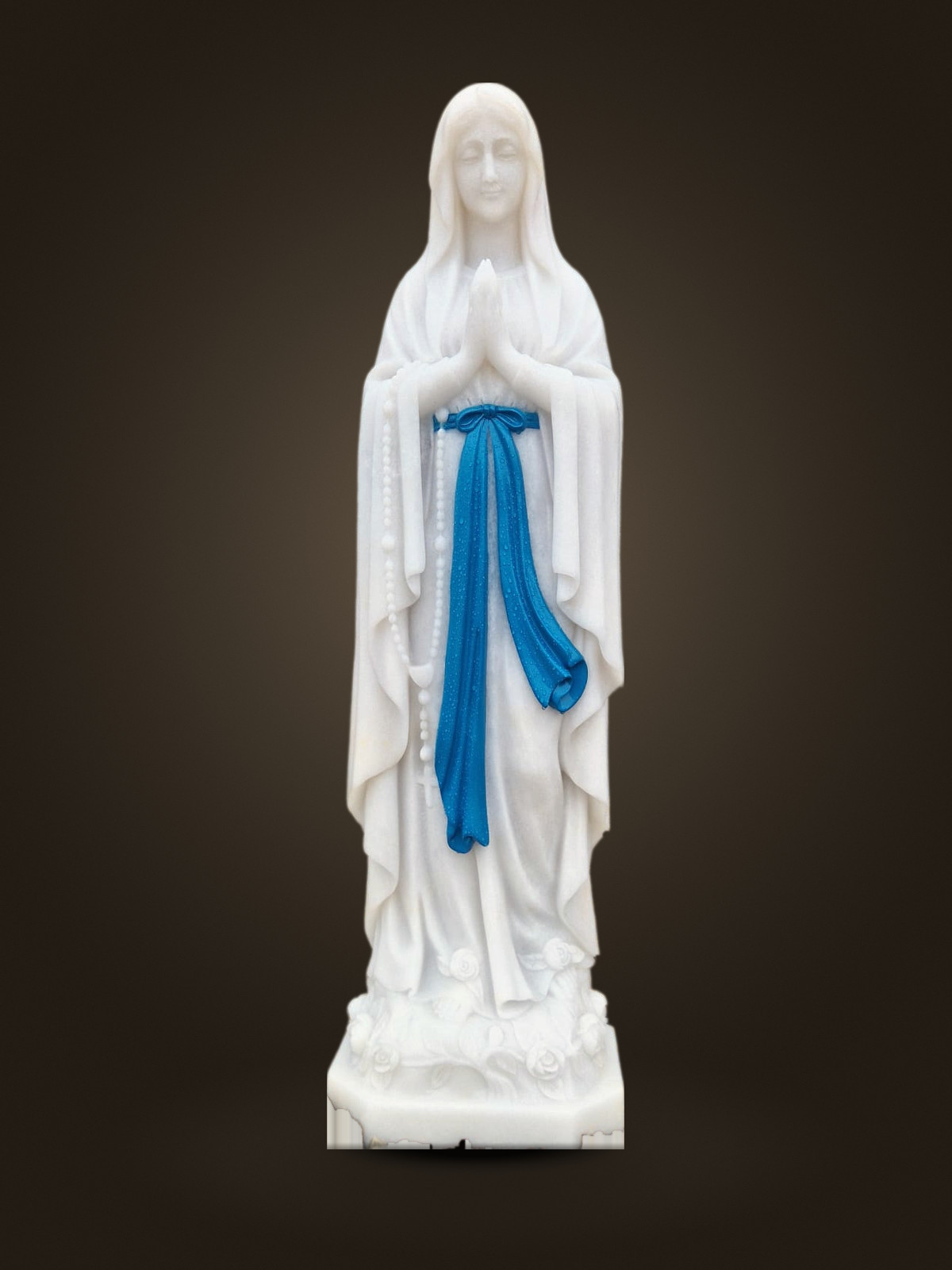
Our Lady of Lourdes (Blue Ribbon)
Hand-carved marble · blue ribbon
€2,100
Questions people ask
Do I need planning permission for a garden grotto?
A small grotto in a private garden is usually treated like any other garden feature, but rules vary and a large structure near a road or boundary may be different. If in doubt, ask your local county council before you build.
How big should the niche be?
Choose the statue first, then build the niche with a clear margin around the head and sides. A statue that touches the arch looks cramped, and it makes cleaning hard.
Can a grotto have a light?
Many do. A candle in a glass holder on the ledge is traditional; a solar or low-voltage light is safer if the grotto will be left unattended. Keep any flame well clear of the statue.
Should the grotto be finished before the statue arrives?
Have the base laid and set first, so the statue can go straight onto it. The niche itself can be built around the statue afterwards if that is easier. We deliver marble ourselves, at the charge shown on its page, so mention a side gate, steps or a long lawn when you order.
Can a school or parish grotto be dedicated in memory of someone?
Yes, and many are. Talk to the parish priest about a blessing and, if you want one, a small plaque. See memorial statues.
Read next
Updated
Read next
Grotto statues
Almost every Irish parish has one: a rock grotto with Our Lady of Lourdes in a niche above and St Bernadette kneeling below. Here is the story behind it, and how to choose statues for a grotto of your own.
Garden statues
A statue of Our Lady in the garden is one of the oldest sights in Ireland. Getting one to look right — and keep it standing straight winter after winter — is mostly about the base, the spot and the material.
Our Lady of Lourdes
In 1858 a poor, asthmatic fourteen-year-old in the south of France saw a young Lady in a rock cave by the river. Her name was Bernadette Soubirous, and the cave was Massabielle, at Lourdes.
Outdoor statues in Irish weather
Ireland is kind to stone in some ways and hard on it in others. Rain is constant, frost comes and goes, and wind off the Atlantic finds anything not fixed down. A little care at the start and once a year does most of the work.